
Podcast 759: Hyperkalemia and Myth of Kayexalate

Podcast 759: Hyperkalemia and Myth of Kayexalate

Contributor: Nick Tsipis, MD

Educational Pearls:

  • Acute hyperkalemia is characterized as serum K of 5.4 or higher in non-hemolyzed samples
  • Hyperkalemia is commonly associated with end stage renal disease, acute kidney injury or acute renal failure
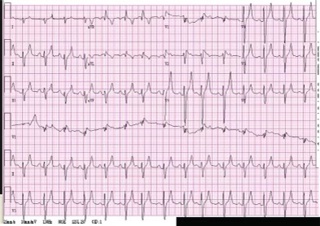
  • Cardiac dysrhythmias are the primary concern with hyperkalemia, common EKG changes (and approximate serum levels) can include:
    • Peaked T waves that start to show at serum K of 6
    • Second sign is lengthening of PR and QRS intervals due to extended repolarization
    • Severe hyperkalemia manifests as a sine wave around serum of 8-9
  • Three approaches to treat hyperkalemia:
    • Stabilize cardiac membrane with calcium
    • Shift potassium back into the cell, insulin and albuterol are common agents used.
    • Potassium binding for excretion
  • Cochrane review showed no significant effects of Kayexalate on serum K in 4 hours
  • Bowel necrosis is a rare adverse event that can occur with Kayexalate
  • More myths and misconceptions about hyperkalemia addressed in reference below!

References:

Gupta AA, Self M, Mueller M, Wardi G, Tainter C. Dispelling myths and misconceptions about the treatment of acute hyperkalemia. Am J Emerg Med. 2022;52:85-91. doi:10.1016/j.ajem.2021.11.030

Mahoney BA, Smith WA, Lo DS, Tsoi K, Tonelli M, Clase CM. Emergency interventions for hyperkalaemia. Cochrane Database Syst Rev. 2005;2005(2):CD003235. Published 2005 Apr 18. doi:10.1002/14651858.CD003235.pub2

Li T, Vijayan A. Insulin for the treatment of hyperkalemia: a double-edged sword?. Clin Kidney J. 2014;7(3):239-241. doi:10.1093/ckj/sfu049

Summarized by Mason Tuttle| Edited by Nick Tsipis, MD

Jaksot(1145)

Episode 913: Vasopressors after ROSC

Episode 913: Vasopressors after ROSC

Contributor: Travis Barlock MD Educational Pearls: Recent study assessed outcomes after ROSC with epinephrine vs. norepinephrine Observational multicenter study from 2011-2018 285 patients rece...

23 Heinä 20241min

Podcast 912: Narcan (Naloxone)

Podcast 912: Narcan (Naloxone)

Contributor: Taylor Lynch, MD Educational Pearls: Opioid Epidemic- quick facts Drug overdoses, primarily driven by opioids, have become the leading cause of accidental death in the U.S. for individu...

15 Heinä 20246min

Episode 911: Anticholinergic Toxicity

Episode 911: Anticholinergic Toxicity

Contributor: Taylor Lynch MD Educational Pearls: Anticholinergics are found in many medications, including over-the-counter remedies Medications include: Diphenhydramine Tricyclic antidepressa...

8 Heinä 20247min

Episode 910: Cellulitis Recovery Timeline

Episode 910: Cellulitis Recovery Timeline

Contributor: Aaron Lessen, MD Educational Pearls: How fast does cellulitis recover? A recent prospective cohort study took a look at this question. The study included 300 adults with cellulitis ...

2 Heinä 20241min

Episode 909: Prehospital Blood Pressure Management in Suspected Stroke

Episode 909: Prehospital Blood Pressure Management in Suspected Stroke

Contributor: Aaron Lessen MD Educational Pearls: A recent study assessed EMS treatment of high blood pressure in the field 2404 patients randomized to prehospital treatment (1205) vs. usual care ...

24 Kesä 20242min

Episode 908: Sympathomimetic Drugs

Episode 908: Sympathomimetic Drugs

Contributor: Taylor Lynch MD Educational Pearls: Overview: Sympathomimetic drugs mimic the fight or flight response, affecting monoamines such as dopamine, norepinephrine, and epinephrine Limited th...

17 Kesä 20247min

Episode 907: Wide-Complex Tachycardia

Episode 907: Wide-Complex Tachycardia

Contributor: Travis Barlock MD Educational Pearls: Wide-complex tachycardia is defined as a heart rate > 100 BPM with a QRS width > 120 milliseconds Wide-complex tachycardia of supraventricular or...

12 Kesä 20243min

Episode 906: Case Study of Hypernatremia

Episode 906: Case Study of Hypernatremia

Contributor: Aaron Lessen MD Educational Pearls: The case: A gentleman came in from a nursing home with symptoms concerning for sepsis. He was hypotensive, hypoxic, febrile, and mentally altered. ...

3 Kesä 20243min

Suosittua kategoriassa Tiede

tiedekulma-podcast
rss-mita-tulisi-tietaa
rss-poliisin-mieli
docemilia
radio-antro
utelias-mieli
filocast-filosofian-perusteet
rss-sosiopodi
ihanat-ipanat
mielipaivakirja
rss-bios-podcast
rss-duodecim-lehti
rss-ammamafia
rss-laakaripodi
rss-opeklubi