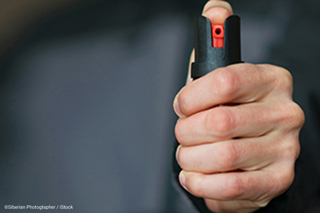

Podcast 785: Pepper Spray

Podcast 785: Pepper Spray

Contributor: Jared Scott, MD

Educational Pearls:

  • Pepper spray is a chemical irritant derived from oleoresin capsicum (OC), an extract from pepper plants. It can be used by police for riot or crowd control, or by individuals for self defense.
  • In the event of an exposure, those affected should immediately disperse from the area, remove contact lenses with clean or gloved hands, and remove contaminated clothing.
  • Pepper spray can spread from patients to providers by contact. When caring for those exposed, providers should use PPE including gloves and should double bag personal belongings.
  • For patient management consider the following:
    • If the eyes are affected, first remove contacts then irrigate with clean water. Use proparacaine drops for relief.
    • Clean exposed skin thoroughly with soap and water.
    • Inhalation and ingestion may cause nausea, vomiting, shortness of breath and generalized anxiety from discomfort. Treatment can include antiemetics and anxiolytics. Symptoms may persist for many days.

References

Schep LJ, Slaughter RJ, McBride DI. Riot control agents: the tear gases CN, CS and OC-a medical review. J R Army Med Corps. 2015;161(2):94-99. doi:10.1136/jramc-2013-000165

Tidwell RD, Wills BK. Tear Gas and Pepper Spray Toxicity. [Updated 2022 Jan 10]. In: StatPearls [Internet]. Treasure Island (FL): StatPearls Publishing; 2022 Jan-. Available from: https://www.ncbi.nlm.nih.gov/books/NBK544263/

Summarized by Kirsten Hughes, MS4 | Edited by John Spartz MS4 & Erik Verzemnieks, MD

The Emergency Medical Minute is excited to announce that we are now offering AMA PRA Category 1 credits™ via online course modules. To access these and for more information, visit our website at https://emergencymedicalminute.org/cme-courses/ and create an account.

Donate to EMM today!

*********************


Jaksot(1145)

Deep Dive #6: Bacteriuria and the Elderly

Deep Dive #6: Bacteriuria and the Elderly

Author: Heidi Wald, MD, MSPH Associate Professor of Medicine - University of Colorado School of Medicine, Physician Advisor - Colorado Hospital Association Dr. Heidi Wald explains common misconceptio...

25 Syys 201729min
Podcast #255: Posterior Vitreous Detachment

Podcast #255: Posterior Vitreous Detachment

Author: Erik Verzemnieks, M.D. Educational Pearls Posterior vitreous detachment is the tearing of the lining in the back of of the eye. Patients often present with loss of vision and floaters. Diagno...

22 Syys 20171min
Podcast #254: Myths About Antibiotic Course Length

Podcast #254: Myths About Antibiotic Course Length

Author: Chris Holmes, M.D. Educational Pearls There's little/no data about the necessary length of an antibiotic course, nor has it proven that stopping a course of antibiotics early selects for the ...

20 Syys 20174min

Podcast #253: Total Eclipse of the Eye - Solar Retinopathy

Podcast #253: Total Eclipse of the Eye - Solar Retinopathy

Author: Nick Hatch, M.D. Educational Pearls Photic or solar retinitis occurs when you stare at the sun. The refractive power of the lens of the eye concentrates the light of the sun on the retina, st...

18 Syys 20173min
Podcast #252: Mandible Fractures

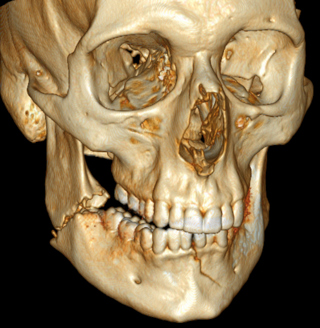
Podcast #252: Mandible Fractures

Author: Sam Killian, M.D. Educational Pearls The tongue blade test is done for mandible fractures, which make up 40-60% of facial fractures. The test is done by having the patient bite down on a tong...

15 Syys 20174min
Podcast #251: Cyanide Poisoning

Podcast #251: Cyanide Poisoning

Author: Rachel Beham, PharmD, Advanced Clinical Pharmacist – Emergency Medicine Educational Pearls Cyanide poisoning is suspected in patients who present with lactic acidosis after being trapped arou...

13 Syys 20174min

Podcast #250: Desmopressin

Podcast #250: Desmopressin

Author: Rachael Duncan, PharmD BCPS BCCCP Educational Pearls Desmopressin is an ADH mimetic and helps retain water, release von Willibrand Factor (in high doses), and treat diabetes insipidus (in low...

11 Syys 20173min

Podcast #249: Detecting Pulses

Podcast #249: Detecting Pulses

Author: Jared Scott, M.D. Educational Pearls Overall, medical providers are bad at detecting pulses. However, only 2% of patients do not have a detectable DP pulse. In one study, for patients with l...

10 Syys 20173min

Suosittua kategoriassa Tiede

tiedekulma-podcast
rss-mita-tulisi-tietaa
rss-poliisin-mieli
docemilia
radio-antro
utelias-mieli
filocast-filosofian-perusteet
rss-sosiopodi
ihanat-ipanat
mielipaivakirja
rss-bios-podcast
rss-duodecim-lehti
rss-ammamafia
rss-laakaripodi
rss-opeklubi