Podcast 862: How to Apply a Painful Stimulus

Podcast 862: How to Apply a Painful Stimulus

Contributor: Travis Barlock MD

Educational Pearls:

When might you need to apply a painful stimulus in a medical setting?

  • The main reason is to assess the patient's level of consciousness, such as when they are waking up from anesthesia or have potentially suffered a brain injury.

  • It can be part of the Glasgow Coma Scale (GCS) if patients are not responding to auditory stimuli.

  • Possible levels of consciousness include Alert, Lethargic, Obtunded, and Comatose (ALOC)

What are the approved ways to apply a painful stimulus to assess central nervous system function?

  • Trapezius squeeze. Grab the trapezius muscle and twist (contraindicated in clavicle fractures).

  • Supraorbital rim pressure. Find the notch in the supraorbital rim of the patient and push hard with your thumb (contraindicated in facial fractures).

  • Mandibular pressure (not mentioned). Press hard at the angle of the jaw on the mandibular nerve (contraindicated in mandible fractures).

  • Sternal rub. Push down with your knuckles into the patient's sternum and rub vigorously (contraindicated in chest injury/surgery).

  • Each technique should be done for between 15 and 30 seconds.

  • If skin damage is observed in one location, move to a different location. This is especially true of the sternal rub.

Important note: Peripheral techniques such as nail tip pressure should only be used to evaluate spinal nerve reflexes and not as a method of assessing the level of consciousness.

References

  1. Lower J. Using pain to assess neurologic response. Nursing. 2003 Jun;33(6):56-7. doi: 10.1097/00152193-200306000-00047. PMID: 12799591.

  2. Middleton PM. Practical use of the Glasgow Coma Scale; a comprehensive narrative review of GCS methodology. Australas Emerg Nurs J. 2012 Aug;15(3):170-83. doi: 10.1016/j.aenj.2012.06.002. Epub 2012 Aug 3. PMID: 22947690.

  3. Mistovich JJ, Krost W, Limmer DD. Beyond the basics: patient assessment. Emerg Med Serv. 2006 Jul;35(7):72-7; quiz 78-9. PMID: 16878751.

  4. Naalla R, Chitirala P, Chittaluru P, Atreyapurapu V. Sternal rub causing presternal abrasion in a patient with capsuloganglionic haemorrhage. BMJ Case Rep. 2014 Apr 7;2014:bcr2014204028. doi: 10.1136/bcr-2014-204028. PMID: 24711478; PMCID: PMC3987201.

Summarized by Jeffrey Olson, MS2 | Edited by Jorge Chalit, OMSII

Jaksot(1145)

Pediatric Palliative Care Expert Panel

Pediatric Palliative Care Expert Panel

Selected audio from our event, Palliative, hosted on June 27, 2022 in conjunction with Children's Hospital Colorado's Department of Palliative Medicine and The Denver Hospice's Footprints Program. Ke...

3 Elo 20221h 6min

Podcast 802: Intranasal Medication Administration for Pediatric Patients

Podcast 802: Intranasal Medication Administration for Pediatric Patients

Contributor: Aaron Lessen, MD Educational Pearls: Intranasal medication administration is a convenient, quick, and relatively painless option for pediatric patients Often used as an initial medicatio...

2 Elo 20223min
Mental Health Monthly #14: Substance-Induced Psychosis (Part II)

Mental Health Monthly #14: Substance-Induced Psychosis (Part II)

In this second episode of a two-part mini-series, we feature Dr. Nadia Haddad, a Colorado psychiatrist, and Dr. Ricky Dhaliwal, an emergency medicine physician, as they discuss the various treatment m...

27 Heinä 202224min
Podcast 801: Push Dose Vasopressors

Podcast 801: Push Dose Vasopressors

Contributor: Aaron Lessen, MD Educational Pearls: There are two common options for push-dose vasopressor: phenylephrine and epinephrine. Both have been studied in the setting of the OR, but are lacki...

26 Heinä 20223min
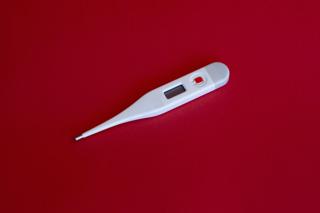
Podcast 800: Mortality in Fevers

Podcast 800: Mortality in Fevers

Contributor: Aaron Lessen, MD Educational Pearls: A recent study evaluated the association between the degree of fever and mortality rate in patients presenting to a set of Emergency Departments in I...

25 Heinä 20222min
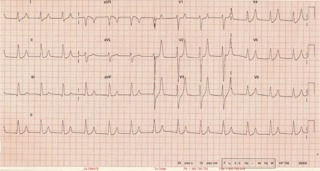
Podcast 799: EKG Abnormalities in Renal Failure

Podcast 799: EKG Abnormalities in Renal Failure

Contributor: Peter Bakes, MD Educational Pearls: Patients in renal failure may have elevated serum potassium levels which can result in EKG changes. EKG changes in the setting of hyperkalemia gener...

19 Heinä 20224min
Podcast 797: Vitamin C in Sepsis

Podcast 797: Vitamin C in Sepsis

Contributor: Aaron Lessen, MD Educational Pearls: Prior, smaller studies showed intravenous Vitamin C given to patients with sepsis significantly improved patient mortality and additional outcomes. ...

12 Heinä 20222min
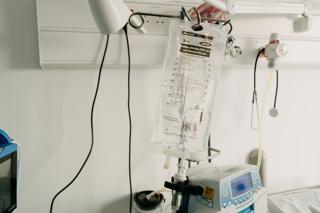
Podcast 796: Fluid Amounts in Septic Shock

Podcast 796: Fluid Amounts in Septic Shock

Contributor: Aaron Lessen, MD Educational Pearls: Septic shock management has traditionally endorsed rapid fluid resuscitation and the administration of vasopressors Current guidelines are for patien...

11 Heinä 20223min

Suosittua kategoriassa Tiede

tiedekulma-podcast
rss-mita-tulisi-tietaa
rss-poliisin-mieli
docemilia
radio-antro
utelias-mieli
rss-sosiopodi
ihanat-ipanat
mielipaivakirja
filocast-filosofian-perusteet
rss-bios-podcast
rss-laakaripodi
rss-radplus
rss-opeklubi