Podcast 862: How to Apply a Painful Stimulus

Podcast 862: How to Apply a Painful Stimulus

Contributor: Travis Barlock MD

Educational Pearls:

When might you need to apply a painful stimulus in a medical setting?

  • The main reason is to assess the patient's level of consciousness, such as when they are waking up from anesthesia or have potentially suffered a brain injury.

  • It can be part of the Glasgow Coma Scale (GCS) if patients are not responding to auditory stimuli.

  • Possible levels of consciousness include Alert, Lethargic, Obtunded, and Comatose (ALOC)

What are the approved ways to apply a painful stimulus to assess central nervous system function?

  • Trapezius squeeze. Grab the trapezius muscle and twist (contraindicated in clavicle fractures).

  • Supraorbital rim pressure. Find the notch in the supraorbital rim of the patient and push hard with your thumb (contraindicated in facial fractures).

  • Mandibular pressure (not mentioned). Press hard at the angle of the jaw on the mandibular nerve (contraindicated in mandible fractures).

  • Sternal rub. Push down with your knuckles into the patient's sternum and rub vigorously (contraindicated in chest injury/surgery).

  • Each technique should be done for between 15 and 30 seconds.

  • If skin damage is observed in one location, move to a different location. This is especially true of the sternal rub.

Important note: Peripheral techniques such as nail tip pressure should only be used to evaluate spinal nerve reflexes and not as a method of assessing the level of consciousness.

References

  1. Lower J. Using pain to assess neurologic response. Nursing. 2003 Jun;33(6):56-7. doi: 10.1097/00152193-200306000-00047. PMID: 12799591.

  2. Middleton PM. Practical use of the Glasgow Coma Scale; a comprehensive narrative review of GCS methodology. Australas Emerg Nurs J. 2012 Aug;15(3):170-83. doi: 10.1016/j.aenj.2012.06.002. Epub 2012 Aug 3. PMID: 22947690.

  3. Mistovich JJ, Krost W, Limmer DD. Beyond the basics: patient assessment. Emerg Med Serv. 2006 Jul;35(7):72-7; quiz 78-9. PMID: 16878751.

  4. Naalla R, Chitirala P, Chittaluru P, Atreyapurapu V. Sternal rub causing presternal abrasion in a patient with capsuloganglionic haemorrhage. BMJ Case Rep. 2014 Apr 7;2014:bcr2014204028. doi: 10.1136/bcr-2014-204028. PMID: 24711478; PMCID: PMC3987201.

Summarized by Jeffrey Olson, MS2 | Edited by Jorge Chalit, OMSII

Jaksot(1145)

Podcast 686: Vaginal Self Swabs

Podcast 686: Vaginal Self Swabs

Contributor: Jared Scott, MD Educational Pearls: Recent study evaluated vaginal self swab testing for STIs to determine if they are equally sensitive to provider-obtained swab 515 patients consented ...

29 Kesä 20213min

Podcast 685: Cultural Sensitivity with LGBTIQ+ Patients

Podcast 685: Cultural Sensitivity with LGBTIQ+ Patients

Contributor: Dr. Nick Gorton, MD Educational Pearls: Use transgender people's correct names and pronouns, the Russell study found a 56% reduction in suicide behavior with chosen name usage ⅕ to ½ of ...

28 Kesä 202110min
Podcast 684: Acidosis

Podcast 684: Acidosis

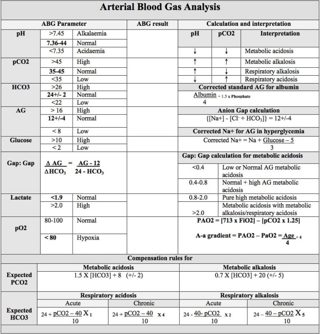
Contributor:  Nick Tsipis, MD Educational Pearls: pH 7.45=alkalemia If pH low and pCO2 high, indicates a respiratory acidosis If pH low and pCO2 low, indicates metabolic acidosis After determining ty...

23 Kesä 20216min
Podcast 683: Zofran vs. Haldol for Cannabinoid Hyperemesis Syndrome

Podcast 683: Zofran vs. Haldol for Cannabinoid Hyperemesis Syndrome

Contributor: Jared Scott, MD Educational Pearls: Around 30 patients with cannabinoid hyperemesis syndrome (CHS) randomized treatment in three arms with 8mg Zofran, Haldol 0.05 mg/kg, and Haldol 0.1 ...

22 Kesä 20215min

Podcast 682: Snake Bites

Podcast 682: Snake Bites

Contributor: Gretchen Hinson, MD Educational Pearls: Pit vipers include cottonmouths, rattlesnakes, and copperheads All have folding long fangs, triangular face, and elliptical pupils About 5,00...

21 Kesä 20216min
Podcast 681: Internal Hernias

Podcast 681: Internal Hernias

Contributor: Adam Barkin, MD Educational Pearls: Internal hernias, when bowel herniates through iatrogenic or congenital defect in mesentery, represent 1-6% of all small bowel obstructions Mortality...

16 Kesä 20215min
Podcast 680: Coronary Artery Dissection

Podcast 680: Coronary Artery Dissection

Contributor: Adam Barkin, MD Educational Pearls: Spontaneous coronary artery dissection (SCAD) is the most common cause of acute MI in women under 50 years old Risk factors include fibromuscular dys...

15 Kesä 20214min
Podcast 679: Antibiotics for CAP

Podcast 679: Antibiotics for CAP

Contributor: Peter Bakes, MD Educational Pearls: Community-acquired pneumonia (CAP) is normally stratified into outpatient-candidates vs. inpatient candidates for treatment For outpatient treatment,...

9 Kesä 20217min

Suosittua kategoriassa Tiede

tiedekulma-podcast
rss-mita-tulisi-tietaa
rss-poliisin-mieli
docemilia
radio-antro
rss-duodecim-lehti
rss-ammamafia
rss-sosiopodi
utelias-mieli
ihanat-ipanat
mielipaivakirja
filocast-filosofian-perusteet
rss-bios-podcast
rss-tiedetta-vai-tarinaa