
Episode 868: Airway Management in Obesity

Episode 868: Airway Management in Obesity

Contributor: Aaron Lessen MD

Educational Pearls:

Why is airway management more difficult in obesity?

  • Larger body habitus causes the chest to be above the head when the patient is lying supine, creating difficult angles for intubation.

  • Reduced Functional Residual Capacity (FRC) causes these patients to deoxygenate much more quickly, reducing the amount of time during which the intubation can take place.

What special considerations need to be made?

  • Positioning. The auditory canal and sternal notch should be aligned in a horizontal plane. Do this by stacking blankets to lift the neck and head. Also, try to make the head itself parallel to the ceiling.

  • Pre-oxygenation. Use Bi-level Positive Airway Pressure (BiPAP) with Positive End Expiratory Pressure (PEEP) or a Bag-Valve-Mask (BVM) with a PEEP valve. PEEP helps prevent alveoli from collapsing after every breath and improves oxygenation.

  • Dosing of paralytics. Succinylcholine is dosed on total body weight so the dose will be much larger for the obese patient. Rocuronium is dosed on ideal body weight, but adjusted body weight may also be used in obese cases.

References

  1. De Jong A, Wrigge H, Hedenstierna G, Gattinoni L, Chiumello D, Frat JP, Ball L, Schetz M, Pickkers P, Jaber S. How to ventilate obese patients in the ICU. Intensive Care Med. 2020 Dec;46(12):2423-2435. doi: 10.1007/s00134-020-06286-x. Epub 2020 Oct 23. PMID: 33095284; PMCID: PMC7582031.

  2. Langeron O, Birenbaum A, Le Saché F, Raux M. Airway management in obese patient. Minerva Anestesiol. 2014 Mar;80(3):382-92. Epub 2013 Oct 14. PMID: 24122033.

  3. Sharma S, Arora L. Anesthesia for the Morbidly Obese Patient. Anesthesiol Clin. 2020 Mar;38(1):197-212. doi: 10.1016/j.anclin.2019.10.008. Epub 2020 Jan 2. PMID: 32008653.

  4. Singer BD, Corbridge TC. Basic invasive mechanical ventilation. South Med J. 2009 Dec;102(12):1238-45. doi: 10.1097/SMJ.0b013e3181bfac4f. PMID: 20016432.

Summarized by Jeffrey Olson, MS2 | Edited by Jorge Chalit, OMSII

Jaksot(1146)

Podcast #221: Walking Corpse Syndrome

Podcast #221: Walking Corpse Syndrome

Podcast #221: Walking Corpse Syndrome Author: Erik Verzemnieks, M.D. Educational Pearls Walking Corpse Syndrome (aka Cotard Delusion) is a very rare psychiatric disorder that leads to the belief that...

25 Kesä 20171min

Podcast #220: A-Fib Cardioversion

Podcast #220: A-Fib Cardioversion

Author: Aaron Lessen, M.D. Educational Pearls Atrial fibrillation is common. One of the best treatments for a fib is cardioversion back into sinus rhythm. Cardioversion may increase stroke risk if A-...

23 Kesä 20172min
Podcast #219: History of Sepsis

Podcast #219: History of Sepsis

Author: Chris Holmes, M.D. Educational Pearls "Sepo' is a term from Homer (author of The Iliad and The Odyssey), and means "I rot". Hippocrates in 400 BC identified sepsis as a "dangerous decay withi...

21 Kesä 20176min

Podcast #218: Estimating Pediatric Weight

Podcast #218: Estimating Pediatric Weight

Author: Aaron Lessen, M.D. Educational Pearls Asking parents and Broselow Tape are common options for estimating pediatric weight. Equipment sizes should not be adjusted for under/overweight kids bas...

19 Kesä 20172min
Podcast #217: Designer Drugs

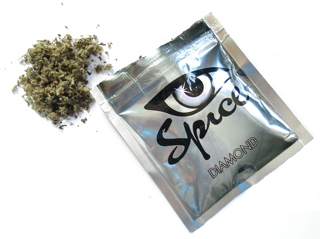
Podcast #217: Designer Drugs

Author: John Winkler, M.D. Educational Pearls: Designer, or "synthetic" drugs include bath salts, synthetic THC, and many others. Many of these drugs are originally manufactured in China and are ship...

17 Kesä 20173min

Podcast #216: Roller Coasters and Kidney Stones

Podcast #216: Roller Coasters and Kidney Stones

Author: Aaron Lessen, M.D. Educational Pearls: Anecdotal evidence suggests that roller coasters may help with kidney stones. A recent study used a model of a kidney and ureter with different sized s...

13 Kesä 20171min

Opioid MIniseries Part IV: Harm Reduction

Opioid MIniseries Part IV: Harm Reduction

PRACTICE RECOMMENDATIONS 1. Patients who abuse opioids should be managed without judgement; addiction is a medical condition and not a moral failing. Caregivers should endeavor to meet patients "where...

8 Kesä 201748min
Opioid Miniseries Part III: Alternative to Opioids

Opioid Miniseries Part III: Alternative to Opioids

PRACTICE RECOMMENDATIONS 1. All emergency departments should implement ALTO programs and provide opioid-free pain treatment pathways for the following conditions: a. Acute on chronic opioid-tolerant r...

8 Kesä 201749min

Suosittua kategoriassa Tiede

tiedekulma-podcast
rss-poliisin-mieli
rss-mita-tulisi-tietaa
docemilia
rss-duodecim-lehti
rss-luontopodi-samuel-glassar-tutkii-luonnon-ihmeita
utelias-mieli
radio-antro
rss-astetta-parempi-elama-podcast
rss-lapsuuden-rakentajat-podcast
rss-lihavuudesta-podcast
rss-sosiopodi












