Mental Health Monthly #17: Mania

Mental Health Monthly #17: Mania

Contributors:

Andrew White MD - Outpatient Psychiatrist; Fellowship Trained in Addiction Psychiatry; Denver Health

Travis Barlock MD - Emergency Medicine Physician; Swedish Medical Center

Summary

In this episode of Mental Health Monthly, Dr. Travis Barlock hosts Dr. Andrew White to discuss the elements of mania that may be encountered in the emergency department. The discussion includes a helpful mnemonic to assess mania, work-up and treatment in the ED, underlying causes of mania, mental health holds, inpatient treatment, and the role of sleep in mania.

Educational Pearls

  • Initial assessment of suspected mania can be done via DIGFAST:

    • Distractibility - Individual that is unable to carry a linear, goal-directed conversation

    • Impulsivity - Executive functioning is impaired and patients are unable to control their behaviors

    • Grandiosity - Elevated mood and sense of self to delusions of grandeur

    • Flight of ideas - Usually described as racing thoughts

    • Agitation - Increase in psychomotor activity; start several projects of which they have little previous knowledge

    • Sleep decrease - Typically, manic episodes start with insomnia and can devolve into multiday sleeplessness

    • Talkativeness - More talkative than usual with pressured speech and a tangential thought process

  • Interviewing patients requires an understanding of mood-based mania vs. psychosis-based mania

    • An individual with mood-based mania will more likely be restless, whereas a patient with psychosis-based mania will be more relaxed from a psychomotor standpoint

  • Treatment of manic patients in the ED includes the use of antipsychotics to manage acute symptomatology

    • Management can be informed and directed by the patient's history i.e. known medications that have worked for the patient

  • ED management of manic patients involves a work-up for a broad differential including agitated delirium, substance-induced mania, metabolic disorders, and autoimmune diseases.

  • Some individuals experience manic episodes from marijuana and other illicit substances

  • Antidepressants used in bipolar patients for suspected depression may induce mania

    • Important to avoid using antidepressants as first-line therapy

  • Mental health holds can be beneficial in patients with grave disabilities from mania

    • Oftentimes, undertreatment of manic episodes leads to re-hospitalization

  • Inpatient treatment:

    • Environment is important - ensure that patients get solo rooms if possible to minimize stimulation

    • Antipsychotics, including risperidone and olanzapine, with or without a benzodiazepine, are useful for short-term agitation

    • Long-term treatment involves coupled pharmacological treatments with non-pharmacological treatments

  • Sleep

    • Fractured sleep is one of the earliest warning signs that someone has an imminent manic episode

    • Poor sleep can be an inciting factor for mania, which then turns into a cycle that further propagates a patient's manic episode

Summarized and edited by Jorge Chalit, OMSII | Studio production by Jeffrey Olson, MS2

Jaksot(1146)

Podcast #194: Atruamatic ICH

Podcast #194: Atruamatic ICH

Author: Peter Bakes, M.D Educational Pearls Intracerebral hemorrhage is an intracranial bleed within the brain tissue or ventricles. Subarachnoid aneurysm causes about 50% of all ICH. Amyloid deposit...

24 Huhti 20179min

Podcast #193: The Quick Wee

Podcast #193: The Quick Wee

Author: JP Brewer M.D. Educational Pearls: The "Quick Wee" was a method to get urine out of infants who need to have a UA in the Emergency Department. A randomized-controlled experiment was done with...

22 Huhti 20172min

Podcast #192: Back Fat Hernia

Podcast #192: Back Fat Hernia

Author: Jared Scott M.D. Educational Pearls: There are two anatomical triangles on the back, the inferior lumbar triangle and the superior lumbar triangle. Herniation occurs whenever something moves ...

20 Huhti 20173min
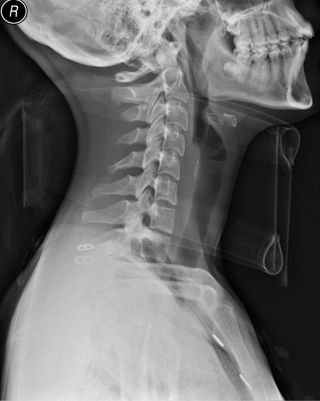
Podcast #191: Blunt Cervical Trauma

Podcast #191: Blunt Cervical Trauma

Author: Chris Holmes M.D. Educational Pearls: Mechanism of injury involves hyperextension/hyperflexion Pathophysiology: inside of the arteries in the neck becomes disrupted, similar to a dissection. ...

18 Huhti 20172min
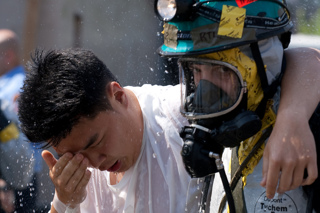
Deep Dive #2: Biological Terrorism

Deep Dive #2: Biological Terrorism

Author: Michael Hunt M.D. Dr. Hunt shares his wealth of experience with biological terrorism over the course of his career.

16 Huhti 201728min
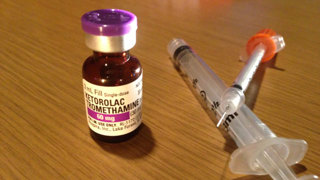
Podcast #190: Toradol Dosing

Podcast #190: Toradol Dosing

Author: Rachel Duncan, PharmD BCPS Educational Pearls: Toradol (Ketorolac) is an NSAID used for its anti-inflammatory properties In practice, the common dosages are 30mg IV or 60mg IM. Clinical conce...

14 Huhti 20172min

Podcast #189: Caffeine

Podcast #189: Caffeine

Author: Donald Stader M.D. Educational Pearls: Coffee originates from Ethiopia. Its "active ingredient" is caffeine. Caffeine is a xanthine alkaloid used in medicine to control headache and as a neo...

12 Huhti 20173min

Podcast #188: Monoarthritis

Podcast #188: Monoarthritis

Author: Peter Bakes M.D. Educational Pearls: Some common causes of monoarticular arthritis include: crystal arthropathies (gout and pseudogout), infection (septic joint), reactive arthritis and acute...

10 Huhti 20175min

Suosittua kategoriassa Tiede

rss-poliisin-mieli
tiedekulma-podcast
rss-mita-tulisi-tietaa
docemilia
rss-luontopodi-samuel-glassar-tutkii-luonnon-ihmeita
rss-duodecim-lehti
utelias-mieli
radio-antro
rss-astetta-parempi-elama-podcast
rss-lapsuuden-rakentajat-podcast
rss-lihavuudesta-podcast
rss-sosiopodi