Episode 900: Ketamine Dosing

Episode 900: Ketamine Dosing

Contributor: Travis Barlock MD

Educational Pearls:

Ketamine is an NMDA receptor antagonist with a wide variety of uses in the emergency department. To dose ketamine remember the numbers 0.3, 1, and 3.

Pain dose

  • For acute pain relief administer 0.3 mg/kg of ketamine IV over 10-20 minutes (max of 30 mg).

  • Note: There is evidence that a lower dose of 0.1-0.15 mg/kg can be just as effective.

Dissociative dose

  • To use ketamine as an induction agent for intubation or for procedural sedation administer 1 mg/kg IV over 1-2 minutes.

IM for acute agitation

  • If a patient is out of control and a danger to themselves or others, administer 3 mg/kg intramuscularly (max 500 mg).

  • If you are giving IM ketamine it has to be in the concentrated 100 mg/ml vial.

Additional pearls

  • Pushing ketamine too quickly can cause laryngospasm.

  • Between .3 and 1 mg/kg is known as the recreational dose. You want to avoid this range because this is where ketamine starts to pick up its dissociative effects and can cause unpleasant and intense hallucinations. This is colloquially known as being in the "k-hole".

References

  1. Gao, M., Rejaei, D., & Liu, H. (2016). Ketamine use in current clinical practice. Acta pharmacologica Sinica, 37(7), 865–872. https://doi.org/10.1038/aps.2016.5

  2. Lin, J., Figuerado, Y., Montgomery, A., Lee, J., Cannis, M., Norton, V. C., Calvo, R., & Sikand, H. (2021). Efficacy of ketamine for initial control of acute agitation in the emergency department: A randomized study. The American journal of emergency medicine, 44, 306–311. https://doi.org/10.1016/j.ajem.2020.04.013

  3. Stirling, J., & McCoy, L. (2010). Quantifying the psychological effects of ketamine: from euphoria to the k-Hole. Substance use & misuse, 45(14), 2428–2443. https://doi.org/10.3109/10826081003793912

Summarized by Jeffrey Olson MS2 | Edited by Jorge Chalit, OMS II

Jaksot(1144)

Podcast 840: Abnormal Pediatric Vitals at Discharge

Podcast 840: Abnormal Pediatric Vitals at Discharge

Contributor: Aaron Lessen, MD Educational Pearls: Pediatric patients frequently have vital signs considered abnormal for age at discharge Large multicenter study recently evaluated if pediatric patie...

29 Joulu 20223min
Podcast 839: Causes of Pancreatitis

Podcast 839: Causes of Pancreatitis

Contributor: Travis Barlock, MD Educational Pearls: The causes of pancreatitis can be remembered with the mnemonic: "GET SMASHED" G: Gallstones (Most common cause of pancreatitis overall) E: Ethan...

19 Joulu 20223min
Podcast 838: Sternoclavicular Septic Arthritis

Podcast 838: Sternoclavicular Septic Arthritis

Contributor: Aaron Lessen, MD Educational Pearls: Septic arthritis of the sternoclavicular joint is uncommon accounting for Immunosuppression and IV drug use increases the risk  Can account for up ...

13 Joulu 20224min

Podcast 837: Snakebites

Podcast 837: Snakebites

Contributor: Meghan Hurley, MD Educational Pearls: Venomous snakes in the United States include species from the family Elapidae and subfamily Crotalinae In prehospital setting, elevate the bitten ex...

12 Joulu 20226min

Podcast 836: Humming to get EJ

Podcast 836: Humming to get EJ

Contributor: Jared Scott, MD Educational Pearls: Two conventional ways to aid in external jugular vein (EJ) catheter placement are Trendelenburg's position and Valsalva's maneuver by patient One stu...

6 Joulu 20223min
Podcast 835: Syncope Review

Podcast 835: Syncope Review

Contributor: Meghan Hurley, MD Educational Pearls: Syncope is defined as a loss of consciousness with an immediate return to baseline Differential is broad Cardiogenic Structural (aortic stenosis, ...

5 Joulu 20226min
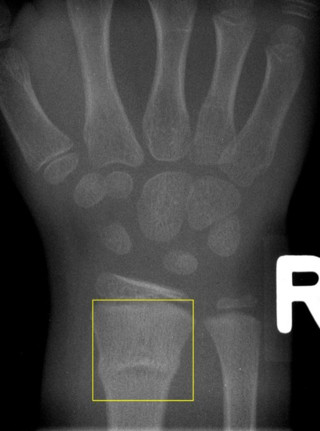
Podcast 834:  Peds Buckle Fractures

Podcast 834: Peds Buckle Fractures

Contributor: Aaron Lessen, MD Educational Pearls: Torus (Buckle) fractures are a commonly encountered pediatric fracture pattern Typically presents as wrist pain secondary to a child falling on outs...

29 Marras 20223min

Podcast 833: NS vs LR

Podcast 833: NS vs LR

Contributor: Travis Barlock, MD Educational Pearls: Normal Saline (NS) contains 154 mEq of both Sodium (Na) and Chloride (Cl), and has a pH of 5.5 Normal Na and Cl in adult humans are about 140 mEq...

28 Marras 20225min

Suosittua kategoriassa Tiede

rss-mita-tulisi-tietaa
tiedekulma-podcast
rss-poliisin-mieli
docemilia
rss-duodecim-lehti
utelias-mieli
filocast-filosofian-perusteet
rss-laakaripodi
rss-opeklubi
rss-lihavuudesta-podcast
rss-sosiopodi
sotataidon-ytimessa
mielipaivakirja
radio-antro
rss-radplus
rss-luontopodi-samuel-glassar-tutkii-luonnon-ihmeita