Episode 916: Central Cord Syndrome

Episode 916: Central Cord Syndrome

Contributor: Taylor Lynch, MD

Educational Pearls:

What is Central Cord Syndrome (CCS)?

  • Incomplete spinal cord injury caused by trauma that compresses the center of the cord

  • More common in hyperextension injuries like falling and hitting the chin

  • Usually happens only in individuals with preexisting neck and spinal cord conditions like cervical spondylosis (age-related wear and tear of the cervical spine)

Anatomy of spinal cord

  • Motor tracts

    • The signals the brain sends for the muscles to move travel in the corticospinal tracts of the spinal cord

    • The tracts that control the upper limbs are more central than the ones that control the lower limbs

    • The tracts that control the hands are more central than the ones that control the upper arm/shoulder

  • Fine touch, vibration, and proprioception (body position) tracts

    • These sensations travel in separate tracts in the spinal cord than the sensation of pain and temperature

    • Their pathway is called the dorsal column-medial lemniscus (DCML) pathway

    • This information travels in the most posterior aspect of the spinal cord

  • Pain, crude touch, pressure, and temperature tracts

    • These sensations travel in the spinothalamic tract, which is more centrally located

    • These signals also cross one side of the body to the other within the spinal cord near the level that they enter

How does this anatomy affect the presentation of CCS?

  • Patients typically experience more pronounced weakness or paralysis in their upper extremities as compared to their lower extremities with their hands being weaker than more proximal muscle groups

  • Sensation of pain, crude touch, pressure, and temperature are much morelikely to be diminished while the sensation of fine touch, vibration, and proprioception are spared

What happens with reflexes?

  • Deep tendon reflexes become exaggerated in CCS

  • This is because the disruption in the corticospinal tract removes inhibitory control over reflex arcs

What happens to bladder control?

  • The neural signals that coordinate bladder emptying are disrupted, therefore patients can present with urinary retention and/or urge incontinence

What is a Babinski's Sign?

  • When the sole of the foot is stimulated a normal response in adults is for the toes to flex downward (plantar flexion)

  • If there is an upper motor neuron injury like in CCS, the toes will flex upwards (dorsiflexion)

How is CCS diagnosed?

  • CCS is mostly a clinical diagnosis

  • These patient also need an MRI to see the extent of the damage which will show increased signal intensity within the central part of the spinal cord on T2-weighted images

How is CCS treated?

  • Strict c-spine precautions

  • Neurogenic shock precautions. Maintain a mean arterial pressure (MAP) of 85-90 to ensure profusion of the spinal cord

  • Levophed (norepinephrine bitartrate) and/or phenylephrine can be used to support their blood pressure to support spinal perfusion

  • Consider intubation for injuries above C5 (C3, 4, and 5 keep the diaphragm alive)

  • Consult neurosurgery for possible decompression surgery

  • Physical Therapy

References

  1. Avila, M. J., & Hurlbert, R. J. (2021). Central Cord Syndrome Redefined. Neurosurgery clinics of North America, 32(3), 353–363. https://doi.org/10.1016/j.nec.2021.03.007

  2. Brooks N. P. (2017). Central Cord Syndrome. Neurosurgery clinics of North America, 28(1), 41–47. https://doi.org/10.1016/j.nec.2016.08.002

  3. Engel-Haber, E., Snider, B., & Kirshblum, S. (2023). Central cord syndrome definitions, variations and limitations. Spinal cord, 61(11), 579–586. https://doi.org/10.1038/s41393-023-00894-2

Summarized by Jeffrey Olson, MS3 | Edited by Jorge Chalit, OMS3

Donate: https://emergencymedicalminute.org/donate/

Jaksot(1145)

Podcast #235: ER Discharge and Mortality

Podcast #235: ER Discharge and Mortality

Author: Pete Bakes, M.D. Educational Pearls One of the roles of the ER provider is to discharge patients only after life-threatening conditions have been ruled out. However, some patients that are di...

5 Elo 20176min
Podcast #234: CIN AEM Study

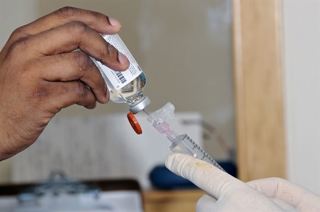
Podcast #234: CIN AEM Study

Author: Dylan Luyten, M.D. Educational Pearls Around 30% of patients in the ER receive CT imaging, and the sensitivity of CT imaging may be improved with IV contrast. However, contrast is often withh...

3 Elo 20173min
Podcast #233: Carfentanil

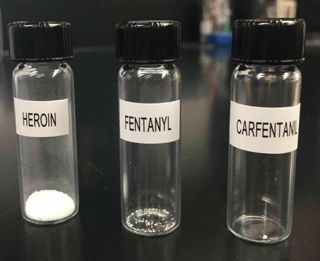
Podcast #233: Carfentanil

Author: Don Stader, M.D. and Rachael Duncan, PharmD BCPS BCCCP Educational Pearls Carfentanil is an opioid elephant tranquilizer that can be used recreationally. It is 1000 times stronger than fenta...

1 Elo 20174min

Podcast #232: HAPE

Podcast #232: HAPE

Author: Gretchen Hinson, M.D. Educational Pearls High-Altitude Pulmonary Edema (HAPE) is caused when hypoxemia due to low ambient pO2 leads to breakdown and constriction of the pulmonary vasculature ...

30 Heinä 20176min
Podcast #231: Esophageal Tearing

Podcast #231: Esophageal Tearing

Author: Jared Scott, M.D. Educational Pearls Boerhaave syndrome (aka effort rupture of the esophagus) accounts for 10% of esophageal ruptures and is usually caused by strain during vomiting episodes....

28 Heinä 20174min
Podcast #230: Concussive Treatment

Podcast #230: Concussive Treatment

Author: Aaron Lessen, M.D. Educational Pearls 2 studies this past year looked at pediatric and adolescent patients following a concussion. They found people who returned to activity sooner did better...

26 Heinä 20172min
Podcast #229: Andrew Jackson

Podcast #229: Andrew Jackson

Author: Sam Killian, M.D. Educational Pearls Andrew Jackson was the 7th president of the USA. He served 2 terms from 1829-1837. He had had many medical issues during his presidency. He was said to be...

24 Heinä 20175min
Podcast #228: BB Guns

Podcast #228: BB Guns

Author: Jared Scott, M.D. Educational Pearls BB gun eye injuries are most common in August and September. They most often happen to males aged 16-17 year old. Around 10% of the BB eye injuries lead t...

22 Heinä 20174min

Suosittua kategoriassa Tiede

tiedekulma-podcast
rss-mita-tulisi-tietaa
rss-poliisin-mieli
docemilia
radio-antro
utelias-mieli
rss-sosiopodi
ihanat-ipanat
mielipaivakirja
filocast-filosofian-perusteet
rss-bios-podcast
rss-laakaripodi
rss-radplus
rss-opeklubi