
Episode 916: Central Cord Syndrome

Episode 916: Central Cord Syndrome

Contributor: Taylor Lynch, MD

Educational Pearls:

What is Central Cord Syndrome (CCS)?

  • Incomplete spinal cord injury caused by trauma that compresses the center of the cord

  • More common in hyperextension injuries like falling and hitting the chin

  • Usually happens only in individuals with preexisting neck and spinal cord conditions like cervical spondylosis (age-related wear and tear of the cervical spine)

Anatomy of spinal cord

  • Motor tracts

    • The signals the brain sends for the muscles to move travel in the corticospinal tracts of the spinal cord

    • The tracts that control the upper limbs are more central than the ones that control the lower limbs

    • The tracts that control the hands are more central than the ones that control the upper arm/shoulder

  • Fine touch, vibration, and proprioception (body position) tracts

    • These sensations travel in separate tracts in the spinal cord than the sensation of pain and temperature

    • Their pathway is called the dorsal column-medial lemniscus (DCML) pathway

    • This information travels in the most posterior aspect of the spinal cord

  • Pain, crude touch, pressure, and temperature tracts

    • These sensations travel in the spinothalamic tract, which is more centrally located

    • These signals also cross one side of the body to the other within the spinal cord near the level that they enter

How does this anatomy affect the presentation of CCS?

  • Patients typically experience more pronounced weakness or paralysis in their upper extremities as compared to their lower extremities with their hands being weaker than more proximal muscle groups

  • Sensation of pain, crude touch, pressure, and temperature are much morelikely to be diminished while the sensation of fine touch, vibration, and proprioception are spared

What happens with reflexes?

  • Deep tendon reflexes become exaggerated in CCS

  • This is because the disruption in the corticospinal tract removes inhibitory control over reflex arcs

What happens to bladder control?

  • The neural signals that coordinate bladder emptying are disrupted, therefore patients can present with urinary retention and/or urge incontinence

What is a Babinski's Sign?

  • When the sole of the foot is stimulated a normal response in adults is for the toes to flex downward (plantar flexion)

  • If there is an upper motor neuron injury like in CCS, the toes will flex upwards (dorsiflexion)

How is CCS diagnosed?

  • CCS is mostly a clinical diagnosis

  • These patient also need an MRI to see the extent of the damage which will show increased signal intensity within the central part of the spinal cord on T2-weighted images

How is CCS treated?

  • Strict c-spine precautions

  • Neurogenic shock precautions. Maintain a mean arterial pressure (MAP) of 85-90 to ensure profusion of the spinal cord

  • Levophed (norepinephrine bitartrate) and/or phenylephrine can be used to support their blood pressure to support spinal perfusion

  • Consider intubation for injuries above C5 (C3, 4, and 5 keep the diaphragm alive)

  • Consult neurosurgery for possible decompression surgery

  • Physical Therapy

References

  1. Avila, M. J., & Hurlbert, R. J. (2021). Central Cord Syndrome Redefined. Neurosurgery clinics of North America, 32(3), 353–363. https://doi.org/10.1016/j.nec.2021.03.007

  2. Brooks N. P. (2017). Central Cord Syndrome. Neurosurgery clinics of North America, 28(1), 41–47. https://doi.org/10.1016/j.nec.2016.08.002

  3. Engel-Haber, E., Snider, B., & Kirshblum, S. (2023). Central cord syndrome definitions, variations and limitations. Spinal cord, 61(11), 579–586. https://doi.org/10.1038/s41393-023-00894-2

Summarized by Jeffrey Olson, MS3 | Edited by Jorge Chalit, OMS3

Donate: https://emergencymedicalminute.org/donate/

Jaksot(1145)

Podcast 587:  Puppies Preventing Burnout?

Podcast 587: Puppies Preventing Burnout?

Contributor: Jared Scott, MD Educational Pearls: Burnout happens. This study reminds us to take a few minutes on shift to take care of yourself. A new study looked at burnout in ER nurses, residents,...

17 Elo 20204min
On the Streets #7: Burns in the Pre-Hospital and ED Setting

On the Streets #7: Burns in the Pre-Hospital and ED Setting

Burns are low-volume, high-acuity injuries that require special attention and care from the pre-hospital team to the Emergency Department and finally to a dedicated burn unit and ICU. As a first respo...

12 Elo 202048min
Podcast 586:  Toxic Shock Syndrome

Podcast 586: Toxic Shock Syndrome

Contributor: Don Stader, MD Educational Pearls: Toxic shock syndrome (TSS) is a rare cause of shock typically caused by Staph aureus or Strep pyogenes, that produces a toxin that leads to rapid onset...

11 Elo 20206min
Podcast 585:  You Sure You Want Colchicine for Gout?

Podcast 585: You Sure You Want Colchicine for Gout?

Contributor: Don Stader, MD Educational Pearls: Gout is an arthritis caused by the deposition of urate crystals into the joint space Colchicine works by disrupting microtubules and prevents white blo...

10 Elo 20203min
Podcast 584:  Ketamine for Depression and Suicidality

Podcast 584: Ketamine for Depression and Suicidality

Contributor: Jared Scott, MD Educational Pearls: Suicide is currently the 10th leading cause of death in the US  Low quality studies have reported ketamine as a potential promising agent in treating ...

4 Elo 20203min
Podcast 583:  Raise Your Hands if You Have Carpal Tunnel Syndrome

Podcast 583: Raise Your Hands if You Have Carpal Tunnel Syndrome

Contributor: Aaron Lessen, MD Educational Pearls: Hand raising test: a simple but effective tool to diagnose carpal tunnel  Patients hold their hands over their head and if symptoms of carpal tunnel ...

3 Elo 20202min
Rapid Fire Pharmacy Review with Adis Keric of ER-Rx

Rapid Fire Pharmacy Review with Adis Keric of ER-Rx

Meet Adis Keric, Board Certified Pharmacotherapy Specialist and a Board Certified Critical Care pharmacist who works in the Emergency Department and ICU of level 1 trauma center Regions Hospital in Sa...

29 Heinä 202018min
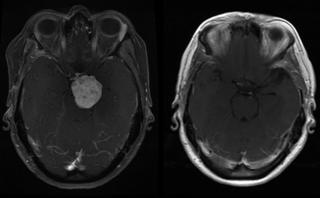
Podcast 582:  Gadolinium - The Contrast of MRI

Podcast 582: Gadolinium - The Contrast of MRI

Contributor: Michael Hunt, MD Educational Pearls: Contrast agents are commonly used for X-rays and CT's to better characterize disease, but contrast doesn't work with MRI. That's where the element Ga...

28 Heinä 20204min

Suosittua kategoriassa Tiede

tiedekulma-podcast
rss-mita-tulisi-tietaa
rss-poliisin-mieli
docemilia
radio-antro
utelias-mieli
filocast-filosofian-perusteet
rss-sosiopodi
ihanat-ipanat
mielipaivakirja
rss-bios-podcast
rss-duodecim-lehti
rss-ammamafia
rss-laakaripodi
rss-opeklubi