Episode 918: Automated Blood Pressure Cuffs

Episode 918: Automated Blood Pressure Cuffs

Contributor: Aaron Lessen, MD

Educational Pearls:

How does an automated blood pressure cuff work?

  • Automated blood pressure cuffs work differently than taking a manual blood pressure.

  • While taking a manual blood pressure, one typically listens for Korotkoff sounds (turbulent flow) while slowly deflating the cuff.

  • An automatic blood pressure cuff only senses the pressure in the cuff itself and specifically pays attention to oscillations in the pressure caused by when the pressure of the cuff is between the systolic (heart squeezing) and diastolic (heart relaxed) pressures.

  • These oscillations are at a maximum when the pressure in the cuff matches the mean arterial pressure (MAP) and therefore the machines are most accurate at reporting the MAP.

  • The machines then use the MAP and other information about the oscillations to estimate the systolic and diastolic pressures, which are less accurate.

What should you do if you need more accurate systolic and diastolic blood pressures?

  • Take a manual blood pressure.

  • Get an arterial-line (a-line), which provides continuous data for the blood pressure at the end of a catheter.

What happens if the cuff is too big or too small for the patient?

  • If the cuff is too small it will overestimate the pressure.

  • If the cuff is too large it will underestimate the pressure.

What should you do if the cuff cycles a bunch of times before reporting a blood pressure?

  • It probably isn't very accurate so consider another method.

Bonus fact!

  • The MAP is not directly in the middle of the systolic and diastolic pressures but is weighted towards the diastolic pressure. The MAP can be calculated by adding two-thirds of the diastolic pressure to one third of the systolic pressure. For example if the BP is 120/90 the MAP is 100 mmHg.

References

  1. Benmira, A., Perez-Martin, A., Schuster, I., Aichoun, I., Coudray, S., Bereksi-Reguig, F., & Dauzat, M. (2016). From Korotkoff and Marey to automatic non-invasive oscillometric blood pressure measurement: does easiness come with reliability?. Expert review of medical devices, 13(2), 179–189. https://doi.org/10.1586/17434440.2016.1128821

  2. Liu, J., Li, Y., Li, J., Zheng, D., & Liu, C. (2022). Sources of automatic office blood pressure measurement error: a systematic review. Physiological measurement, 43(9), 10.1088/1361-6579/ac890e. https://doi.org/10.1088/1361-6579/ac890e

  3. Vilaplana J. M. (2006). Blood pressure measurement. Journal of renal care, 32(4), 210–213. https://doi.org/10.1111/j.1755-6686.2006.tb00025.x

Summarized by Jeffrey Olson, MS3 | Edited by Meg Joyce, MS1 & Jorge Chalit, OMS3

Donate: https://emergencymedicalminute.org/donate/

Jaksot(1145)

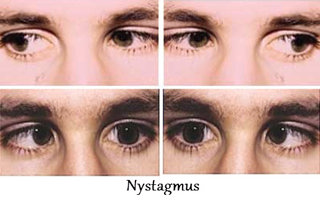
Podcast #318: Nystagmus

Podcast #318: Nystagmus

Author: Erik Verzemnieks, M.D. Educational Pearls: ● Common causes of nystagmus: Congenital disorders, CNS diseases (MS, CVA), Intoxication ● Drugs associated (ETOH, Ketamine, PCP, SSRI, MDMA, Lit...

13 Huhti 20181min
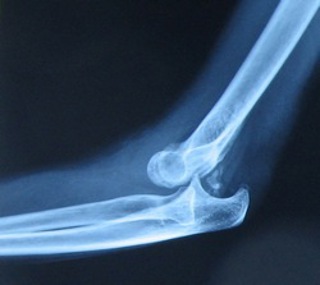
Podcast #317: Elbow Dislocation

Podcast #317: Elbow Dislocation

Author: John Winkler, M.D. Educational Pearls: ● Lower mechanisms of injury have a lower chance of an associated fracture or major ligament injury ● One major concern is having a fracture fragment i...

11 Huhti 20182min

Podcast #316: Abnormalities in Alcohol Intoxication

Podcast #316: Abnormalities in Alcohol Intoxication

Author: Michael Hunt, M.D. Educational Pearls: 1% of patients presenting to ED with alcohol intoxication end up going to the ICU Most common critical illnesses were acute hypoxic respiratory fail...

9 Huhti 20183min

Podcast #315: Retropharyngeal Infections in Pediatrics

Podcast #315: Retropharyngeal Infections in Pediatrics

Author: Dr. Karen Woolf, MD Educational Pearls: Anatomy : base of skull to posterior mediastinum, anteriorly bounded by middle layer of deep cervical fascia and posteriorly by the deep layer, communi...

6 Huhti 20186min
Podcast #314: Psychogenic nonepileptic seizures (PNES)

Podcast #314: Psychogenic nonepileptic seizures (PNES)

Author: Gretchen Hinson, M.D. Educational Pearls: PNES vs. epilepsy: postictal state is diagnostic of an epileptic seizure (sonorous respirations and/or confusion, lasting typically 20-30 minutes);...

4 Huhti 20185min
Podcast #313: Flu Screening

Podcast #313: Flu Screening

Author: Dr. Peter Bakes Educational Pearls: High risk patients: underlying lung disease, immunocompromised, extremes of age (65), underlying cardiac/renal/neurologic disease, and pregnant women Testi...

2 Huhti 20187min
Podcast #312: SCIWORA

Podcast #312: SCIWORA

Author: Sam Killian, M.D. Educational Pearls: Spinal cord injury without radiographic abnormality (SCIWORA) is a diagnosis defined as traumatic injury to spine with clinical sx of traumatic myelopa...

30 Maalis 20184min
Podcast #311: Recurrence of Seizures in Pediatrics

Podcast #311: Recurrence of Seizures in Pediatrics

Author: Aaron Lessen, M.D. Educational Pearls: Recurrence rate for first time unprovoked seizures - 5% after 48 hours, 14% at 2 weeks , 30% after 4 months. Higher risk for recurrence: age under 3; pa...

28 Maalis 20182min

Suosittua kategoriassa Tiede

tiedekulma-podcast
rss-mita-tulisi-tietaa
rss-poliisin-mieli
rss-duodecim-lehti
docemilia
filocast-filosofian-perusteet
rss-ammamafia
rss-luontopodi-samuel-glassar-tutkii-luonnon-ihmeita
rss-sosiopodi
utelias-mieli
radio-antro
rss-astetta-parempi-elama-podcast
rss-tiedetta-vai-tarinaa