Episode 918: Automated Blood Pressure Cuffs

Episode 918: Automated Blood Pressure Cuffs

Contributor: Aaron Lessen, MD

Educational Pearls:

How does an automated blood pressure cuff work?

  • Automated blood pressure cuffs work differently than taking a manual blood pressure.

  • While taking a manual blood pressure, one typically listens for Korotkoff sounds (turbulent flow) while slowly deflating the cuff.

  • An automatic blood pressure cuff only senses the pressure in the cuff itself and specifically pays attention to oscillations in the pressure caused by when the pressure of the cuff is between the systolic (heart squeezing) and diastolic (heart relaxed) pressures.

  • These oscillations are at a maximum when the pressure in the cuff matches the mean arterial pressure (MAP) and therefore the machines are most accurate at reporting the MAP.

  • The machines then use the MAP and other information about the oscillations to estimate the systolic and diastolic pressures, which are less accurate.

What should you do if you need more accurate systolic and diastolic blood pressures?

  • Take a manual blood pressure.

  • Get an arterial-line (a-line), which provides continuous data for the blood pressure at the end of a catheter.

What happens if the cuff is too big or too small for the patient?

  • If the cuff is too small it will overestimate the pressure.

  • If the cuff is too large it will underestimate the pressure.

What should you do if the cuff cycles a bunch of times before reporting a blood pressure?

  • It probably isn't very accurate so consider another method.

Bonus fact!

  • The MAP is not directly in the middle of the systolic and diastolic pressures but is weighted towards the diastolic pressure. The MAP can be calculated by adding two-thirds of the diastolic pressure to one third of the systolic pressure. For example if the BP is 120/90 the MAP is 100 mmHg.

References

  1. Benmira, A., Perez-Martin, A., Schuster, I., Aichoun, I., Coudray, S., Bereksi-Reguig, F., & Dauzat, M. (2016). From Korotkoff and Marey to automatic non-invasive oscillometric blood pressure measurement: does easiness come with reliability?. Expert review of medical devices, 13(2), 179–189. https://doi.org/10.1586/17434440.2016.1128821

  2. Liu, J., Li, Y., Li, J., Zheng, D., & Liu, C. (2022). Sources of automatic office blood pressure measurement error: a systematic review. Physiological measurement, 43(9), 10.1088/1361-6579/ac890e. https://doi.org/10.1088/1361-6579/ac890e

  3. Vilaplana J. M. (2006). Blood pressure measurement. Journal of renal care, 32(4), 210–213. https://doi.org/10.1111/j.1755-6686.2006.tb00025.x

Summarized by Jeffrey Olson, MS3 | Edited by Meg Joyce, MS1 & Jorge Chalit, OMS3

Donate: https://emergencymedicalminute.org/donate/

Jaksot(1144)

Podcast 825: ALS vs PD Transport

Podcast 825: ALS vs PD Transport

Contributor: Aaron Lessen, MD Educational Pearls: In urban settings, it is becoming more common for police to transport critical patients from scene to hospital A 2022 multicenter observational study...

31 Loka 20222min

Podcast 824: Catheter-Related Blood Infections

Podcast 824: Catheter-Related Blood Infections

Contributor: Travis Barlock, MD Educational Pearls: Catheter related blood infections were thought to be caused by skin flora seeding the catheter. Thus, significant effort is applied to sterility an...

25 Loka 20223min

Podcast 823: Immediate Resuscitative Thoracotomy

Podcast 823: Immediate Resuscitative Thoracotomy

Contributor: Jared Scott, MD Educational Pearls: Immediate resuscitative thoracotomy can be performed in the ED to gain rapid access to the thoracic cavity in cases of traumatic cardiac arrest Wester...

24 Loka 20227min
Podcast 822: Meralgia Paresthetica

Podcast 822: Meralgia Paresthetica

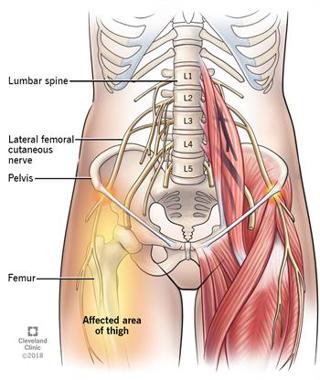
Contributor: Aaron Lessen, MD Educational Pearls: Lateral Cutaneous Femoral Nerve Entrapment Syndrome, also known as Meralgia Paresthetica, results from entrapment of the lateral cutaneous femoral ne...

18 Loka 20223min
Podcast 821: EKGs in Syncope

Podcast 821: EKGs in Syncope

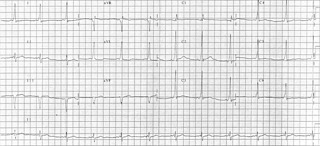
Contributor: Travis Barlock, MD Educational Pearls: An EKG should be obtained quickly after a syncopal event to identify possible life-threatening causes such as ischemia and arrhythmia WOBBLER is a...

17 Loka 20224min

Podcast 820: Who Qualifies for Take-Home Naloxone

Podcast 820: Who Qualifies for Take-Home Naloxone

Contributor: Don Stader, MD Educational Pearls: Home naloxone is traditionally given to those at high risk for opioid overdose such as those in the ED due to an opioid overdose, opioid intoxication, ...

11 Loka 20224min

Podcast 819: Indiscriminate Lactate Testing

Podcast 819: Indiscriminate Lactate Testing

Contributor: Jared Scott, MD Educational Pearls: Elevated lactate levels can be a useful indicator of critical illness in patients who meet SIRS criteria Lactate can also be elevated due to ot...

10 Loka 20225min
Podcast 818: Local Anesthetics and LAST

Podcast 818: Local Anesthetics and LAST

Contributor: Don Stader, MD Educational Pearls: There are two major groups of local anesthetics: Amide and Esther To recall what group an anesthetic belongs to, use this memory trick: Amide has...

4 Loka 20226min

Suosittua kategoriassa Tiede

rss-mita-tulisi-tietaa
tiedekulma-podcast
rss-poliisin-mieli
docemilia
rss-duodecim-lehti
utelias-mieli
filocast-filosofian-perusteet
rss-laakaripodi
rss-opeklubi
rss-lihavuudesta-podcast
rss-sosiopodi
sotataidon-ytimessa
mielipaivakirja
radio-antro
rss-radplus
rss-luontopodi-samuel-glassar-tutkii-luonnon-ihmeita