Episode 918: Automated Blood Pressure Cuffs

Episode 918: Automated Blood Pressure Cuffs

Contributor: Aaron Lessen, MD

Educational Pearls:

How does an automated blood pressure cuff work?

  • Automated blood pressure cuffs work differently than taking a manual blood pressure.

  • While taking a manual blood pressure, one typically listens for Korotkoff sounds (turbulent flow) while slowly deflating the cuff.

  • An automatic blood pressure cuff only senses the pressure in the cuff itself and specifically pays attention to oscillations in the pressure caused by when the pressure of the cuff is between the systolic (heart squeezing) and diastolic (heart relaxed) pressures.

  • These oscillations are at a maximum when the pressure in the cuff matches the mean arterial pressure (MAP) and therefore the machines are most accurate at reporting the MAP.

  • The machines then use the MAP and other information about the oscillations to estimate the systolic and diastolic pressures, which are less accurate.

What should you do if you need more accurate systolic and diastolic blood pressures?

  • Take a manual blood pressure.

  • Get an arterial-line (a-line), which provides continuous data for the blood pressure at the end of a catheter.

What happens if the cuff is too big or too small for the patient?

  • If the cuff is too small it will overestimate the pressure.

  • If the cuff is too large it will underestimate the pressure.

What should you do if the cuff cycles a bunch of times before reporting a blood pressure?

  • It probably isn't very accurate so consider another method.

Bonus fact!

  • The MAP is not directly in the middle of the systolic and diastolic pressures but is weighted towards the diastolic pressure. The MAP can be calculated by adding two-thirds of the diastolic pressure to one third of the systolic pressure. For example if the BP is 120/90 the MAP is 100 mmHg.

References

  1. Benmira, A., Perez-Martin, A., Schuster, I., Aichoun, I., Coudray, S., Bereksi-Reguig, F., & Dauzat, M. (2016). From Korotkoff and Marey to automatic non-invasive oscillometric blood pressure measurement: does easiness come with reliability?. Expert review of medical devices, 13(2), 179–189. https://doi.org/10.1586/17434440.2016.1128821

  2. Liu, J., Li, Y., Li, J., Zheng, D., & Liu, C. (2022). Sources of automatic office blood pressure measurement error: a systematic review. Physiological measurement, 43(9), 10.1088/1361-6579/ac890e. https://doi.org/10.1088/1361-6579/ac890e

  3. Vilaplana J. M. (2006). Blood pressure measurement. Journal of renal care, 32(4), 210–213. https://doi.org/10.1111/j.1755-6686.2006.tb00025.x

Summarized by Jeffrey Olson, MS3 | Edited by Meg Joyce, MS1 & Jorge Chalit, OMS3

Donate: https://emergencymedicalminute.org/donate/

Jaksot(1144)

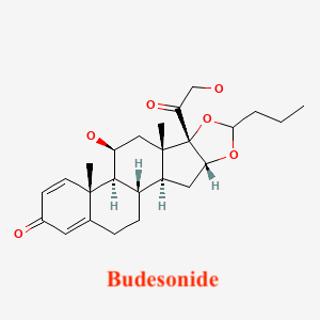
Podcast 752: Budesonide for COVID

Podcast 752: Budesonide for COVID

Contributor: Aaron Lessen, MD Educational Pearls: Recent study evaluated budesonide for outpatient COVID-19 infection treatment to see if there was a decrease in length of illness or hospitalization ...

1 Helmi 20222min
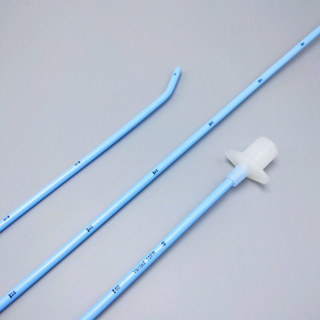
Podcast 751: The Bougie Trial

Podcast 751: The Bougie Trial

Contributor: Aaron Lessen, MD Educational Pearls: An endotracheal tube introducer or bougie are often used as a rescue device during difficult intubations as they are small and can be placed blindly ...

31 Tammi 20223min

Mental Health Monthly #9: Suicide Assessment in the ED: Using the ICAR2E Tool

Mental Health Monthly #9: Suicide Assessment in the ED: Using the ICAR2E Tool

Dr. Kim Nordstrom discusses a valuable bedside tool for evidence-based assessment in patients that visit the ED and are at risk for suicidality. Dr. Nordstrom is a practicing emergency psychiatrist an...

26 Tammi 20228min

Podcast 750: Take Home Naloxone

Podcast 750: Take Home Naloxone

Contributor: Aaron Lessen, MD Educational Pearls: Think about giving take home naloxone kits for anyone on long-term opioids as well as anyone with an opioid use disorder, those in opioid withdrawal,...

25 Tammi 20222min

Podcast 749: PCC for Me?

Podcast 749: PCC for Me?

Contributor: Nick Tsipis, MD Educational Pearls: Prothrombin complex concentrate (Kcentra)  and Vitamin K are used to reverse life-threatening bleeds in patients on warfarin (Coumadin) Factors II, VI...

24 Tammi 20224min
Podcast 748: Botulism

Podcast 748: Botulism

Contributor: Nick Hatch, MD Educational Pearls: Botulism requires a prompt clinical diagnosis as lab results can take about 5 days to return Whale blubber, honey, home fermented foods, homemade wine ...

18 Tammi 20228min

Podcast 747: Food Impaction

Podcast 747: Food Impaction

Contributor: Ricky Dhaliwal, MD Educational Pearls: Esophageal food impaction can be managed in the ED prior to calling GI for endoscopy Coca-cola, glucagon, benzodiazepines, calcium channel blockers...

17 Tammi 20223min

Podcast 746: Elderly Head Trauma on Anticoagulation

Podcast 746: Elderly Head Trauma on Anticoagulation

Contributor: Aaron Lessen, MD Educational Pearls: Biggest study to date examined new protocol for repeat head CT in anticoagulated elderly patients with head trauma and an initial negative head CT ...

11 Tammi 20223min

Suosittua kategoriassa Tiede

rss-mita-tulisi-tietaa
tiedekulma-podcast
rss-poliisin-mieli
docemilia
rss-duodecim-lehti
utelias-mieli
radio-antro
filocast-filosofian-perusteet
rss-laakaripodi
rss-lihavuudesta-podcast
rss-sosiopodi
ihanat-ipanat
sotataidon-ytimessa
mielipaivakirja
rss-radplus
rss-opeklubi