Episode 918: Automated Blood Pressure Cuffs

Episode 918: Automated Blood Pressure Cuffs

Contributor: Aaron Lessen, MD

Educational Pearls:

How does an automated blood pressure cuff work?

  • Automated blood pressure cuffs work differently than taking a manual blood pressure.

  • While taking a manual blood pressure, one typically listens for Korotkoff sounds (turbulent flow) while slowly deflating the cuff.

  • An automatic blood pressure cuff only senses the pressure in the cuff itself and specifically pays attention to oscillations in the pressure caused by when the pressure of the cuff is between the systolic (heart squeezing) and diastolic (heart relaxed) pressures.

  • These oscillations are at a maximum when the pressure in the cuff matches the mean arterial pressure (MAP) and therefore the machines are most accurate at reporting the MAP.

  • The machines then use the MAP and other information about the oscillations to estimate the systolic and diastolic pressures, which are less accurate.

What should you do if you need more accurate systolic and diastolic blood pressures?

  • Take a manual blood pressure.

  • Get an arterial-line (a-line), which provides continuous data for the blood pressure at the end of a catheter.

What happens if the cuff is too big or too small for the patient?

  • If the cuff is too small it will overestimate the pressure.

  • If the cuff is too large it will underestimate the pressure.

What should you do if the cuff cycles a bunch of times before reporting a blood pressure?

  • It probably isn't very accurate so consider another method.

Bonus fact!

  • The MAP is not directly in the middle of the systolic and diastolic pressures but is weighted towards the diastolic pressure. The MAP can be calculated by adding two-thirds of the diastolic pressure to one third of the systolic pressure. For example if the BP is 120/90 the MAP is 100 mmHg.

References

  1. Benmira, A., Perez-Martin, A., Schuster, I., Aichoun, I., Coudray, S., Bereksi-Reguig, F., & Dauzat, M. (2016). From Korotkoff and Marey to automatic non-invasive oscillometric blood pressure measurement: does easiness come with reliability?. Expert review of medical devices, 13(2), 179–189. https://doi.org/10.1586/17434440.2016.1128821

  2. Liu, J., Li, Y., Li, J., Zheng, D., & Liu, C. (2022). Sources of automatic office blood pressure measurement error: a systematic review. Physiological measurement, 43(9), 10.1088/1361-6579/ac890e. https://doi.org/10.1088/1361-6579/ac890e

  3. Vilaplana J. M. (2006). Blood pressure measurement. Journal of renal care, 32(4), 210–213. https://doi.org/10.1111/j.1755-6686.2006.tb00025.x

Summarized by Jeffrey Olson, MS3 | Edited by Meg Joyce, MS1 & Jorge Chalit, OMS3

Donate: https://emergencymedicalminute.org/donate/

Jaksot(1145)

Podcast 716: Resuscitation Fluids

Podcast 716: Resuscitation Fluids

Contributor: Nick Tsipis, MD Educational Pearls: Fluid choice may have an impact on outcomes in resuscitation, and a meta-analysis has relevant insight into their use in sepsis and trauma patients La...

29 Syys 20214min

Podcast 715: Heated High Flow O2

Podcast 715: Heated High Flow O2

Contributor: Nick Hatch, MD Educational Pearls: High flow nasal cannula (HFNC) or "heated high flow" can deliver higher oxygen levels than nasal cannula It typically is used as an "intermediate" betw...

27 Syys 20214min

Podcast 714: Intradermal Sterile Water for Back Pain

Podcast 714: Intradermal Sterile Water for Back Pain

Contributor: Aaron Lessen, MD Educational Pearls: Randomized controlled-trial evaluated intradermal injections of sterile water to manage low back pain versus an IV NSAID Four intradermal injections ...

21 Syys 20213min

Podcast 713: Oral Ketamine

Podcast 713: Oral Ketamine

Contributor: Don Stader, MD Educational Pearls: Those on chronic opioid therapy may have high tolerance to opioids and/or opioid hyperalgesia Ketamine is a good adjunct for pain control in patients o...

20 Syys 20213min

Podcast 712: Cephalosporin with a Penicillin Allergy

Podcast 712: Cephalosporin with a Penicillin Allergy

Contributor: Aaron Lessen, MD Educational Pearls: Retrospective cohort study in the Kaiser system looked at over 4 million patients receiving antibiotics to determine the effect of penicillin allergy...

13 Syys 20213min
On the Streets #10: IO Administration Gone Awry

On the Streets #10: IO Administration Gone Awry

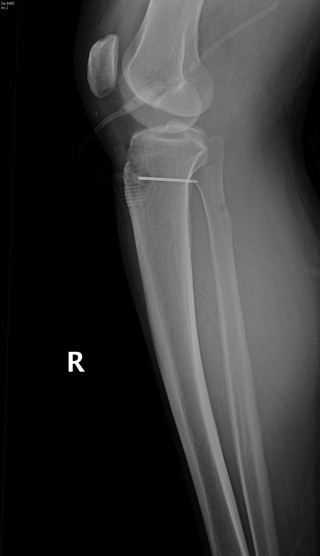
Dr. Glenda Quan, trauma surgeon from Swedish Medical Center joins our host Jordan Ourada to review a case of an incorrectly placed IO and how to avoid it. The Emergency Medical Minute is excited to an...

8 Syys 202115min
Podcast 711: Insulin Pumps

Podcast 711: Insulin Pumps

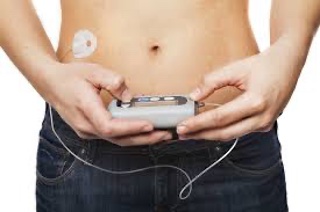
Contributor: Aaron Lessen, MD Educational Pearls: Insulin pumps provide a continuous infusion of fast-acting insulin using a basal rate and bolus prior to meals Some connect to a continuous glucomete...

7 Syys 20214min
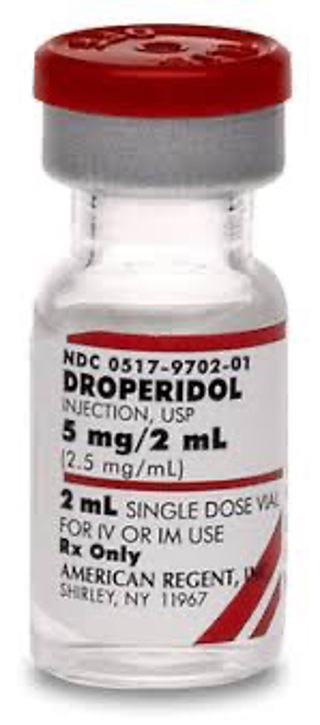
Podcast 710: Droperidol vs. Zyprexa

Podcast 710: Droperidol vs. Zyprexa

Contributor: Nick Tsipis, MD Educational Pearls: Prospective trial studied 5 mg IM droperidol to 10 mg IM olanzapine (Zyprexa) in the reducing levels of agitation Time to adequate sedation was about ...

31 Elo 20215min

Suosittua kategoriassa Tiede

tiedekulma-podcast
rss-mita-tulisi-tietaa
rss-poliisin-mieli
docemilia
rss-duodecim-lehti
utelias-mieli
radio-antro
filocast-filosofian-perusteet
rss-laakaripodi
rss-sosiopodi
ihanat-ipanat
sotataidon-ytimessa
mielipaivakirja
rss-bios-podcast
rss-radplus
rss-opeklubi
rss-lihavuudesta-podcast