Episode 918: Automated Blood Pressure Cuffs

Episode 918: Automated Blood Pressure Cuffs

Contributor: Aaron Lessen, MD

Educational Pearls:

How does an automated blood pressure cuff work?

  • Automated blood pressure cuffs work differently than taking a manual blood pressure.

  • While taking a manual blood pressure, one typically listens for Korotkoff sounds (turbulent flow) while slowly deflating the cuff.

  • An automatic blood pressure cuff only senses the pressure in the cuff itself and specifically pays attention to oscillations in the pressure caused by when the pressure of the cuff is between the systolic (heart squeezing) and diastolic (heart relaxed) pressures.

  • These oscillations are at a maximum when the pressure in the cuff matches the mean arterial pressure (MAP) and therefore the machines are most accurate at reporting the MAP.

  • The machines then use the MAP and other information about the oscillations to estimate the systolic and diastolic pressures, which are less accurate.

What should you do if you need more accurate systolic and diastolic blood pressures?

  • Take a manual blood pressure.

  • Get an arterial-line (a-line), which provides continuous data for the blood pressure at the end of a catheter.

What happens if the cuff is too big or too small for the patient?

  • If the cuff is too small it will overestimate the pressure.

  • If the cuff is too large it will underestimate the pressure.

What should you do if the cuff cycles a bunch of times before reporting a blood pressure?

  • It probably isn't very accurate so consider another method.

Bonus fact!

  • The MAP is not directly in the middle of the systolic and diastolic pressures but is weighted towards the diastolic pressure. The MAP can be calculated by adding two-thirds of the diastolic pressure to one third of the systolic pressure. For example if the BP is 120/90 the MAP is 100 mmHg.

References

  1. Benmira, A., Perez-Martin, A., Schuster, I., Aichoun, I., Coudray, S., Bereksi-Reguig, F., & Dauzat, M. (2016). From Korotkoff and Marey to automatic non-invasive oscillometric blood pressure measurement: does easiness come with reliability?. Expert review of medical devices, 13(2), 179–189. https://doi.org/10.1586/17434440.2016.1128821

  2. Liu, J., Li, Y., Li, J., Zheng, D., & Liu, C. (2022). Sources of automatic office blood pressure measurement error: a systematic review. Physiological measurement, 43(9), 10.1088/1361-6579/ac890e. https://doi.org/10.1088/1361-6579/ac890e

  3. Vilaplana J. M. (2006). Blood pressure measurement. Journal of renal care, 32(4), 210–213. https://doi.org/10.1111/j.1755-6686.2006.tb00025.x

Summarized by Jeffrey Olson, MS3 | Edited by Meg Joyce, MS1 & Jorge Chalit, OMS3

Donate: https://emergencymedicalminute.org/donate/

Jaksot(1145)

Podcast 671: Scapula Fractures

Podcast 671: Scapula Fractures

Contributor: Adam Barkin, MD Educational Pearls: Represents less than 1% of all fractures that occur, although it has a significant mortality rate of 2-5% Typically occurs in high-energy trauma and ...

17 Touko 20213min

Podcast 670: Operation Tat-Type

Podcast 670: Operation Tat-Type

Contributor: Dave Rosenberg, MD Educational Pearls: In 1951, Operation Tat-Type began tattooing adults with their blood type in an effort to prepare for rapid transfusions in the time of the Cold Wa...

12 Touko 20214min

Podcast 669: VTach Storm

Podcast 669: VTach Storm

Contributor: Gretchen Hinson, MD Educational Pearls: Three episodes of ventricular tachycardia within 24 hours or two episodes back-to-back Treat with IV amiodarone and IV beta-blockers initially as...

11 Touko 20215min
Podcast 668: Opioid-Induced Hyperalgesia

Podcast 668: Opioid-Induced Hyperalgesia

Contributor: Donald Stader, MD Educational Pearls: Opioids target kappa and NMDA receptors that can lead to central nervous system sensitization and therefore increased pain For patients with opioid-...

10 Touko 20214min
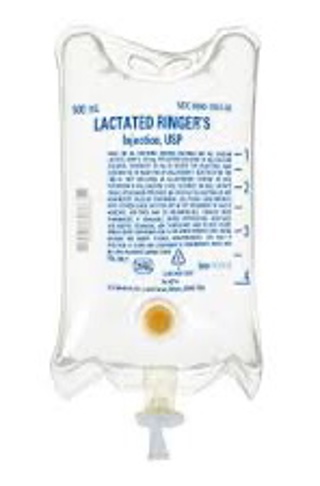
Podcast 667: Lactated Ringers for DKA

Podcast 667: Lactated Ringers for DKA

Contributor: Aaron Lessen, MD Educational Pearls: Recent study looked at whether lactated ringers might be a better choice for fluid resuscitation in patients with DKA compared to normal saline Norm...

4 Touko 20213min

Podcast 666: Pain Management & Patient Perspective

Podcast 666: Pain Management & Patient Perspective

Contributor: Jared Scott, MD Educational Pearls: About ½ of the patients in the ED present with some form of pain One study looked at patients presenting in pain and followed up two days after disch...

3 Touko 20215min
Podcast 665: Allergic Reactions after COVID Vaccinations

Podcast 665: Allergic Reactions after COVID Vaccinations

Contributor: Peter Bakes, MD Educational Pearls: Incidence 2.5-10 per million people occurring primarily in those with environmental allergens Typically occurs with mRNA vaccines in lipid nanopartic...

28 Huhti 20214min
Podcast 664: Rabies Prophylaxis

Podcast 664: Rabies Prophylaxis

Contributor: Jared Scott, MD Educational Pearls: 1-3 cases of rabies per year in US with 55,000 people per year receiving rabies prophylaxis 90% of rabies cases come from wildlife, most commonly by ...

27 Huhti 20215min

Suosittua kategoriassa Tiede

tiedekulma-podcast
rss-mita-tulisi-tietaa
rss-poliisin-mieli
docemilia
radio-antro
utelias-mieli
rss-sosiopodi
ihanat-ipanat
mielipaivakirja
filocast-filosofian-perusteet
rss-bios-podcast
rss-laakaripodi
rss-radplus
rss-opeklubi