
Episode 918: Automated Blood Pressure Cuffs

Episode 918: Automated Blood Pressure Cuffs

Contributor: Aaron Lessen, MD

Educational Pearls:

How does an automated blood pressure cuff work?

  • Automated blood pressure cuffs work differently than taking a manual blood pressure.

  • While taking a manual blood pressure, one typically listens for Korotkoff sounds (turbulent flow) while slowly deflating the cuff.

  • An automatic blood pressure cuff only senses the pressure in the cuff itself and specifically pays attention to oscillations in the pressure caused by when the pressure of the cuff is between the systolic (heart squeezing) and diastolic (heart relaxed) pressures.

  • These oscillations are at a maximum when the pressure in the cuff matches the mean arterial pressure (MAP) and therefore the machines are most accurate at reporting the MAP.

  • The machines then use the MAP and other information about the oscillations to estimate the systolic and diastolic pressures, which are less accurate.

What should you do if you need more accurate systolic and diastolic blood pressures?

  • Take a manual blood pressure.

  • Get an arterial-line (a-line), which provides continuous data for the blood pressure at the end of a catheter.

What happens if the cuff is too big or too small for the patient?

  • If the cuff is too small it will overestimate the pressure.

  • If the cuff is too large it will underestimate the pressure.

What should you do if the cuff cycles a bunch of times before reporting a blood pressure?

  • It probably isn't very accurate so consider another method.

Bonus fact!

  • The MAP is not directly in the middle of the systolic and diastolic pressures but is weighted towards the diastolic pressure. The MAP can be calculated by adding two-thirds of the diastolic pressure to one third of the systolic pressure. For example if the BP is 120/90 the MAP is 100 mmHg.

References

  1. Benmira, A., Perez-Martin, A., Schuster, I., Aichoun, I., Coudray, S., Bereksi-Reguig, F., & Dauzat, M. (2016). From Korotkoff and Marey to automatic non-invasive oscillometric blood pressure measurement: does easiness come with reliability?. Expert review of medical devices, 13(2), 179–189. https://doi.org/10.1586/17434440.2016.1128821

  2. Liu, J., Li, Y., Li, J., Zheng, D., & Liu, C. (2022). Sources of automatic office blood pressure measurement error: a systematic review. Physiological measurement, 43(9), 10.1088/1361-6579/ac890e. https://doi.org/10.1088/1361-6579/ac890e

  3. Vilaplana J. M. (2006). Blood pressure measurement. Journal of renal care, 32(4), 210–213. https://doi.org/10.1111/j.1755-6686.2006.tb00025.x

Summarized by Jeffrey Olson, MS3 | Edited by Meg Joyce, MS1 & Jorge Chalit, OMS3

Donate: https://emergencymedicalminute.org/donate/

Jaksot(1146)

On the Streets #5: Trauma during COVID-19

On the Streets #5: Trauma during COVID-19

Jordan sits down to discuss trauma with Dr. Kaysie Banton, the Trauma Services Medical Director at Level 1 Trauma Center Swedish Medical Center in Englewood, Colorado. In this laid back interview, Dr....

20 Touko 202026min
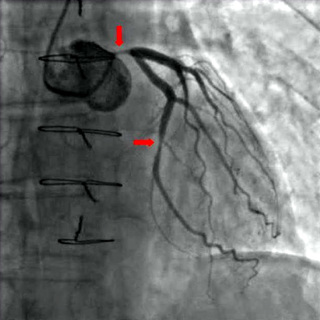
Podcast 564:  Cardiac Ischemia Management Update

Podcast 564: Cardiac Ischemia Management Update

Contributor: Nick Tsipis, MD Educational Pearls: Recent randomized controlled trial compared early intervention (PCI/CABG) to medical management for those diagnosed with moderate to severe cardiac is...

19 Touko 20205min
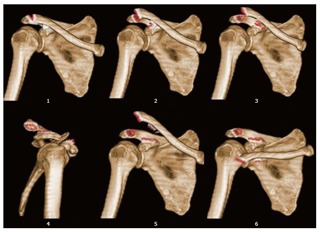
Podcast 563:  DC ACs

Podcast 563: DC ACs

Contributor: Nick Hatch, MD Educational Pearls: An AC (acromioclavicular joint) separation in the shoulder is a common traumatic injury XRs can help rule out other injuries as well as help with gradi...

18 Touko 20202min
COVID-19 Digest: Could Cigarette Smoking Actually be Protective Against COVID?

COVID-19 Digest: Could Cigarette Smoking Actually be Protective Against COVID?

Host: Elizabeth Esty, MD. Smoking is known to increase both susceptibility and severity of all manner of colds and pneumonias, so you'd think the world's 1.1 billion smokers would be at risk in this p...

13 Touko 202018min
Podcast 562:  COVID-19 Occlusions

Podcast 562: COVID-19 Occlusions

Contributor: Nick Tsipis, MD Educational Pearls: Case series reported 5 cases of generally young and healthy patients with COVID-19 who presented to the ER with acute stroke Now several case series s...

12 Touko 20202min
Podcast 561:  Give Bup

Podcast 561: Give Bup

Contributor: Don Stader, MD Educational Pearls: Buprenorphine has been shown to decrease morbidity and mortality in opioid use disorder Buprenorphine used in naloxone-induced withdrawals can displace...

11 Touko 20204min
COVID-19 Digest: Bacille Calmette-Guérin (BCG) Vaccine for Treating COVID-19

COVID-19 Digest: Bacille Calmette-Guérin (BCG) Vaccine for Treating COVID-19

In the US, few people receive vaccination for tuberculosis (TB), a disease that hasn't been a major killer here for many decades. But while we in the US mostly experience TB as a relatively rare but ...

8 Touko 202014min
Podcast 560:  Imaging in a COVID world

Podcast 560: Imaging in a COVID world

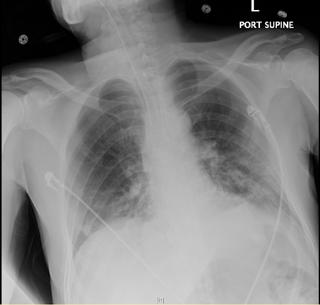
Contributor: Don Stader, MD Educational Pearls: COVID-19 commonly appears as a bilateral patchy infiltrate on chest radiograph, but this is a non-specific finding Sensitivities range from 17-70% f...

7 Touko 20206min

Suosittua kategoriassa Tiede

rss-poliisin-mieli
tiedekulma-podcast
rss-mita-tulisi-tietaa
docemilia
rss-luontopodi-samuel-glassar-tutkii-luonnon-ihmeita
rss-duodecim-lehti
utelias-mieli
radio-antro
filocast-filosofian-perusteet
rss-astetta-parempi-elama-podcast
rss-lapsuuden-rakentajat-podcast
rss-lihavuudesta-podcast
rss-sosiopodi













