

Episode 918: Automated Blood Pressure Cuffs

Episode 918: Automated Blood Pressure Cuffs

Contributor: Aaron Lessen, MD

Educational Pearls:

How does an automated blood pressure cuff work?

  • Automated blood pressure cuffs work differently than taking a manual blood pressure.

  • While taking a manual blood pressure, one typically listens for Korotkoff sounds (turbulent flow) while slowly deflating the cuff.

  • An automatic blood pressure cuff only senses the pressure in the cuff itself and specifically pays attention to oscillations in the pressure caused by when the pressure of the cuff is between the systolic (heart squeezing) and diastolic (heart relaxed) pressures.

  • These oscillations are at a maximum when the pressure in the cuff matches the mean arterial pressure (MAP) and therefore the machines are most accurate at reporting the MAP.

  • The machines then use the MAP and other information about the oscillations to estimate the systolic and diastolic pressures, which are less accurate.

What should you do if you need more accurate systolic and diastolic blood pressures?

  • Take a manual blood pressure.

  • Get an arterial-line (a-line), which provides continuous data for the blood pressure at the end of a catheter.

What happens if the cuff is too big or too small for the patient?

  • If the cuff is too small it will overestimate the pressure.

  • If the cuff is too large it will underestimate the pressure.

What should you do if the cuff cycles a bunch of times before reporting a blood pressure?

  • It probably isn't very accurate so consider another method.

Bonus fact!

  • The MAP is not directly in the middle of the systolic and diastolic pressures but is weighted towards the diastolic pressure. The MAP can be calculated by adding two-thirds of the diastolic pressure to one third of the systolic pressure. For example if the BP is 120/90 the MAP is 100 mmHg.

References

  1. Benmira, A., Perez-Martin, A., Schuster, I., Aichoun, I., Coudray, S., Bereksi-Reguig, F., & Dauzat, M. (2016). From Korotkoff and Marey to automatic non-invasive oscillometric blood pressure measurement: does easiness come with reliability?. Expert review of medical devices, 13(2), 179–189. https://doi.org/10.1586/17434440.2016.1128821

  2. Liu, J., Li, Y., Li, J., Zheng, D., & Liu, C. (2022). Sources of automatic office blood pressure measurement error: a systematic review. Physiological measurement, 43(9), 10.1088/1361-6579/ac890e. https://doi.org/10.1088/1361-6579/ac890e

  3. Vilaplana J. M. (2006). Blood pressure measurement. Journal of renal care, 32(4), 210–213. https://doi.org/10.1111/j.1755-6686.2006.tb00025.x

Summarized by Jeffrey Olson, MS3 | Edited by Meg Joyce, MS1 & Jorge Chalit, OMS3

Donate: https://emergencymedicalminute.org/donate/

Jaksot(1146)

UnfilterED #6: Dr. Anton Helman

UnfilterED #6: Dr. Anton Helman

In this organic conversation, Nick and Dr. Helman establish a warm rapport early on as they discuss musical beginnings, life-changing mentors and the origins of Emergency Medicine Cases. Their banter ...

22 Huhti 202039min
COVID-19 Digest: Airborne Transmission / Remdesivir (Recorded 4/14/20)

COVID-19 Digest: Airborne Transmission / Remdesivir (Recorded 4/14/20)

In this episode of the COVID-19 Digest, we revisit the airborne vs droplet transmission debate and analyze a highly publicized study on Remdesivir from the New England Journal of Medicine. Host: Eliz...

15 Huhti 202012min

On the Streets #4: Posterior Circulation Strokes

On the Streets #4: Posterior Circulation Strokes

In part 2 of our interview with Dr. Adam Graham, Jordan takes a deep dive into posterior circulation strokes and how to identify them in the field.

14 Huhti 202017min
Podcast 554: Sleeping Away Alzheimer's

Podcast 554: Sleeping Away Alzheimer's

Contributor: Dave Rosenberg, MD Educational Pearls: White noise is all the surrounding sound frequencies mixed together that your brain tunes down so you don't get distracted while you're sleeping Pi...

13 Huhti 20202min
COVID-19: Behind the Masks

COVID-19: Behind the Masks

The circumstances that led to the national shortage in PPE for healthcare workers, the inspiring work of New Orleans med students to equip medical providers with PPE and the science behind personal us...

9 Huhti 202022min

Podcast 553: Airway Management in the Hypoxic COVID-19 Patient (Recorded 4/3/20)

Podcast 553: Airway Management in the Hypoxic COVID-19 Patient (Recorded 4/3/20)

Contributor: Dylan Luyten, MD Educational pearls: Clinical management of COVID-19 is rapidly evolving, relying on case reports and clinical experience In just a month, the consensus around management...

6 Huhti 20208min
COVID-19 Digest: Hydroxychloroquine Update (Recorded 4/3/20)

COVID-19 Digest: Hydroxychloroquine Update (Recorded 4/3/20)

In our coverage of COVID-19 this week, we've investigated the shakey evidence for NSAID use making COVID worse, heard first-hand accounts from ED clinicians with COVID, and looked at the status of tes...

4 Huhti 20209min
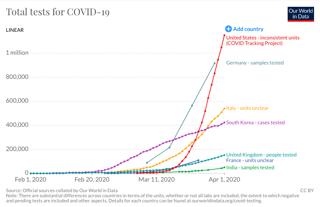
COVID-19 in the United States: Where are the tests?

COVID-19 in the United States: Where are the tests?

A dive into how the United States responded to an emerging pandemic and the pitfalls along the way that led to stalled testing capacity across the country before community transmission was confirmed. ...

2 Huhti 202010min

Suosittua kategoriassa Tiede

rss-poliisin-mieli
tiedekulma-podcast
rss-mita-tulisi-tietaa
docemilia
rss-luontopodi-samuel-glassar-tutkii-luonnon-ihmeita
rss-duodecim-lehti
utelias-mieli
radio-antro
filocast-filosofian-perusteet
rss-astetta-parempi-elama-podcast
rss-lapsuuden-rakentajat-podcast
rss-lihavuudesta-podcast
rss-sosiopodi













