Helen's History of Ideas
TALKING POLITICS9 Heinä 2020

Helen's History of Ideas

David talks with Helen to get her take on the history of ideas - both what's there and what's missing. Why start with Hobbes? What can we learn from the Federalist Papers? Where's Nietzsche? Plus we talk about whether understanding where political ideas come from is

liberating or limiting and we ask how many of them were just rationalisations for power.


Talking Points:


Should we start the story of modern politics with Hobbes?

  • Hobbes poses a stark question: what is the worst thing that can happen in politics? Civil war or tyranny?
  • Is Hobbes’ answer utopian?
  • What are the consequences of the breakdown of political authority—and how do they compare to the consequences of empowering the state to do terrible things?


Who has the authority to decide is a fundamental question in politics.

  • But there are lots of ways of thinking about politics that avoid this question.
  • If you accept the notion that political authority is essential, what form should that authority take and how can it be made as bearable as possible for as many people as possible?


Constant says that the worst thing that can happen isn’t civil war; it’s the tyranny of the state.

  • To him, the French Revolution showed that when people who hold the coercive power of the state also hold certain beliefs, the damage can be much worse.
  • Constant wants to say that the beliefs people have in the modern world are a constraint on political possibilities.
  • What does the pluralism of beliefs mean for politics?
  • Constant is also more direct about the importance of debt and money.

From the French revolution onwards, nationalism became the dominant idea by which the authority of states was justified to those over whom it exercised power.

  • Sieyès equated the state with its people.


The idea of federalism as enshrined in the US constitution is also important: Hobbes did not think sovereignty could be divided.

  • How do you reconcile constitutional ideals with the horrors they justified?


Nietzsche forces a reckoning with the religion question.

  • This blows up the distinction between pre-modern and modern.
  • He presents a genealogy not just of morality, but civilization, ideas of justice, religion.
  • For Nietzsche, Christianity is the manifestation of the will to power of the powerless.
  • Nietzsche tells us how we became the way we are—it didn’t have to go that way.
  • In exposing contingency, he forces us to engage with political questions we don’t really want to think about.


What do ideas explain about human motivation in politics, and to what extent are they rationalizations of other motives?

  • Helen thinks that the history of ideas can make political action seem too straightforward.
  • How should we think about the relationship between ideas and material constraints (or opportunities)?
  • Studying history more generally leads to at least some degree of cynicism about the relationship between ideas and power.


Mentioned in this Episode:


Further Learning:

Tämä jakso on lisätty Podme-palveluun avoimen RSS-syötteen kautta eikä se ole Podmen omaa tuotantoa. Siksi jakso saattaa sisältää mainontaa.

Jaksot(379)

New Podcast: These Times

New Podcast: These Times

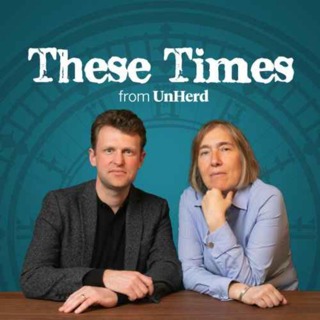
UnHerd political editor Tom McTague and Cambridge professor Helen Thompson team up to investigate the history of today’s politics — and what it means for our future. Each week they will explore the gr...

11 Touko 202352s

New Podcast: Where Are You Going?

New Podcast: Where Are You Going?

Talking Politics producer Catherine Carr returns to her role as mic-wielder in 'Where Are You Going?' a unique storytelling podcast, delivered in bite-size episodes.Called 'utterly compelling and uniq...

24 Huhti 20233min
New Podcast: Past Present Future

New Podcast: Past Present Future

Past Present Future is a new weekly podcast with David Runciman, host of Talking Politics, exploring the history of ideas from politics to philosophy, culture to technology. David talks to historians,...

21 Huhti 20232min
Finale

Finale

David, Helen and Catherine get together for our final episode, to reflect on podcasting through six extraordinary years of politics, and what it means to be ending at the beginning of a war. We talk a...

3 Maalis 202239min

Helen Thompson/Disorder

Helen Thompson/Disorder

For our penultimate episode, David talks to Helen about her new book Disorder: Hard Times in the Twenty-First Century. It’s a conversation about many of the themes Helen has explored on Talking Politi...

24 Helmi 202246min

The Meaning of Macron

The Meaning of Macron

David talks to Shahin Vallee and Chris Bickerton about the upcoming French presidential elections. Can anything or anyone stop Macron? Why has French politics moved so far to the right? And what do le...

17 Helmi 202245min

The Meaning of Boris Johnson

The Meaning of Boris Johnson

David, Helen and Chris Brooke have one more go at making sense of the tangled web that is British politics. Can Johnson really survive, and even if he does, can his brand ever recover? Is this a scand...

10 Helmi 202252min

Putin’s Next Move

Putin’s Next Move

David and Helen talk to Shashank Joshi, Defence Editor of the Economist, about what Vladimir Putin hopes to get out of the Ukraine crisis and what anyone can do to stop him. Is some sort of invasion i...

3 Helmi 202250min

Suosittua kategoriassa Politiikka ja uutiset

uutiscast
aikalisa
ootsa-kuullut-tasta-2
politiikan-puskaradio
rss-ootsa-kuullut-tasta
tervo-halme
rss-podme-livebox
the-ulkopolitist
otetaan-yhdet
rss-asiastudio
rss-vaalirankkurit-podcast
aihe
rikosmyytit
rss-kaikki-uusiksi
rss-raha-talous-ja-politiikka
et-sa-noin-voi-sanoo-esittaa
rss-kuka-mina-olen
rss-girls-finish-f1rst
rss-ulkopoditiikkaa
rss-pinnalla