36 - The Macroeconomics of Star Wars and Star Trek
In this week's special episode, David compares and contrasts the economics of the Star Wars and Star Trek universes. He is joined by Zachary Feinstein, an Assistant Professor at Washington University in St. Louis, and Manu Saadia, author of *Trekonomics.* Topics include the economic fallout from the destruction of the Death Star, the absence of money in Star Trek, and whether a universe can really eliminate scarcity. David's blog: http://macromarketmusings.blogspot.com/ David's Twitter: @davidbeckworth Manu's *Trekonomics* website: https://trekonomics.tumblr.com/ (you can order the book, *Trekonomics,* here as well) Manu's Twitter: @trekonomics Zach's faculty profile: https://sites.wustl.edu/fictionomics/ Zach's Twitter: @FictionomicsWU Related links: "It's a Trap: Emperor Palpatine's Poison Pill" by Zachary Feinstein https://arxiv.org/pdf/1511.09054.pdf "The Case for the Empire" by Jonathan Last http://www.weeklystandard.com/the-case-for-the-empire/article/2540
12 Joulu 201658min

35 - Peter Conti-Brown on *The Power and Independence of the Federal Reserve*
Peter Conti-Brown is an Assistant Professor at The Wharton School of the University of Pennsylvania. He joins the show to discuss his new book, *The Power and Independence of the Federal Reserve,* which exams the evolution of the Federal Reserve and what central bank independence really means. Peter also shares his thoughts on what a Trump presidency might mean for monetary policy. David's bio: http://macromarketmusings.blogspot.com/ Peter's UPenn bio: https://lgst.wharton.upenn.edu/profile/30645/ David's Twitter: @davidbeckworth Peter's Twitter: @PeterContiBrown Related links: *The Power and Independence of the Federal Reserve* by Peter Conti-Brown https://www.amazon.com/Power-Independence-Federal-Reserve/dp/0691164002 *America's Bank: The Epic Struggle to Create the Federal Reserve* by Roger Lowenstein https://www.amazon.com/Americas-Bank-Struggle-Federal-Reserve/dp/1594205493
5 Joulu 20161h 7min

34 – JP Koning on Goldbugs, African Monetary History, and Fedcoin
JP Koning is an economic consultant and writer. He joins the show to discuss fascinating stories in monetary history in Libya, Zimbabwe, and Switzerland. He also shares his thoughts on Blockchain technology and Fedcoin, a hypothetical cryptocurrency stabilized by the Federal Reserve. David's blog: http://macromarketmusings.blogspot.com/ JP's blog "Moneyness": http://jpkoning.blogspot.com/ David's Twitter: @davidbeckworth JP's Twitter: @JP_Koning Related links: "What Happens When a Central Bank Splits in Two?" by JP Koning http://jpkoning.blogspot.com/2016/06/what-happens-when-central-bank-is-split.html "A Modern Example of Gresham's Law" by JP Koning http://jpkoning.blogspot.com/2016/11/a-modern-example-of-greshams-law.html "Fedcoin" by JP Koning http://jpkoning.blogspot.ca/2014/10/fedcoin.html
28 Marras 201659min

33 - Mark Calabria on Housing Policy and the Behavioral Case for Monetary Rules
Mark Calabria is the director of Financial Regulation Studies at the Cato Institute. Before joining Cato in 2009, he worked as a member of the senior staff of the U.S. Senate Committee on Banking, Housing, and Urban Affairs. He joins the show to discuss working on Capitol Hill amidst the 2008 financial crisis. Mark also discusses his recent Cato paper where he argues insights from behavioral economics suggest monetary policy should be more rules-based. David's blog: macromarketmusings.blogspot.com/ Mark's Cato Institute profile: https://www.cato.org/people/mark-calabria Mark's Alt-M archive: http://www.alt-m.org/author/calabria/ David's Twitter: @davidbeckworth Mark's Twitter: @markcalabria Related links: "Yes, the Fed has a Diversity Problem" by Mark Calabria https://www.cato.org/blog/yes-federal-reserve-has-diversity-problem "Behavioral Economics and Fed Policymaking" by Mark Calabria https://object.cato.org/sites/cato.org/files/serials/files/cato-journal/2016/9/cj-v36n3-6.pdf
21 Marras 20161h 6min

32 - Roger Farmer on the Natural Rate of Unemployment Hypothesis and Prosperity for All
Roger Farmer is a Distinguished Professor of Economics at UCLA. He joins the show to discuss his new book, Prosperity for All: How to Prevent Financial Crises. He and David also discuss his criticism of the natural rate of unemployment hypothesis, an important proposition in mainstream macroeconomics. David's blog: http://macromarketmusings.blogspot.com/ Roger's personal website: http://www.rogerfarmer.com/ David's Twitter: @davidbeckworth Roger's Twitter: @farmerrf Related links: Roger's UCLA profile http://www.econ.ucla.edu/faculty/regular/Farmer.html Prosperity for All: How to Prevent Financial Crises by Roger Farmer https://global.oup.com/academic/product/prosperity-for-all-9780190621438?cc=us&lang=en& "The Natural Rate Hypthesis: An Idea Past Its Sell-by Date" by Roger Farmer http://www.nber.org/papers/w19267
14 Marras 201658min

31 – Mark Koyama on the Macroeconomics of Ancient Rome
Mark Koyama is an Assistant Professor of Economics at George Mason University and a Senior Fellow at George Mason University's Mercatus Center. He joins the show to discuss his research on the economic history of ancient Rome from the rise of the Roman Republic to the transition to the Roman Empire to the Empire's eventual fall. David's blog: http://macromarketmusings.blogspot.com/ Mark's Medium page: https://medium.com/@MarkKoyama Mark's GMU profile: http://economics.gmu.edu/people/mkoyama2 David's Twitter: @DavidBeckworth Mark's Twitter: @MarkKoyama Related links: "The Roman Market Economy" by Peter Temin (2012, Princeton University Press) http://press.princeton.edu/titles/9896.html "Peter Temin and the Malthusian Hypothesis for the Limits of Roman Growth" by Mark Koyama https://medium.com/@MarkKoyama/peter-temin-and-the-malthusian-hypothesis-for-the-limits-of-roman-growth-12489edce93a#.ijytapey2 "Why did the Roman Economy Decline?" by Mark Koyama https://medium.com/art-marketing/why-did-the-roman-economy-decline-225deada66ea#.xnwksin86
7 Marras 20161h 2min

30 - Rudi Bachmann on German Macroeconomics, Walter Eucken, and Ordoliberalism
Rüdiger (Rudi) Bachmann is a Stepan Family Associate Professor of Economics at the University of Notre Dame. He joins the show to discuss the economic history of his native Germany. David and Rudi also discuss how the German approach to macroeconomics is distinctly different from the approach taken in the United States. David's blog: macromarketmusings.blogspot.com/ Rudi's Notre Dame webpage: https://www3.nd.edu/~rbachman/ David's Twitter: @DavidBeckworth Related links: Rudi on his work on economic uncertainty: https://www.youtube.com/watch?v=6XDlzBgf1uE NYT Upshot Article: "How Economists Came to Dominate the Conversation" http://www.nytimes.com/2015/01/24/upshot/how-economists-came-to-dominate-the-conversation.html?_r=0 Peter Bofinger's Vox EU article: "German Macroeconomics: The Long Shadow of Walter Eucken" http://voxeu.org/article/german-macroeconomics-long-shadow-walter-eucken
31 Loka 20161h 1min
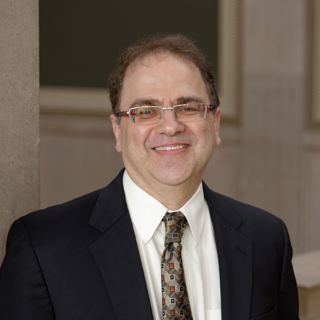
29 - Narayana Kocherlakota on the FOMC, the 2008 Crisis, and Monetary Rules
Narayana Kocherlakota is the Lionel W. McKenzie Professor of Economics at the University of Rochester, and he previously served as president and CEO of the Federal Reserve Bank of Minneapolis. He joins the show to discuss to discuss what it is like working as a Fed president and a member of the Federal Open Market Committee. He also shares some of his thoughts on the drawbacks of current proposals on establishing monetary rules. David's blog: macromarketmusings.blogspot.com/ Narayana's website: https://sites.google.com/site/kocherlakota009/ David's Twitter: @davidbeckworth Narayana's Twitter: @kocherlakota009 Related links: Narayana's profile, speeches, and articles as Fed president: https://www.minneapolisfed.org/about/more-about-the-fed/presidents-of-the-minneapolis-fed/narayana-kocherlakota Narayana's Bloomberg archive: https://www.bloomberg.com/view/contributors/APvwpZqjDaA/narayana-kocherlakota/articles Narayana's Brookings article: Rules vs. Discretion: A Reconsideration https://www.brookings.edu/bpea-articles/rules-versus-discretion-a-reconsideration/ Responses to the Brookings article by John Taylor and George Selgin: https://economicsone.com/2016/09/17/kocherlakota-on-the-fed-and-the-taylor-rule/ http://www.alt-m.org/2016/09/22/rules-discretion-audacity-critique-kocherlakota/
24 Loka 201659min