417: Defeating the "Inner" and "Outer Bully"!

417: Defeating the "Inner" and "Outer Bully"!

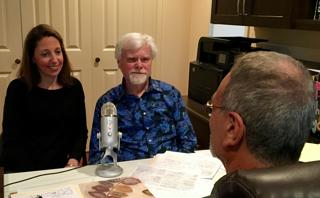
Podcast 417 Bullying Featuring Manuel Sierra, MD (pictured above)

Today, we welcome an old friend, Manuel Sierra, MD, who practices pediatric psychiatry in Idaho, and Dr. Matt May, a familiar and beloved colleague, to discuss bullying.

Below you'll find a great list of questions Dr. Matt May submitted just prior to today's podcast, along with some links you may wish to explore for more information. We addressed some of the questions, but certainly not all, during the podcast!

Manuel described bullying, and said the ¼ of children and adults have experienced bullying. The consequences can be severe, including suicidal urges or completed suicides, along with shame and a severe loss of self-esteem, and more. He pointed out that bullies are good at zeroing in on aspects of ourselves that we feel insecure about, including how we look, our ethnicity, our aptitudes, and more. He provided links to resources on bullying.

The bully picks on someone who is weak, so there is a power imbalance, and does the bullying to gain popularity and power, at the expense of the victim. David and Manuel emphasized that the bullying per se cannot cause the depression, shame, and so forth, but rather the victim must buy into the bully's mean-spirited statements, like "you're weak," or "you have an ugly zit on your nose," "your mother is a dirty whore," and more.

Then, the inner dialogue of the victim often goes like this:

  1. I must be a terrible and horrible person to get bullied like this.
  2. I'm worthless.
  3. All the kids are looking down on me.
  4. Everybody hates me!
  5. Everyone is laughing at me.
  6. I'm just a loser.

And that, of course, is the voice of the "inner bully" who does all the emotional damage. Manuel and David both emphasized that the goal of treatment is to help the victim see that the "badness" is not with them, but rather with the kid (or adult) who's doing the bullying.

Because the victims nearly always feel ashamed, they will often suffer in silence, keeping the bullying a secret. David described what he calls the "abuse contract" that many, and perhaps most, humans buy into when being hurt or exploited. It's really a contract between the abuser and the abused, and there are there parts to the agreement.

  1. I get to hurt you for my own pleasure. This might include sexual, physical, financial, or psychological torture or abuse.
  2. You, the victim are entirely to blame for this. You are the bad one. I am superior and totally innocent. You deserve what's happening to you.
  3. We have to keep this a secret, even from ourselves. You cannot even hint that I am doing something wrong. If you try that, I will REALLY hurt you.

David emphasized that the tendency to "accept" this type of horrible contract is not limited to children, but includes adults as well.

He emphasized that sometimes the child who is being bullied will tell parents, who then tell the teacher or school officials, who will tell the bully to stop. This is rarely effective, and often makes the situation worse, since the bully tells the victim that they are a snitch and now they will REALLY get what they "deserve."

Matt described many types of bullying, including physical, psychological, and cyber bullying. Manuel described some of the signs to look for if you suspect a problem with your child, including:

  1. Not wanting to go to school.
  2. Saying things like "everyone thinks I'm terrible."
  3. Changes in sleep, eating habits, and energy.
  4. Somatic symptoms such as stomach aches and headaches.

Manuel emphasized that the goal is not to eliminate negative feelings entirely, but rather to reduce the time you spend feeling anxious, humiliated and upset after being bullied. He also emphasized that ongoing practice talking back to your own negative thoughts is an important key to change, in exactly the same way that athletes must commit to ongoing daily practice to boost their physical skills and stamina.

Manuel emphasized the importance of empathy and support, as well as asking victims if they'd want some help combatting their automatic negative thoughts and feelings. He shared that he endured considerable bullying as a kid, and was bullied because he was poor, of Mexican heritage, short, wearing glasses ("four eyes"), and young, and sometimes called "a fag" and other hurtful things.

He said that reattribution is one useful strategy, among many, for combatting automatic thoughts and negative feelings. Instead of automatically blaming yourself for the bullying, you can ask questions like this: "What is it in their life that makes them want to do things like this.?" And "They are trying to hurt and embarrass me. Why are they doing that."

The goal is to help the victim see that the "badness" and shame really reside within the bully, and not with them. The bully is trying to tear you down. Ask yourself why? The bully thinks that this is the best way for them to gain popularity, power, and importance.

Toward the end of the podcast, I, David, again emphasized that the Outer Bully can hurt us physically, by hitting for example, but only the Inner Bully can make us suffer emotionally. And if you've used the Externalization of Voices to crush the inner bully, and you no longer feel intimidated or ashamed when some tries to bully you, it becomes infinitely easier to respond effectively to the Outer Bully, using the Five Secrets, including Disarming and Stroking, as well as humor.

To demonstrate this, I invited the other guests to try to bully me as an old person (I'm about to turn 82), and urged them to say the cruelest things they could think of. This is called the Feared Fantasy Technique.

I was surprised and pleased at how incredibly easy it was to get "the edge on them. " I hope you enjoy that aspect of the podcast.

We will likely approach this topic again, with a focus on cyber bullying, and will restrict our focus to children and teens.

How to Help!

Matt once worked with a child who encountered their own 'inner bully' in the form of negative thoughts that would occur when they were unable to assemble LEGO's. The child could express certain thoughts, but was too young to write, so Matt wrote these down:

  1. I'll never be able to do it
  2. It's impossible
  3. I'm not good at anything
  4. There is something wrong with me

Matt asked the child if they would like to learn a trick for how to feel better and the child agreed.

Matt wrote down some new thoughts for the child to choose from to describe the situation that was upsetting to them.

Multiple Choice Positive Thoughts:

  1. I really, really want to do this!
  2. It's ok if I can't do it, yet
  3. Some things take lots and lots of practice
  4. I may be able to do it later
  5. I can do lots of things really well already
  6. I can probably get better with practice
  7. People love me and like to help
  8. Nobody's good at everything all the time
  9. Everybody messes up sometimes
  10. It might help to take a break
  11. I can always choose to like myself

The child said they really liked #11 and felt better right away and during future 'relapses'!

Thanks,

Matt

Thanks for listening today. Below you'll find the email Matt sent prior to the show.

Manuel, Rhonda, Matt, and David

Matt wrote:

Just to stir up trouble and make you all sweat, I'm sending a few questions we might address:

  1. What is bullying? How are we defining this term? Is it Liberal Propaganda? How dare I say that?
  2. What's the difference between bullying and micro-aggressions / gaslighting? Am I crazy, if I think I'm being gaslighted?
  3. If I avoid bullying, in-person, including physical, emotional and verbal abuse...am I safe, on the Internet, at least?
  4. Is there such a thing as 'Safety'? Isn't that the thing we need, the most? Whose job is it, to make me feel safe? Why do some people think that safety doesn't exist?
  5. What is the significance of bullying? Does it matter or have any tangible effects on individuals or society? Link: https://www.ncbi.nlm.nih.gov/books/NBK390414/

What are some common misconceptions when it comes to bullying? Here are some that Matt has seen on DML's:

  1. It was all my fault / I deserved it / This happened because I am (insert label: bad/weak/defective, etc.)
  2. Bullying is normal, nothing can be done about it. Everyone gets bullied. It builds character. I should just get over it.
  3. I shouldn't *still* feel upset. That was a long time ago and I've done a lot of therapy.
  4. I can't speak up or talk about it, it's just too disturbing and upsetting.
  5. People would judge me and reject me, if they knew what happened to me
  6. All conflict is dangerous and must be avoided, at all costs
  7. I'm just a loser, a born victim, worthless in every way.
  8. This will always happen to me and people who believe #2 are correct
  9. I should be more accepting of bullies, they're people, too.
  10. Bullies shouldn't be bullies and should be hunted to the ends of the earth, and destroyed.

What is the *cause* of bullying behaviors? Why would anyone choose to be cruel, manipulative and selfish?

  1. What is the 'Dark Triad'?
  2. Which feature of the 'Dark Triad' is most closely associated with bullying? Link: https://en.wikipedia.org/wiki/Bullying

What can be done about bullying?

  1. How can TEAM therapy help someone who is being bullied?
  2. Can TEAM therapy help a bully?
  3. What can parents do, if their child is being bullied? Can TEAM help?
  4. What can parents do, if their child is bullying? Can TEAM help?
  5. What can society do?

Other Questions:

  1. What is the "Internal Bully"?
  2. How does the "Internal Bully" relate to depression?
  3. What is the greatest predictor of bullying behavior and thinking?
  4. Who's to blame, anyway, here?

Jaksot(512)

031: Live Session (Mark) — Agenda Setting Phase (Part 3)

031: Live Session (Mark) — Agenda Setting Phase (Part 3)

In the early days of my career, I (Dr. Burns) would have assumed that Mark definitely wanted to change--after all, he'd been in a lot of pain for a long time, and he came to the session because he wan...

10 Huhti 201731min
030: Live Session (Mark) — Empathy Phase (Part 2)

030: Live Session (Mark) — Empathy Phase (Part 2)

After reviewing Mark's scores on the Brief Mood Survey, the Empathy phase of the session unfolds. During this phase of the session, David and Jill will not try to help, rescue, or save Mark. They will...

3 Huhti 201747min

029: Live Session (Mark) — Introduction & Testing Phase (Part 1)

029: Live Session (Mark) — Introduction & Testing Phase (Part 1)

This is the first in a series of podcasts that will feature live therapy. As you listen, you'll have the opportunity to peak behind closed doors to see how TEAM-CBT actually works in a real-world sett...

27 Maalis 201730min
028: Scared Stiff — The Motivational Model (Part 6)

028: Scared Stiff — The Motivational Model (Part 6)

The key is bringing the patient's subconscious resistance to conscious awareness, and melting it away with paradoxical techniques. This is absolutely critical if you are hoping to see a complete elimi...

20 Maalis 201746min

027: Scared Stiff — The Hidden Emotion Model (Part 5)

027: Scared Stiff — The Hidden Emotion Model (Part 5)

David reminds us about the differences between healthy fear and unhealthy, neurotic anxiety, or an anxiety "disorder" like a phobia, or OCD, and so forth. He explains that negative thoughts, and not e...

13 Maalis 201726min

026: Scared Stiff — The Exposure Model (Part 4)

026: Scared Stiff — The Exposure Model (Part 4)

We begin by describing the three different deaths of the ego that are required for recovery from depression, anxiety, or a relationship conflict, respectively. For depression recovery often results fr...

6 Maalis 201744min

025: Ask David — How do you handle a patient you don't like (or who bores you)?

025: Ask David — How do you handle a patient you don't like (or who bores you)?

David answers these questions: How do you deal with a patient (or friend) who is boring? How do you deal with a patient (or friend) you don't like? How do you get patients to do their psychotherapy ho...

27 Helmi 201737min

024: Scared Stiff — The Cognitive Model (Part 3)

024: Scared Stiff — The Cognitive Model (Part 3)

The cognitive model of anxiety is based on three powerful ideas: Anxiety always results from negative thought (NTs) that involve the prediction of danger. For example, if you have public speaking anx...

20 Helmi 201751min

Suosittua kategoriassa Koulutus

rss-murhan-anatomia
voi-hyvin-meditaatiot-2
rss-narsisti
psykopodiaa-podcast
rss-vapaudu-voimaasi
rss-uskonto-on-tylsaa
psykologia
rss-liian-kuuma-peruna
rss-duodecim-lehti
aamukahvilla
rss-valo-minussa-2
kesken
rss-niinku-asia-on
adhd-podi
koulu-podcast-2
jari-sarasvuo-podcast
rss-xamk-podcast
rss-luonnollinen-synnytys-podcast
rss-laiska-joogi
rss-opi-espanjaa