Respectability Politics and the AIDS Crisis
Blindspot8 Helmi 2024

Respectability Politics and the AIDS Crisis

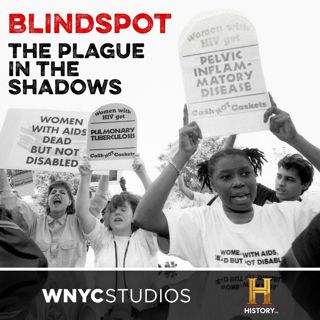
By 1986, almost 40 percent of people diagnosed with AIDS in the United States were either Black or Latino. As the full contours of the crisis became apparent, a group of Black gay men began to organize in cities across the country, demanding attention and support for the people dying in their midst. This effort required them to confront big, important institutions in both the medical establishment and the government — and it meant they had to stare down racism in the broader LGBTQ+ community. But perhaps their most pressing and consequential challenge was the most difficult to name: the rejection of their own community.

As men, women and children within the Black community began falling ill, essential institutions — the family, the church, civil rights groups — which had long stood powerfully against the most brutal injustices, remained silent or, worse, turned away. Why? What made so many shrink back at such a powerful moment of need? And what would it take to get them to step up?

In this episode, we meet some of the people who pushed their families, ministers and politicians to reckon with the crisis in their midst. We hear the words of a writer and poet, still echoing powerfully through the decades, demanding that he and his dying friends be both seen and heard; and we spend time with a woman who picked up their call, ultimately founding one of the country’s first AIDS ministries. And we meet a legendary figure, Dr. Beny Primm, who, in spite of some of his own biases and blindspots, transformed into one of the era’s leading medical advocates for Black people with HIV and AIDs. Along the way, we learn how one community was able to change — and we ask, what might have been different if that change had come sooner?

Voices in the episode:

George Bellinger grew up in Queens, New York. He’s been involved in activism since he was a teenager. He was an original board member of Gay Men of African Descent and also worked at GMHC and other HIV and AIDS organizations. He says his work is to “champion those who don’t always have a champion.”

Gil Gerald is a Black HIV and AIDS activist and writer, who co-founded the National Coalition of Black Lesbians and Gays.

Cathy Cohen is the author of “The Boundaries of Blackness: AIDS and the Breakdown of Black Politics,” which is considered a definitive history of the epidemic in Black communities.

Governor David Paterson is the former governor of New York State and a former state senator. He is the son of Basil Paterson, who served as state senator from Harlem in the late 1960s, secretary of New York State in the 1980s, and was a longtime member of Harlem’s political establishment.

Pernessa Seele is an immunologist and interfaith public health activist. She founded the Harlem Week of Prayer to End Aids and the Balm in Gilead.

• Maxine Frere is a retired nurse who spent the entirety of her 40-year career at Harlem Hospital. A lifelong Harlem resident, she’s been a member of First AME Church: Bethel since she was a kid.

Dr. Beny Primm was a nationally recognized expert on drug addiction and substance abuse treatment. His work on addiction led him to becoming one of the world’s foremost experts on HIV and AIDS.

Dr. Lawrence Brown was Dr. Beny Primm’s protégé who worked as an internist at Harlem Hospital and at Dr. Primm’s Addiction Recovery and Treatment Center in Brooklyn. Brown served on the National Black Commission on AIDS, American Society of Addiction Medicine and took over for Dr. Primm as Director of ARTC (now START) when he retired.

Jeanine Primm-Jones is the daughter of Dr. Beny Primm, a pioneer of addiction treatment and recovery. Primm is a clinical social worker, abuse recovery specialist and wellness coach, who worked with her father for decades before his death in 2015.

Phill Wilson is the founder of the Black AIDS Institute, AIDS policy director for the city of Los Angeles at the height of the epidemic and a celebrated AIDS activist in both the LGBTQ+ and Black communities since the early 1980s.

Audio from the 1986 American Public Health Association annual conference comes from APHA.

Dr. Beny Primm archival audio comes from History Makers.

This episode contains a brief mention of suicide. If you or someone you know is struggling with suicidal thoughts, there’s help available. The National Suicide Prevention Lifeline is open 24 hours a day by calling or texting 988. There’s also a live chat option on their website.

Blindspot is a co-production of The HISTORY® Channel and WNYC Studios, in collaboration with The Nation Magazine.

A companion photography exhibit by Kia LaBeija featuring portraits from the series is on view through March 11 at The Greene Space at WNYC. The photography for Blindspot was supported by a grant from the Economic Hardship Reporting Project, a nonprofit organization that promotes coverage of social inequality and economic justice.

Tämä jakso on lisätty Podme-palveluun avoimen RSS-syötteen kautta eikä se ole Podmen omaa tuotantoa. Siksi jakso saattaa sisältää mainontaa.

Jaksot(26)

There Was Love Here

There Was Love Here

In this final episode, we turn to people living with HIV today — longtime survivors of a plague who, despite their pain, frustrations and desires to just be done with it, realize they can’t be done wi...

22 Helmi 202438min

What If I Could Have Grown Old With My Brother?

What If I Could Have Grown Old With My Brother?

In 1985, doctors at a methadone clinic in the South Bronx made the harrowing discovery: 50 percent of its patients had HIV. Three years later, in the same neighborhood, a pair of epidemiologists estim...

15 Helmi 202439min

'Women Don’t Get AIDS, They Just Die From It'

'Women Don’t Get AIDS, They Just Die From It'

From the very earliest days of the epidemic, women got infected with HIV and died from AIDS — just like men. But from the earliest days, this undeniable fact was largely ignored — by the public, the g...

1 Helmi 202444min

If I Didn't Have HIV, I Wouldn't Have Met You

If I Didn't Have HIV, I Wouldn't Have Met You

It’s the 1980s — Harlem, USA — and the 17th floor of the area’s struggling public hospital is filling up with infants and children who arrive and then never leave. Some spend their whole lives on the ...

25 Tammi 202439min

Mourning in America

Mourning in America

Valerie Reyes-Jimenez called it “The Monster.” That’s how some people described HIV and AIDS in the 1980s. Valerie thinks as many as 75 people from her block on New York City’s Lower East Side died. T...

18 Tammi 202435min

Introducing Blindspot: The Plague in the Shadows

Introducing Blindspot: The Plague in the Shadows

In this season of Blindspot: The Plague in the Shadows, we travel back to a pivotal moment in the history of this country, and we trace how, decades before Covid-19, a virus tore through some of our m...

11 Tammi 20243min
Blindspot introduces Dead End: A New Jersey Political Murder Mystery

Blindspot introduces Dead End: A New Jersey Political Murder Mystery

Blindspot introduces a new podcast: Dead End: A New Jersey Political Murder Mystery New Jersey politics is not for the faint of heart. But the brutal killing of John and Joyce Sheridan, a prominent co...

2 Kesä 20225min

Suosittua kategoriassa Yhteiskunta

olipa-kerran-otsikko
seitseman
sita
siita-on-vaikea-puhua
ihme-ja-kumma
kaksi-aitia
i-dont-like-mondays
hupiklubi
uutiscast
poks
antin-palautepalvelu
rss-murhan-anatomia
mamma-mia
kolme-kaannekohtaa
gogin-ja-janin-maailmanhistoria
yopuolen-tarinoita-2
rss-palmujen-varjoissa
aikalisa
kummitusjuttuja
rss-haudattu