What If I Could Have Grown Old With My Brother?
Blindspot15 Helmi 2024

What If I Could Have Grown Old With My Brother?

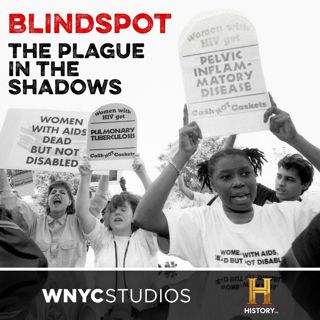
In 1985, doctors at a methadone clinic in the South Bronx made the harrowing discovery: 50 percent of its patients had HIV. Three years later, in the same neighborhood, a pair of epidemiologists estimated that as many as one in five young men were positive for the disease. Those numbers made the South Bronx one of most critical hotspots for HIV in the country.

Joyce Rivera was born and raised in the South Bronx. She watched as heroin flooded into her neighborhood followed by HIV. When Rivera’s brother died in 1987, she decided to do something. Working with a heroin dealer and a local priest, she defied the law and set up an illegal needle exchange in an attempt to prevent the transmission of HIV among injection drug users. And she largely succeeded. But what if this country had treated drug addiction like a public health issue instead of a criminal problem?

Voices in this episode include:

Don Des Jarlais has been a leader in the field of HIV and AIDS research among persons who inject drugs (PWID) for nearly 40 years. A professor of epidemiology at New York University, he served as the principal investigator of the “Risk Factors” study, which was instrumental in tracking the HIV and AIDS epidemic in New York City, among numerous others.

Sister Eileen Hogan was the first female chaplain in the Department of Correction in New York City.

Dr. Arye Rubinstein is an immunologist and allergist on the faculty at Albert Einstein Medical Center and Montefiore Medical Center. An early pioneer in AIDS research and treatment for children, he founded the pediatric AIDS center at Einstein in the early 1980s.

Joyce Rivera is the founder of St. Ann’s Corner of Harm Reduction, one of the first syringe-exchange programs in New York City. A National Science Foundation Fellow from 1981 to 1984, Rivera has been a leader in the field of AIDS and substance use for 35 years.

Father Luis Barrios is a priest and a professor of Latin American and Latinx studies and sociology at both John Jay College and the CUNY Graduate Center.

Robert Fullilove is associate dean for community and minority affairs at Columbia University’s Mailman School of Public Health, as well as a professor of clinical sociomedical sciences and the co-director of the Cities Research Group.

Blindspot is a co-production of The HISTORY® Channel and WNYC Studios, in collaboration with The Nation Magazine.

A companion photography exhibit by Kia LaBeija featuring portraits from the series is on view through March 11 at The Greene Space at WNYC. The photography for Blindspot was supported by a grant from the Economic Hardship Reporting Project, a nonprofit organization that promotes coverage of social inequality and economic justice.

Tämä jakso on lisätty Podme-palveluun avoimen RSS-syötteen kautta eikä se ole Podmen omaa tuotantoa. Siksi jakso saattaa sisältää mainontaa.

Jaksot(26)

Revisiting 9/11

Revisiting 9/11

Twenty years after the attacks that changed our world, we revisit the evidence and question the people at the center of the story.

1 Syys 20212min

Episode 6: The Lesson

Episode 6: The Lesson

The centennial of the massacre attracted international coverage; camera crews, T-shirt vendors, and even a visit from President Joe Biden. It seemed as though all this attention might ensure that hist...

2 Heinä 202133min

Episode 5: The Body

Episode 5: The Body

This episode contains descriptions of graphic violence. Ignored, erased, silenced… But Greenwood’s trauma from 1921 persists. Resmaa Menakem — a therapist and expert on healing from conflict and viole...

25 Kesä 202131min

Episode 4: The Massacre

Episode 4: The Massacre

This episode contains descriptions of graphic violence and racially offensive language. Over two days — May 31 and June 1, 1921 — a mob of white attackers systematically looted Greenwood and burned it...

18 Kesä 202139min

Episode 3: The Two Wars

Episode 3: The Two Wars

This episode contains descriptions of graphic violence and racially offensive language. When the U.S. entered World War I, W.E.B. DuBois and Tulsa lawyer B.C. Franklin saw a rare opportunity: Black Am...

11 Kesä 202139min

Episode 2: The Rise of Greenwood

Episode 2: The Rise of Greenwood

The people beyond Greenwood’s borders ensured that the neighborhood could not prosper for long. To understand how and why, we travel back to the Trail of Tears and the forced resettlement of five Nati...

4 Kesä 202135min

Episode 1: The Past Is Present

Episode 1: The Past Is Present

This episode contains descriptions of graphic violence and racially offensive language. On May 31, 1921, Tulsa, Oklahoma’s Greenwood District was a thriving Black residential and business community — ...

28 Touko 202135min

Introducing Blindspot: Tulsa Burning

Introducing Blindspot: Tulsa Burning

On May 31, 1921, the Greenwood District of Tulsa, Oklahoma was a thriving city within a city -- a symbol of pride, success and wealth. The next morning, it was ashes. What happened remained a secret f...

21 Touko 20211min

Suosittua kategoriassa Yhteiskunta

olipa-kerran-otsikko
seitseman
sita
siita-on-vaikea-puhua
ihme-ja-kumma
kaksi-aitia
i-dont-like-mondays
hupiklubi
uutiscast
poks
antin-palautepalvelu
rss-murhan-anatomia
mamma-mia
kolme-kaannekohtaa
gogin-ja-janin-maailmanhistoria
yopuolen-tarinoita-2
rss-palmujen-varjoissa
aikalisa
kummitusjuttuja
rss-haudattu