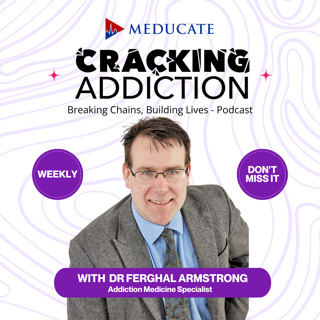
Breaking Down AA Myths and Facts

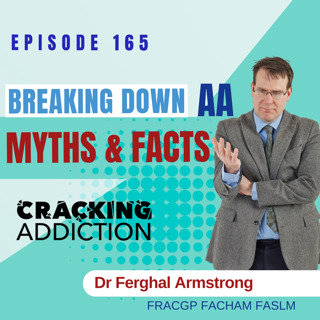
Breaking Down AA Myths and Facts

Are you looking to deepen your understanding of the AA 12-Step Program and peer support in addiction recovery? You've found the perfect video! In this engaging chat, I sit down with Jesse Ball to uncover the transformative power of peer support and the truths behind the AA 12-Step Program.

We dive right in by explaining the fundamental structure of Alcoholics Anonymous and other 12-Step groups like Narcotics Anonymous, Gamblers Anonymous, and so on, breaking down the processes that make these meetings so effective. Our conversation tackles common objections, debunking the myth that the 12-Step Program is a cult and addressing concerns around spirituality and belief systems.


As a bonus, Jesse shares his own journey from addiction to becoming a recovery support worker, highlighting the significance of having a sponsor to guide you through the 12 steps. Whether you're skeptical about needing a sponsor or simply curious about how to choose one, this video answers all your questions.


So, if you're in recovery, considering joining a peer support group, or just eager to learn more about the AA 12-Step Program, hit play and join us on this enlightening journey!


Bullet Points

Peer support groups like Alcoholics Anonymous (AA) and their variants are essential for recovery, offering a structured twelve-step program based on spiritual principles.


The twelve-step philosophy holds that human willpower alone cannot overcome addiction, emphasizing a spiritual approach to recovery.


Common criticisms of the twelve-step program include perceptions of it being a cult; however, the program is decentralised and members can leave freely at any time.


Sponsors within these programs guide newcomers through the twelve steps, and selecting a sponsor involves finding someone you understand and can connect with, often recommended to have at least one year of sobriety.


The actual work and transformation in the twelve-step program happen largely outside meetings, through the guidance of sponsors who help members adopt new ways of thinking.

Jaksot(238)

Dopamine, Relapse, and Recovery: Why Addiction Needs Long-Term Management

Dopamine, Relapse, and Recovery: Why Addiction Needs Long-Term Management

A lot of people still think addiction recovery is just about willpower.But addiction neuroscience tells a different story: dopamine, the reward system, and relapse risk all help explain why recovery o...

25 Maalis 5min

Why You Can Be Detoxed and Still Addicted

Why You Can Be Detoxed and Still Addicted

Addiction neuroscience, dopamine, cravings: detox ends withdrawal, but it does not end addiction.The MythA common myth in addiction recovery is that once detox is over, the problem is solved. Many peo...

18 Maalis 5min

Relapse Happens to Everyone: Here's the Science Why - Addiction Basics 06

Relapse Happens to Everyone: Here's the Science Why - Addiction Basics 06

Dr. Fergal Armstrong reframes relapse in addiction, explaining why it's not a personal failure but a common part of the recovery journey, comparable to chronic illnesses. Understanding the neuroscienc...

11 Maalis 5min

The Science of Withdrawal: What's Actually Happening? - Addiction Basics #5

The Science of Withdrawal: What's Actually Happening? - Addiction Basics #5

Withdrawal is one of the most feared parts of addiction recovery.But neuroscience shows something important:Withdrawal isn’t a failure of willpower — it’s the brain restoring balance after long-term c...

4 Maalis 5min

Addiction vs Dependence vs Tolerance: The Critical Medical Difference

Addiction vs Dependence vs Tolerance: The Critical Medical Difference

🚨 TOLERANCE ≠ ADDICTION 🚨Most people — even healthcare professionals — use these terms incorrectly.And that confusion is hurting patients.In this episode, we break down:🧠 The real definition of add...

25 Helmi 5min

Why Buprenorphine Is Safer Than Full Opioid Agonists

Why Buprenorphine Is Safer Than Full Opioid Agonists

Most people think methadone is the only real option for opioid addiction.Wrong.Buprenorphine — especially long-acting injectable depot — is flipping the entire system upside down.No daily pharmacy vis...

23 Helmi 28min

How Cravings Work: Limbic System vs Prefrontal Cortex - Addiction Basics EP3

How Cravings Work: Limbic System vs Prefrontal Cortex - Addiction Basics EP3

Addiction neuroscience explains why wanting to quit isn’t the same as being able to quit. Dopamine reshapes the brain’s reward system.In Episode 3 of Addiction Basics, we tackle one of the most painfu...

18 Helmi 6min

Dopamine and Addiction: The Science of Cravings - Addiction Basics EP2

Dopamine and Addiction: The Science of Cravings - Addiction Basics EP2

Addiction neuroscience explained. Dopamine, cravings, brain recovery, and neuroplasticity — backed by research.If you’ve ever wondered how addiction works in the brain, this is the science most people...

12 Helmi 6min

Suosittua kategoriassa Terveys ja hyvinvointi

unicast
rss-hanna-tikander
tiedenaiset-podcast
psykopodiaa-podcast
voi-hyvin-meditaatiot-2
rss-pitaisko-erota
rss-kuumilla-aalloilla
vakeva-elama-viisaampi-mieli-vahvempi-keho
rss-narsisti
junnut-pelissa
rss-pt-paahtio
puhu-muru
katilon-kahvitunti
rss-kyykkya-ja-kuoharia
meditaatiot-suomeksi
paritellen
fitnessvastaanotto
rss-sanelunpurku-podcast
rss-seuraava-potilas
terapiassa