132: The essential role of industry for long-term CO2 storage
Seismic Soundoff11 Marras 2021

132: The essential role of industry for long-term CO2 storage

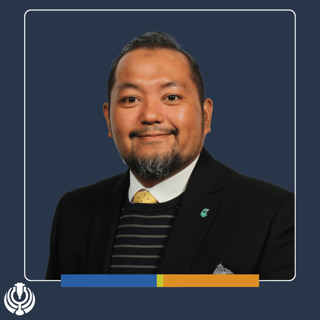
Mark Zoback discusses his Honorary Lecture, "Geomechanical Issues Affecting Long-Term Storage of CO2." In this episode, Mark highlights how oil and gas companies are best positioned to address the needs for large-scale carbon storage. He discusses the role of depleted oil and gas reservoirs for CO2 storage, as well as the geomechanical issues that have to be considered. Mark also shares what is most essential to unlocking long-term CO2 storage and how government officials and companies can work together. This is a timely conversation that addresses real-world needs with the geophysical knowledge to solve problems. Visit https://seg.org/podcast to find the link to listen to Mark's lecture. BIOGRAPHY Mark D. Zoback is the Benjamin M. Page Professor of Geophysics at Stanford University, Director of the Stanford Natural Gas Initiative, and Co-Director of the Stanford Center for Induced and Triggered Seismicity, and the Stanford Center for Carbon Storage. Zoback conducts research on in situ stress, fault mechanics, and reservoir geomechanics with an emphasis on shale gas, tight gas, and tight oil production as well as CO2 sequestration. He is the author of two textbooks and the author/co-author of approximately 400 technical papers. Zoback has received a number of awards and honors, including election to the U.S. National Academy of Engineering in 2011 and the Robert R. Berg Outstanding Research Award of the AAPG in 2015. He was the 2020 chair of the Society of Petroleum Engineers Technical Committee on Carbon Capture, Utilization, and Storage. SPONSOR This episode is brought to you by CGG. Question: What is key to safe, long-term CO2 storage? Answer: A good understanding of subsurface site integrity. Making more-informed decisions while developing your sub-surface storage calls for the kind of integrated geoscience expertise CGG can provide. Our multi-discipline approach delivers assessments of containment risks such a cap rock failure, fault reactivation and surface deformation. Our coupled reservoir, geomechanics and fracturing simulations can incorporate thermal effects and a full range of non-linear material models to ensure a rigorous assessment of injection and storage risks. With CGG, gain greater insight for your carbon and energy storage projects with our unique range of geoscience expertise that helps you see things differently. Visit https://www.cgg.com/ to learn more. CREDITS Original music by Zach Bridges. This episode was hosted, edited, and produced by Andrew Geary at 51 features, LLC. Thank you to the SEG podcast team: Ted Bakamjian, Kathy Gamble, and Ally McGinnis. You can follow the podcast to hear the latest episodes on Apple Podcasts, Google Podcasts, and Spotify.

Jaksot(301)

OTC 2026 Emerging Leaders on the Future of Offshore Energy Collaboration

OTC 2026 Emerging Leaders on the Future of Offshore Energy Collaboration

“Nothing can happen in a vacuum anymore. We need to have the developers talking to the geoscientists, talking to the environmental professionals.” Two OTC 2026 Emerging Leaders share why the future o...

23 Huhti 28min

Why Seismic Acquisition Is Making a Quiet Comeback

Why Seismic Acquisition Is Making a Quiet Comeback

"What has happened in the last few years is exploration overall has taken a little bit of a backseat. So they are starting to relook at seismic acquisition to explore new areas and solve more complex ...

16 Huhti 27min

From Hype to Reality: What Machine Learning Can Actually Do

From Hype to Reality: What Machine Learning Can Actually Do

“You can't be stationary in this field. I've never seen anything like it." Machine learning is changing geophysics faster than most people expected, but knowing what actually works versus what is hyp...

9 Huhti 27min

DAS and Seismic Innovation: What Geophysicists Need to Know

DAS and Seismic Innovation: What Geophysicists Need to Know

"For early career geophysicists, I think it's really important to understand that DAS is going to have a unique role in reservoir management, be it onshore or offshore." Distributed acoustic sensing ...

19 Maalis 27min

From Oil and Gas to Offshore Wind: Why Everyone Meets at OTC

From Oil and Gas to Offshore Wind: Why Everyone Meets at OTC

“And what the world really needs is this flexibility on energy and the agility to ensure access and affordability. And that's where steering the offshore energy business is really critical.” Offshore...

12 Maalis 29min

Applying Near-Surface Geophysics to Agricultural Challenges

Applying Near-Surface Geophysics to Agricultural Challenges

“It’s not only about discovering resources, but about safeguarding them and safeguarding our future. When you understand the subsurface, you understand the foundation of food security, water security,...

5 Maalis 26min

Inside the Workflow - Unsupervised Machine Learning for Seismic Interpretation

Inside the Workflow - Unsupervised Machine Learning for Seismic Interpretation

“The major pitfall of machine learning of any kind is to be overly confident in the results. We run the risk of garbage in gospel out.” This discussion offers a rare chance to go a little deeper into...

19 Helmi 35min

Why High-Performance Computing Is No Longer Optional in Geophysics

Why High-Performance Computing Is No Longer Optional in Geophysics

“I think that for geophysicists out there, people need to realize that it's an integrated career path. You can't separate the geophysics from the HPC anymore, if we ever did to begin with.” High-perf...

12 Helmi 21min

Suosittua kategoriassa Tiede

rss-poliisin-mieli
rss-mita-tulisi-tietaa
utelias-mieli
tiedekulma-podcast
rss-duodecim-lehti
radio-antro
rss-ylistys-elaimille
docemilia
sotataidon-ytimessa
filocast-filosofian-perusteet
menologeja-tutkimusmatka-vaihdevuosiin
rss-tiedetta-vai-tarinaa
rss-lapsuuden-rakentajat-podcast
rss-sosiopodi
rss-totuuden-liepeilla