136: The hidden stories data tell with Joe Dellinger
Seismic Soundoff16 Joulu 2021

136: The hidden stories data tell with Joe Dellinger

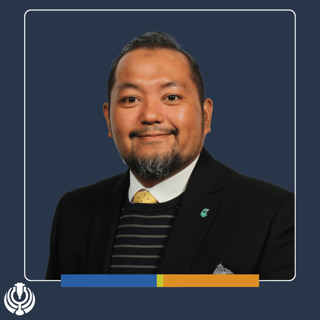
Joe Dellinger discusses his 2022 Distinguished Instructor Short Course, "Forensic data processing." Are you a geophysicist that processes seismic data, or someone who uses the processed results of that data? If so, you probably think of seismic data as something that arrives on a tape or "from the cloud." However, your data also has other, hidden stories to tell - stories that likely were shredded and lost when you chopped the data into traces and fed it into your algorithms for processing. We typically call anything our algorithms are not designed to deal with "noise." Can we make use of such "noise," or at least better understand it? If we understood it, could we do something useful with it (or at least have a better idea of how to suppress it)? The goal of Joe's course - and this conversation - is to get you thinking more critically about your data. How was it recorded? What is in it? What happened to it on the way from the field to numbers in a file? Joe brings his experience, expertise, wisdom, and humor to this essential conversation on data that will be valuable for every geophysicist. Start the new year with the fresh insights presented in this episode. RELATED LINKS * Learn more about Joe's DISC (https://seg.org/Education/Courses/DISC/2022-DISC-joe-dellinger) * Watch the 2016 DISC: Forensic data processing - Revealing your data's hidden stories (https://seg.org/Education/Lectures/Distinguished-Lectures/2016-DL-Dellinger/Recording) * Discover SEG on Demand (https://seg.org/Education/SEG-on-Demand) BIOGRAPHY Joe Dellinger received a Ph.D. in 1991 from Jon Claerbout’s Stanford Exploration Project. He then did a three-year post-doc at the University of Hawaii before joining Amoco in Tulsa in 1994. He moved to BP in Houston in 1999 and has worked there since. In his career, he has specialized in anisotropy, multi-component algorithms and processing, and most recently investigated the problem of how to record ultra-low frequencies with the goal of enabling inversion algorithms like FWI to resolve complex velocity-model-building challenges in deep-water marine environments. This last challenge required Dellinger to look closely at “useful information in our seismic data that is normally ignored,” i.e., “forensic data processing.” This has included studying the 2006 “Green Canyon” earthquake, investigating how the Valhall Ocean-bottom-cable array might be used between seismic surveys, and characterizing seismic sources and noise in deep-water ocean-bottom Gulf of Mexico data. In the course of that project, BP created a new vibratory low-frequency marine source, Wolfspar®, which proved to be particularly amenable for these studies because it has a precisely known source signature. These learnings became the basis for his Spring 2016 Distinguished Lecture and will be the core of the follow-up 2022 short course. SPONSOR This episode is sponsored by CGG. For over 90 years, CGG’s positive outlook for the future has driven us to constantly push the boundaries of what’s possible. This optimism, combined with new thinking and advanced technologies, helps us solve today’s most complex natural resource, environmental and infrastructure challenges. As this year draws to a close, we’d like to wish SEG and its members every success in 2022. As always, CGG will be there to help you see things differently. Visit https://www.cgg.com/ to learn more. CREDITS Original music by Zach Bridges. This episode was hosted, edited, and produced by Andrew Geary at 51 features, LLC. Thank you to the SEG podcast team: Ted Bakamjian, Kathy Gamble, and Ally McGinnis. You can follow the podcast to hear the latest episodes on Apple Podcasts, Google Podcasts, and Spotify.

Jaksot(301)

OTC 2026 Emerging Leaders on the Future of Offshore Energy Collaboration

OTC 2026 Emerging Leaders on the Future of Offshore Energy Collaboration

“Nothing can happen in a vacuum anymore. We need to have the developers talking to the geoscientists, talking to the environmental professionals.” Two OTC 2026 Emerging Leaders share why the future o...

23 Huhti 28min

Why Seismic Acquisition Is Making a Quiet Comeback

Why Seismic Acquisition Is Making a Quiet Comeback

"What has happened in the last few years is exploration overall has taken a little bit of a backseat. So they are starting to relook at seismic acquisition to explore new areas and solve more complex ...

16 Huhti 27min

From Hype to Reality: What Machine Learning Can Actually Do

From Hype to Reality: What Machine Learning Can Actually Do

“You can't be stationary in this field. I've never seen anything like it." Machine learning is changing geophysics faster than most people expected, but knowing what actually works versus what is hyp...

9 Huhti 27min

DAS and Seismic Innovation: What Geophysicists Need to Know

DAS and Seismic Innovation: What Geophysicists Need to Know

"For early career geophysicists, I think it's really important to understand that DAS is going to have a unique role in reservoir management, be it onshore or offshore." Distributed acoustic sensing ...

19 Maalis 27min

From Oil and Gas to Offshore Wind: Why Everyone Meets at OTC

From Oil and Gas to Offshore Wind: Why Everyone Meets at OTC

“And what the world really needs is this flexibility on energy and the agility to ensure access and affordability. And that's where steering the offshore energy business is really critical.” Offshore...

12 Maalis 29min

Applying Near-Surface Geophysics to Agricultural Challenges

Applying Near-Surface Geophysics to Agricultural Challenges

“It’s not only about discovering resources, but about safeguarding them and safeguarding our future. When you understand the subsurface, you understand the foundation of food security, water security,...

5 Maalis 26min

Inside the Workflow - Unsupervised Machine Learning for Seismic Interpretation

Inside the Workflow - Unsupervised Machine Learning for Seismic Interpretation

“The major pitfall of machine learning of any kind is to be overly confident in the results. We run the risk of garbage in gospel out.” This discussion offers a rare chance to go a little deeper into...

19 Helmi 35min

Why High-Performance Computing Is No Longer Optional in Geophysics

Why High-Performance Computing Is No Longer Optional in Geophysics

“I think that for geophysicists out there, people need to realize that it's an integrated career path. You can't separate the geophysics from the HPC anymore, if we ever did to begin with.” High-perf...

12 Helmi 21min

Suosittua kategoriassa Tiede

rss-poliisin-mieli
rss-mita-tulisi-tietaa
utelias-mieli
tiedekulma-podcast
rss-duodecim-lehti
radio-antro
rss-ylistys-elaimille
docemilia
sotataidon-ytimessa
filocast-filosofian-perusteet
menologeja-tutkimusmatka-vaihdevuosiin
rss-tiedetta-vai-tarinaa
rss-lapsuuden-rakentajat-podcast
rss-sosiopodi
rss-totuuden-liepeilla