150: Consequences of contemporary stress in the earth’s crust
Seismic Soundoff12 Touko 2022

150: Consequences of contemporary stress in the earth’s crust

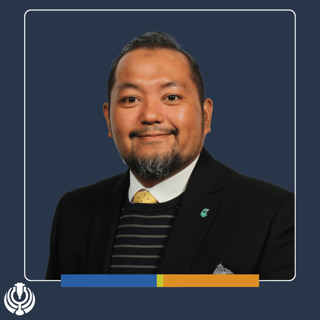
Mojtaba Rajabi discusses his upcoming Pacific South Honorary Lecture, "Present-Day Crustal Stress Across Spatial Scales." The present-day crustal in-situ stress field is of extreme importance for understanding both natural processes (e.g., understanding neotectonics, earthquake, and seismic hazard assessment) and anthropogenic activities (e.g., exploration and production of geothermal energy, groundwater, hydrocarbon, mineral resources, CO2, and hydrogen geo-storage). Analysis of the present-day stresses in numerous basins from across the world reveals that significant and complex variations in the present-day stress orientation are commonly observed at different scales. Mojtaba's lecture aims to investigate the pattern of crustal stress at different spatial scales to better evaluate the causes and consequences of contemporary stress in the earth’s crust. In this conversation with host Andrew Geary, Mojtaba shares why it's necessary to understand the present-day crustal in-situ stress field, the impact of investigating crustal stress at different scales, and the causes and consequences of contemporary stress in the earth’s crust. He also goes over the concept of stress mapping and what his years of experience studying basins have taught him. RELATED LINKS * Register for Mojtaba's course for free (9 June 2022) (https://www.knowledgette.com/p/present-day-crustal-stress-across-spatial-scales) * Discover SEG on Demand (https://seg.org/Education/SEG-on-Demand) * See the full archive of the SEG podcast (https://seg.org/podcast) BIOGRAPHY Dr. Mojtaba Rajabi is an ARC DECRA Fellow at the School of Earth and Environmental Sciences, University of Queensland. He has more than 14 years of extensive experience in crustal stress analysis, geomechanics, and geomechanical-numerical modeling. He graduated with a Ph.D. in Earth Sciences from the University of Adelaide in 2016. Dr. Rajabi has worked on the geomechanical analyses of more than 30 sedimentary basins from across the world including Australia, New Zealand, the Middle East, Mozambique, Iceland, and the Western Mediterranean. Since 2012, Dr. Rajabi has worked on the Australian and World Stress Map projects. He has received over 15 prestigious awards and prizes for his research including the ARC-DECRA Award, the Australian SEG Early Achievement Award, EAGE Louis Cagniard Award, the Royal Society of South Australia's H.G. Andrewartha Medal, and the International Lithosphere Program’s Flinn-Hart Award. SPONSOR This episode is sponsored by Geospace Technologies. As the leading innovator and manufacturer of wireless seismic data acquisition systems, Geospace Technologies offers a series of seabed, wireless seismic data acquisition systems designed for extended-duration seabed seismic data acquisition. Geospace is committed to setting new standards for quality, performance, reliability and cost savings to E&P companies and marine geophysical contractors. CREDITS SEG produces Seismic Soundoff to benefit its members, the scientific community, and to inform the public on the value of geophysics. To show your support for the show, please leave a 5-star rating on Apple Podcasts and Spotify. It takes less than five seconds to leave a 5-star rating and is the number one action you can take to show your appreciation for this free resource. And follow the podcast while you are on the app to be notified when each new episode releases. Original music created by Zach Bridges. Andrew Geary hosted, edited, and produced this episode for 51 features, LLC. Thank you to the SEG podcast team: Jennifer Cobb, Kathy Gamble, and Ally McGinnis.

Tämä jakso on lisätty Podme-palveluun avoimen RSS-syötteen kautta eikä se ole Podmen omaa tuotantoa. Siksi jakso saattaa sisältää mainontaa.

Jaksot(308)

300: The Hardest Part of DAS Isn’t the Technology

300: The Hardest Part of DAS Isn’t the Technology

“It’s hard to tell where the limit is in terms of where it can go. You have to see what is possible to want to drive this.” Andrew Geary speaks with Malc Kent about why distributed acoustic sensing i...

9 Heinä 27min

Why SEG Is Building a Home for Mining Geophysics

Why SEG Is Building a Home for Mining Geophysics

"That’s what we’re trying to achieve with this forum: bringing all the people together with different backgrounds and create this community, which I don’t think fully exists right now.” Jiajia Sun an...

18 Kesä 30min

The Human Side of Volcano Monitoring

The Human Side of Volcano Monitoring

"I feel like we are making a change in the way that people now see the volcanoes and see the earthquakes in El Salvador. So in that sense, I think we are making a a big change.” Adonay Martinez Coto ...

11 Kesä 33min

How Geophysics Connects Curiosity, Science, and Career Opportunity

How Geophysics Connects Curiosity, Science, and Career Opportunity

“If you're curious about geophysics, there's definitely a place in geophysics for you. The field is so interdisciplinary.” Johanna Villagomez joins Andrew Geary to share how curiosity, fieldwork, stu...

4 Kesä 23min

What Geophysicists Gain by Attending URTeC

What Geophysicists Gain by Attending URTeC

"Integration, literally, that's why the URTeC is successful.” Marianne Rauch joins Andrew Geary to explain why URTeC 2026 matters for geophysicists who want their work to shape real field decisions. ...

21 Touko 25min

Why Geophysicists Are Paying More Attention to Groundwater

Why Geophysicists Are Paying More Attention to Groundwater

“The concept of mapping the aquifer from the sky, that’s gigantic. It could change how aquifers are managed around the world.” Seogi Kang and Mike Wilt explain why groundwater is becoming one of the ...

14 Touko 28min

The Hidden Opportunity in Critical Minerals That Geophysicists Can’t Ignore

The Hidden Opportunity in Critical Minerals That Geophysicists Can’t Ignore

“We all realize that we need a lot more mineral resources in the next two decades. And we realized that geophysics can play a critical role.” Sarah Devriese and Jiajia Sun explain why demand for crit...

7 Touko 26min

OTC 2026 Emerging Leaders on the Future of Offshore Energy Collaboration

OTC 2026 Emerging Leaders on the Future of Offshore Energy Collaboration

“Nothing can happen in a vacuum anymore. We need to have the developers talking to the geoscientists, talking to the environmental professionals.” Two OTC 2026 Emerging Leaders share why the future o...

23 Huhti 28min

Suosittua kategoriassa Tiede

rss-mita-tulisi-tietaa
tiedekulma-podcast
filocast-filosofian-perusteet
rss-ammamafia
docemilia
rss-poliisin-mieli
hippokrateen-vastaanotolla
rss-bios-podcast
rss-duodecim-lehti
rss-tiedetta-vai-tarinaa
rss-lihavuudesta-podcast