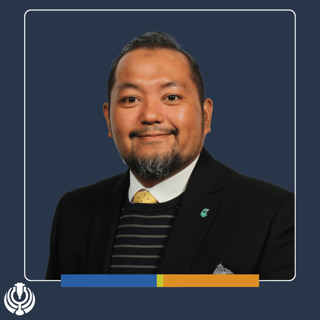
203: Solving future challenges for deep exploration
Seismic Soundoff2 Marras 2023

203: Solving future challenges for deep exploration

Chao Wang and Stephen Graf discuss the October special section in The Leading Edge on deep exploration. In the 1920s, the first oil discovery in Seminole, Oklahoma, was made at a depth of approximately 4,000 feet. In 1949, the average depth was 3,600 feet. By 2008, it was 6,000 feet. Currently, the world's deepest oil well in Russia extends 49,000 feet into the earth's surface. Deep exploration below existing production, complex overburden, or at the limits of geophysical resolution is critical for existing and emerging ventures. To meet these challenges, researchers and geoscientists are actively working to acquire better data and develop innovative methods to improve imaging. And in this episode, guest editors Chao Wang and Stephen Graf highlight the recent advances that improve success and extend capability in challenging deep environments. Chao and Stephen explain how and why the various geological settings impact deep exploration. They outline if land or marine exploration is easier and which has the greater potential. They explore the role of machine learning and AI for deep exploration and what other technological developments warrant attention. Chao and Stephen also share one misconception the public often has about deep exploration and one future development they are most excited about. They also discuss what surprised them across the six papers in this special section and how their different perspectives impact how they see the future of this topic. Chao Wang is Senior Staff Geophysicist at Oxy. Stephen Graf is a Staff Senior Geophysicist at Oxy. Listen to the full archive at https://seg.org/podcast. RELATED LINKS * Chao Wang, Stephen Graf, and Chengbo Li, (2023), "Introduction to this special section: Deep exploration," The Leading Edge 42: 662–662. (https://doi.org/10.1190/tle42100662.1) * Read the October 2023 issue of The Leading Edge (https://library.seg.org/toc/leedff/42/10) Subscribers can read the full articles at https://library.seg.org/; abstracts are always free. CREDITS Seismic Soundoff explores the depth and usefulness of geophysics for the scientific community and the public. If you want to be the first to know about the next episode, please follow or subscribe to the podcast wherever you listen to podcasts. Two of our favorites are Apple Podcasts and "Spotify. If you have episode ideas, feedback for the show, or want to sponsor a future episode, find the "Contact Seismic Soundoff" box at https://seg.org/podcast. Zach Bridges created original music for this show. Andrew Geary hosted, edited, and produced this episode at TreasureMint. The SEG podcast team is Jennifer Cobb, Kathy Gamble, and Ally McGinnis.

Tämä jakso on lisätty Podme-palveluun avoimen RSS-syötteen kautta eikä se ole Podmen omaa tuotantoa. Siksi jakso saattaa sisältää mainontaa.

Jaksot(307)

Why SEG Is Building a Home for Mining Geophysics

Why SEG Is Building a Home for Mining Geophysics

"That’s what we’re trying to achieve with this forum: bringing all the people together with different backgrounds and create this community, which I don’t think fully exists right now.” Jiajia Sun an...

18 Kesä 30min

The Human Side of Volcano Monitoring

The Human Side of Volcano Monitoring

"I feel like we are making a change in the way that people now see the volcanoes and see the earthquakes in El Salvador. So in that sense, I think we are making a a big change.” Adonay Martinez Coto ...

11 Kesä 33min

How Geophysics Connects Curiosity, Science, and Career Opportunity

How Geophysics Connects Curiosity, Science, and Career Opportunity

“If you're curious about geophysics, there's definitely a place in geophysics for you. The field is so interdisciplinary.” Johanna Villagomez joins Andrew Geary to share how curiosity, fieldwork, stu...

4 Kesä 23min

What Geophysicists Gain by Attending URTeC

What Geophysicists Gain by Attending URTeC

"Integration, literally, that's why the URTeC is successful.” Marianne Rauch joins Andrew Geary to explain why URTeC 2026 matters for geophysicists who want their work to shape real field decisions. ...

21 Touko 25min

Why Geophysicists Are Paying More Attention to Groundwater

Why Geophysicists Are Paying More Attention to Groundwater

“The concept of mapping the aquifer from the sky, that’s gigantic. It could change how aquifers are managed around the world.” Seogi Kang and Mike Wilt explain why groundwater is becoming one of the ...

14 Touko 28min

The Hidden Opportunity in Critical Minerals That Geophysicists Can’t Ignore

The Hidden Opportunity in Critical Minerals That Geophysicists Can’t Ignore

“We all realize that we need a lot more mineral resources in the next two decades. And we realized that geophysics can play a critical role.” Sarah Devriese and Jiajia Sun explain why demand for crit...

7 Touko 26min

OTC 2026 Emerging Leaders on the Future of Offshore Energy Collaboration

OTC 2026 Emerging Leaders on the Future of Offshore Energy Collaboration

“Nothing can happen in a vacuum anymore. We need to have the developers talking to the geoscientists, talking to the environmental professionals.” Two OTC 2026 Emerging Leaders share why the future o...

23 Huhti 28min

Why Seismic Acquisition Is Making a Quiet Comeback

Why Seismic Acquisition Is Making a Quiet Comeback

"What has happened in the last few years is exploration overall has taken a little bit of a backseat. So they are starting to relook at seismic acquisition to explore new areas and solve more complex ...

16 Huhti 27min

Suosittua kategoriassa Tiede

rss-mita-tulisi-tietaa
hippokrateen-vastaanotolla
utelias-mieli
docemilia
filocast-filosofian-perusteet
rss-tiedetta-vai-tarinaa
rss-totuuden-liepeilla
tiedekulma-podcast
ihanat-ipanat
radio-antro
rss-bios-podcast
rss-vaasan-yliopiston-podcastit
rss-ammamafia
rss-hereilla
rss-kasvikutsut