234: How AI is Being Applied to Seismic Interpretation
Seismic Soundoff19 Syys 2024

234: How AI is Being Applied to Seismic Interpretation

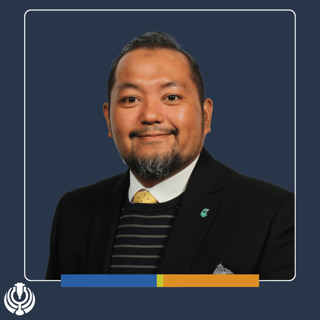
"We are trying to enable the geoscientists to do their work better and faster." In this episode, we explore the use of artificial intelligence (AI) in seismic interpretation, focusing on the advantages of a data-centric approach over the traditional model-centric method. Morten Ofstad, a computer scientist, emphasizes the limitations of pre-trained "black box" deep learning models and advocates for interactive deep learning to improve interpretation accuracy. The discussion highlights VDS, a data format designed for random access and compression, and emphasizes the importance of empowering geoscientists to interact directly with AI-driven interpretation processes. In this episode, we talk about: > The differences between model-centric and data-centric approaches to AI in seismic interpretation. > The limitations of "black box" deep learning models in seismic interpretation and how an interactive approach can improve accuracy and insights. > The importance of high-quality data and accurate labels in training AI models for seismic interpretation and how the data-centric approach helps identify inaccuracies. > How virtual data storage (VDS), a data format designed for random access and compression, can improve the efficiency of data-centric AI workflows in seismic interpretation. > The potential of data-centric AI to empower geoscientists, enabling them to work faster and more accurately. THIS EPISODE IS SPONSORED BY BLUWARE Bluware's InteractivAI is a human-powered AI seismic analysis tool, revolutionizing the way geoscientists extract value from seismic data. Unlike traditional seismic interpretation tools that just "check the box" for AI through black box algorithms, InteractivAI puts the interpreter in the driver’s seat by presenting an intuitive, live feedback loop. Users experience a faster and more comprehensive interpretation, leading to higher-confidence decision-making. Learn more at https://bluware.com. GUEST BIO Morten Ofstad has worked with computer graphics since graduating from high school. As one of the first employees of Norwegian games developer Funcom, he created the game engine for the 2D games that formed the basis of Funcom's initial growth. He's been working as the lead developer of several successful game titles from studios like Sony Computer Entertainment Europe in London and Innerloop Studios in Oslo. Between jobs in the games industry, he completed an M.Sc. in computer science at the University of Oslo, graduating with honors. Besides 3D graphics, Morten's interests include compiler technology, system architecture, and image processing. KEY IDEAS AND FACTS * Limitations of Model-Centric AI * Benefits of Data-Centric & Interactive Deep Learning * Addressing Challenges of Data Quality and Labeling * VDS Data Format as an Enabler CALL TO ACTION * Explore how data-centric AI tools can be integrated into geoscientists' workflows. * Move beyond simply asking questions and receiving answers, and instead utilize AI to "interrogate your data" and gain deeper insights. LINKS * Visit https://seg.org/podcasts/episode-234-how-ai-is-being-applied-to-seismic-interpretation/ for a breakdown of the key terms discussed and the complete show notes. SHOW CREDITS Andrew Geary at TreasureMint hosted, edited, and produced this episode. The SEG podcast team comprises Jennifer Cobb, Kathy Gamble, and Ally McGinnis. If you have episode ideas or feedback for the show or want to sponsor a future episode, email the show at podcast@seg.org.

Tämä jakso on lisätty Podme-palveluun avoimen RSS-syötteen kautta eikä se ole Podmen omaa tuotantoa. Siksi jakso saattaa sisältää mainontaa.

Jaksot(320)

305: Building Trust in Elastic FWI

305: Building Trust in Elastic FWI

“We always aim for 60 percent. The other 40 percent, we are ready to make mistakes, learn from those mistakes, and then move forward.” A 600-meter carbonate platform forced Dr. Ahmad Riza Ghazali and...

27 Elo 30min
14: How Exhibiting at IMAGE Can Shape What You Build Next (Inside IMAGE '26)

14: How Exhibiting at IMAGE Can Shape What You Build Next (Inside IMAGE '26)

Julian Chenin calls IMAGE “Disneyland for geoscience,” and after walking the exhibition floor it is easy to understand what he means. But for ROGII, the real value is what happens when people stop at ...

21 Elo 9min

13: AI Is an Accelerator, Not the Decision-Maker (Inside IMAGE '26)

13: AI Is an Accelerator, Not the Decision-Maker (Inside IMAGE '26)

Companies have spent years storing more and more data, but Amii Rozell and Hana Kabazi make an important distinction: saving the final answer is not the same as saving why you made the decision. Three...

21 Elo 28min

12: How GWB Turns Geoscience Into Human Impact (Inside IMAGE '26)

12: How GWB Turns Geoscience Into Human Impact (Inside IMAGE '26)

Geoscientists Without Borders starts with a simple idea: geoscience can improve someone’s life. Jim Funk has seen what access to clean water can mean in African communities, while Craig Beasley talks ...

20 Elo 26min

11: Bringing Sheriff's Dictionary to the Spanish-Speaking World (Inside IMAGE '26)

11: Bringing Sheriff's Dictionary to the Spanish-Speaking World (Inside IMAGE '26)

This one is personal for me. I worked with Reinaldo Michelena, Lucía Torrado, and Sergio Chávez-Pérez on this project for years, and after more than a decade of effort, seeing a printed Spanish editio...

20 Elo 32min
10: The Other Half of a Technical Career (Inside IMAGE '26)

10: The Other Half of a Technical Career (Inside IMAGE '26)

The SEG & AAPG Women’s Network brought together six leaders for a conversation on technical leadership and decision-making in complex energy environments. The panel focused on what happens as technica...

19 Elo 22min

9: What Great Geoscientists Keep Learning (Inside IMAGE '26)

9: What Great Geoscientists Keep Learning (Inside IMAGE '26)

Tom Ewing and Mike Forrest join me ahead of the AAPG and SEG Honors and Awards ceremonies for a conversation that quickly becomes less about the awards and more about what kept them engaged for so man...

19 Elo 26min
8: Where the Next Geoscience Opportunity Comes From (Inside IMAGE '26)

8: Where the Next Geoscience Opportunity Comes From (Inside IMAGE '26)

As IMAGE 2026 gets underway, we return to two conversations from last year that feel even more relevant now. Peter Duncan explains why asset turnover can create openings for smaller oil and gas compa...

18 Elo 19min

Suosittua kategoriassa Tiede

rss-poliisin-mieli
tiedekulma-podcast
utelias-mieli
rss-mita-tulisi-tietaa
rss-luontopodi-samuel-glassar-tutkii-luonnon-ihmeita
docemilia
rss-hereilla
rss-tiedetta-vai-tarinaa
rss-totuuden-liepeilla
rss-duokkari-ekstra
rss-murremyytin-murtajat
sotataidon-ytimessa
rss-ja-ihminen-loi-alyn-aalto-yliopiston-tekoalypodcast
filocast-filosofian-perusteet
rss-tervetta-skeptisyytta
hippokrateen-vastaanotolla
rss-duodecim-lehti