William E. Connolly, “The Fragility of Things: Self-Organizing Processes, Neoliberal Fantasies, and Democratic Activism” (Duke UP, 2013)

William E. Connolly, “The Fragility of Things: Self-Organizing Processes, Neoliberal Fantasies, and Democratic Activism” (Duke UP, 2013)

Bill Connolly‘s new book proposes a way to think about the world as a gathering of self-organizing systems or ecologies, and from there explores the ramifications and possibilities of this notion for how we think about and practice work with markets, politics, daily life, and beyond. The Fragility of Things: Self-Organizing Processes, Neoliberal Fantasies, and Democratic Activism (Duke UP, 2013) opens with a prelude that takes readers into the 1755 earthquake disaster in Lisbon via Voltaire’s Candide, using this to introduce a critique of neoliberalism that will continue to be so important for the duration of the book. Connolly reframes our understanding of markets in terms of an entanglement of human and nonhuman systems, with main chapters successively offering a critique of current thinking about neoliberalism and clear suggestions for how to move forward from it, a close reading of the work of Friedrich Hayek, and wonderfully productive dialogues between Kant and Hesiod (in Ch. 3) and Nietzsche and Whitehead (in Ch. 4). A series of interludes open up the narrative and ideas from the main chapters in light of contemporary film, bridges and thermodynamic systems, and the idea of human “fullness” and vitality. A postlude explores the relations between belief, sensibility, role experimentation, and political activism. In short, The Fragility of Things is an inspiring and beautifully written work. For readers interested in STS in particular, it also offers a way to think with self-organizing systems in the service of reorienting our stories about (human and nonhuman) individuals, their relationships, and the larger networks of which they’re a part. Highly recommended! Learn more about your ad choices. Visit megaphone.fm/adchoices Support our show by becoming a premium member! https://newbooksnetwork.supportingcast.fm/critical-theory

Tämä jakso on lisätty Podme-palveluun avoimen RSS-syötteen kautta eikä se ole Podmen omaa tuotantoa. Siksi jakso saattaa sisältää mainontaa.

Jaksot(2246)

Ainehi Edoro, "Forest Imaginaries: How African Novels Think" (Columbia UP, 2026)

Ainehi Edoro, "Forest Imaginaries: How African Novels Think" (Columbia UP, 2026)

Forests in fiction are often understood simply as settings, symbols, or remnants of a premodern past. Yet many African novelists have turned to the forest to experiment with worldbuilding and to imagi...

30 Maalis 1h 2min

Emmanuel Ofuasia, "Ìwà: the Process-Relational Dimension to African Metaphysics" (Springer, 2024)

Emmanuel Ofuasia, "Ìwà: the Process-Relational Dimension to African Metaphysics" (Springer, 2024)

Correction: In the interview, the host mistakenly mentioned that Prof. Ofuasia is teaching the University of Pretoria. In reality, Prof Ofuasia is currently a decoloniality research associate at the U...

29 Maalis 1h 31min

Thomas Hegghammer and Diego Gambetta eds., "Fight, Flight, Mimic: Identity Mimicry in Conflict" (Oxford UP, 2024)

Thomas Hegghammer and Diego Gambetta eds., "Fight, Flight, Mimic: Identity Mimicry in Conflict" (Oxford UP, 2024)

Time spent and words spent—what does each signal? Deceptive mimicry—the manipulation of individual or group identity—includes passing off as a different individual, as a member of a group to which on...

28 Maalis 1h 5min

The Criminal Record Complex: Risk, Race, and the Struggle for Work in America

The Criminal Record Complex: Risk, Race, and the Struggle for Work in America

Most employers in the United States routinely conduct criminal background checks on job applicants, weeding out those with criminal convictions—and thus denying opportunities to those who need them m...

26 Maalis 54min

Hsuan L Hsu, "Olfactory Worldmaking" (U Minnesota Press, 2026)

Hsuan L Hsu, "Olfactory Worldmaking" (U Minnesota Press, 2026)

Smell is a vital, if underappreciated, medium through which we inhabit and imagine the world. In Olfactory Worldmaking (University of Minnesota Press, 2026), Dr. Hsuan L. Hsu traces how olfactory expe...

24 Maalis 26min
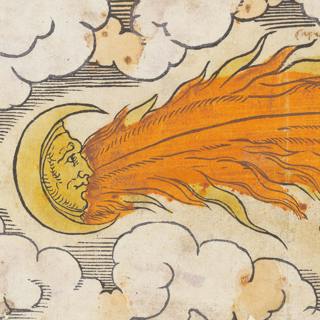
Prolepsis

Prolepsis

In this episode of High Theory, Gloria Fisk talks to Kim about Prolepsis. Defined by Gerard Genette in the 1970s, prolepsis is a flash forward, the opposite of analepsis, a flash back. Initially the p...

23 Maalis 16min

David Bather Woods, "Arthur Schopenhauer: The Life and Thought of Philosophy's Greatest Pessimist" (U Chicago Press, 2025)

David Bather Woods, "Arthur Schopenhauer: The Life and Thought of Philosophy's Greatest Pessimist" (U Chicago Press, 2025)

Arthur Schopenhauer: The Life and Thought of Philosophy’s Greatest Pessimist by David Bather Woods An engaging biography of one of the most influential Western philosophers and a thought-provoking ex...

23 Maalis 1h 16min

Philip C. Almond, "Noah and the Flood in Western Thought" (Cambridge UP, 2025)

Philip C. Almond, "Noah and the Flood in Western Thought" (Cambridge UP, 2025)

In a world beset by climatic emergencies, the continuing resonance of the flood story is perhaps easy to understand. Whether in the tortured alpha male intensity of Russell Crowe’s Noah, in Darren Aro...

21 Maalis 50min

Suosittua kategoriassa Tiede

rss-mita-tulisi-tietaa
rss-poliisin-mieli
tiedekulma-podcast
utelias-mieli
docemilia
rss-duodecim-lehti
rss-tiedetta-vai-tarinaa
rss-totuuden-liepeilla
university-of-eastern-finland
filocast-filosofian-perusteet
rss-bios-podcast
rss-duokkari-ekstra
rss-laakaripodi
rss-astetta-parempi-elama-podcast
rss-ylistys-elaimille