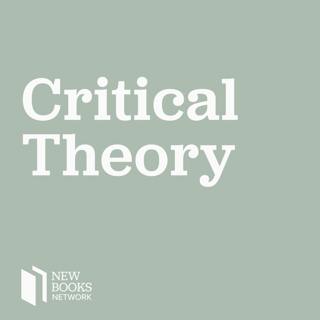
Matthew MacWilliams, “The Rise of Trump: America’s Authoritarian Spring” (Amherst College Press, 2016)

Matthew MacWilliams, “The Rise of Trump: America’s Authoritarian Spring” (Amherst College Press, 2016)

NB: Because Amherst College Press is open-access, this book is available free for download here. Just when I thought I had a pretty good handle on the ways and means of American politics, Donald Trump “happened.” I watched with amazement as he insulted just about every establishment figure in the US–including the untouchable war-hero and senator John McCain!–and alienated large swathes of the American electorate–hispanics, women, people who think it’s important to be polite. And yet he rose; millions of right-thinking Americans continued to vote for him through the primaries and support him after he won them. Every time I said, “Well, that’s it, his run is over,” he trundled on, accompanied by a devoted, Trump-loving “base.” I don’t think I’m alone in my confusion about the Trump phenomenon, and I don’t think I’m alone in wanting to know how Trump did what he did. Happily, the political scientist Matthew MacWilliams provides some answers in his excellent, short book The Rise of Trump: America’s Authoritarian Spring (Amherst College Press, 2016). What’s especially nice about MacWilliam’s work is that it’s based on evidence and logic, not partisanship and vitriol. What MacWilliams discovered is, well, surprising: there are, he shows, a goodly number of Americans who possess values that can only really be be called “Authoritarian,” and those Americans who have these values overwhelming support Trump. What’s most interesting is that these values were, in a sense, always there; they were, however, largely unrepresented among Americans’ political choices. Trump was, if not exactly the first (remember Pat Buchanan?), then the most expert at presenting them and “activating” the Authoritarian impulse in this reasonably large cohort of Americans. Trump uncovered or exposed Americans’ latent Authoritarianism. What the political parties will do with it now that it’s there for the taking is anybody’s guess. Learn more about your ad choices. Visit megaphone.fm/adchoices Support our show by becoming a premium member! https://newbooksnetwork.supportingcast.fm/critical-theory

Jaksot(2153)

Elizabeth Anne Davis, "The Time of the Cannibals: On Conspiracy Theory and Context" (Fordham UP, 2024)

Elizabeth Anne Davis, "The Time of the Cannibals: On Conspiracy Theory and Context" (Fordham UP, 2024)

In 2009, the body of a former president of the Republic of Cyprus, Tassos Papadopoulos, was stolen from his grave. The Time of the Cannibals reconsiders this history and the public discourse on it to ...

25 Marras 20251h 30min

Piotr Nowak, "After Jews: Essays on Political Theology, Shoah and the End of Man" (Anthem Press, 2025)

Piotr Nowak, "After Jews: Essays on Political Theology, Shoah and the End of Man" (Anthem Press, 2025)

After Jews: Essays on Political Theology, Shoah and the End of Man (Anthem Press, 2025) is an attempt to describe and critically interpret the condition of man living in the shadow of the Shoah, in th...

25 Marras 20251h 6min

Amy Hughes, "An Actor's Tale: Theater, Culture, and Everyday Life in the Nineteenth-Century United States" (U Michigan Press, 2025)

Amy Hughes, "An Actor's Tale: Theater, Culture, and Everyday Life in the Nineteenth-Century United States" (U Michigan Press, 2025)

Harry Watkins was no one special. During a career that spanned four decades, this nineteenth-century actor yearned for fame but merely skirted the edges of it. He performed alongside the brightest sta...

24 Marras 20251h 4min

Sebastian Truskolaski, "Adorno and the Ban on Images" (Bloomsbury, 2022)

Sebastian Truskolaski, "Adorno and the Ban on Images" (Bloomsbury, 2022)

Adorno and the Ban on Images (Bloomsbury, 2022) upends some of the myths that have come to surround the work of the philosopher Theodor W. Adorno – not least amongst them, his supposed fatalism. Sebas...

24 Marras 202558min

Mary Edwards, "Sartre’s Existential Psychoanalysis: Knowing Others" (Bloomsbury, 2022)

Mary Edwards, "Sartre’s Existential Psychoanalysis: Knowing Others" (Bloomsbury, 2022)

Thinking of the French philosopher Jean-Paul Sartre, it is hard to think of him without imagining him in very particular contexts. One will likely imagine him in a Parisian cafe working through a pack...

23 Marras 20251h 47min

Heather Davis, "Plastic Matter" (Duke UP, 2022)

Heather Davis, "Plastic Matter" (Duke UP, 2022)

Plastic is ubiquitous. It is in the Arctic, in the depths of the Mariana Trench, and in the high mountaintops of the Pyrenees. It is in the air we breathe and the water we drink. Nanoplastics penetrat...

23 Marras 20251h 1min

Can Feminism be African?: A Conversation with Minna Salami

Can Feminism be African?: A Conversation with Minna Salami

Transcript of the interview Minna Salami is a writer, social critic, and thought leader on feminism, knowledge production, and the aesthetics and structures of power. She formerly served as Programme...

20 Marras 202534min

160* Hannah Arendt's Refugee Politics (JP)

160* Hannah Arendt's Refugee Politics (JP)

John's “Arendt's Refugee Politics” came out in Public Books in early November. He made the case that his favorite political philosopher, Hannah Arendt is an opponent both of identity politics and also...

20 Marras 202521min

Suosittua kategoriassa Tiede

rss-mita-tulisi-tietaa
rss-poliisin-mieli
rss-lihavuudesta-podcast
utelias-mieli
rss-duodecim-lehti
tiedekulma-podcast
docemilia
mielipaivakirja
rss-ylistys-elaimille
rss-tervetta-skeptisyytta
koodikahvit
menologeja-tutkimusmatka-vaihdevuosiin
rss-ranskaa-raakana
rss-vaasan-yliopiston-podcastit
rss-metsa
rss-radplus
rss-tiedetta-vai-tarinaa