#204 – Nate Silver on making sense of SBF, and his biggest critiques of effective altruism

#204 – Nate Silver on making sense of SBF, and his biggest critiques of effective altruism

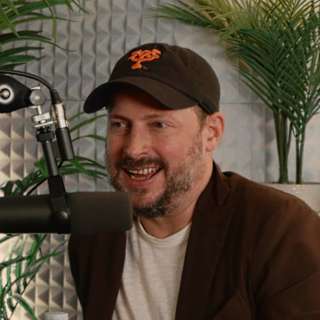
Rob Wiblin speaks with FiveThirtyEight election forecaster and author Nate Silver about his new book: On the Edge: The Art of Risking Everything.

Links to learn more, highlights, video, and full transcript.

On the Edge explores a cultural grouping Nate dubs “the River” — made up of people who are analytical, competitive, quantitatively minded, risk-taking, and willing to be contrarian. It’s a tendency he considers himself a part of, and the River has been doing well for itself in recent decades — gaining cultural influence through success in finance, technology, gambling, philanthropy, and politics, among other pursuits.

But on Nate’s telling, it’s a group particularly vulnerable to oversimplification and hubris. Where Riverians’ ability to calculate the “expected value” of actions isn’t as good as they believe, their poorly calculated bets can leave a trail of destruction — aptly demonstrated by Nate’s discussion of the extended time he spent with FTX CEO Sam Bankman-Fried before and after his downfall.

Given this show’s focus on the world’s most pressing problems and how to solve them, we narrow in on Nate’s discussion of effective altruism (EA), which has been little covered elsewhere. Nate met many leaders and members of the EA community in researching the book and has watched its evolution online for many years.

Effective altruism is the River style of doing good, because of its willingness to buck both fashion and common sense — making its giving decisions based on mathematical calculations and analytical arguments with the goal of maximising an outcome.

Nate sees a lot to admire in this, but the book paints a mixed picture in which effective altruism is arguably too trusting, too utilitarian, too selfless, and too reckless at some times, while too image-conscious at others.

But while everything has arguable weaknesses, could Nate actually do any better in practice? We ask him:

  • How would Nate spend $10 billion differently than today’s philanthropists influenced by EA?
  • Is anyone else competitive with EA in terms of impact per dollar?
  • Does he have any big disagreements with 80,000 Hours’ advice on how to have impact?
  • Is EA too big a tent to function?
  • What global problems could EA be ignoring?
  • Should EA be more willing to court controversy?
  • Does EA’s niceness leave it vulnerable to exploitation?
  • What moral philosophy would he have modelled EA on?

Rob and Nate also talk about:

  • Nate’s theory of Sam Bankman-Fried’s psychology.
  • Whether we had to “raise or fold” on COVID.
  • Whether Sam Altman and Sam Bankman-Fried are structurally similar cases or not.
  • “Winners’ tilt.”
  • Whether it’s selfish to slow down AI progress.
  • The ridiculous 13 Keys to the White House.
  • Whether prediction markets are now overrated.
  • Whether venture capitalists talk a big talk about risk while pushing all the risk off onto the entrepreneurs they fund.
  • And plenty more.

Chapters:

  • Cold open (00:00:00)
  • Rob's intro (00:01:03)
  • The interview begins (00:03:08)
  • Sam Bankman-Fried and trust in the effective altruism community (00:04:09)
  • Expected value (00:19:06)
  • Similarities and differences between Sam Altman and SBF (00:24:45)
  • How would Nate do EA differently? (00:31:54)
  • Reservations about utilitarianism (00:44:37)
  • Game theory equilibrium (00:48:51)
  • Differences between EA culture and rationalist culture (00:52:55)
  • What would Nate do with $10 billion to donate? (00:57:07)
  • COVID strategies and tradeoffs (01:06:52)
  • Is it selfish to slow down AI progress? (01:10:02)
  • Democratic legitimacy of AI progress (01:18:33)
  • Dubious election forecasting (01:22:40)
  • Assessing how reliable election forecasting models are (01:29:58)
  • Are prediction markets overrated? (01:41:01)
  • Venture capitalists and risk (01:48:48)

Producer and editor: Keiran Harris
Audio engineering by Ben Cordell, Milo McGuire, Simon Monsour, and Dominic Armstrong
Video engineering: Simon Monsour
Transcriptions: Katy Moore

Tämä jakso on lisätty Podme-palveluun avoimen RSS-syötteen kautta eikä se ole Podmen omaa tuotantoa. Siksi jakso saattaa sisältää mainontaa.

Jaksot(334)

#179 Classic episode – Randy Nesse on why evolution left us so vulnerable to depression and anxiety

#179 Classic episode – Randy Nesse on why evolution left us so vulnerable to depression and anxiety

Mental health problems like depression and anxiety affect enormous numbers of people and severely interfere with their lives. By contrast, we don’t see similar levels of physical ill health in young p...

3 Helmi 2h 51min
#234 – David Duvenaud on why 'aligned AI' would still kill democracy

#234 – David Duvenaud on why 'aligned AI' would still kill democracy

Democracy might be a brief historical blip. That’s the unsettling thesis of a recent paper, which argues AI that can do all the work a human can do inevitably leads to the “gradual disempowerment” of ...

27 Tammi 2h 31min
#145 Classic episode – Christopher Brown on why slavery abolition wasn't inevitable

#145 Classic episode – Christopher Brown on why slavery abolition wasn't inevitable

In many ways, humanity seems to have become more humane and inclusive over time. While there’s still a lot of progress to be made, campaigns to give people of different genders, races, sexualities, et...

20 Tammi 2h 56min
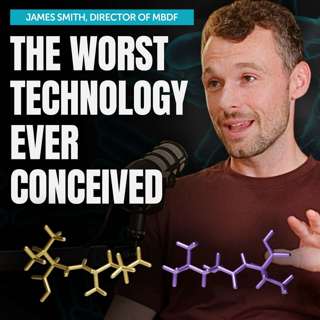
#233 – James Smith on how to prevent a mirror life catastrophe

#233 – James Smith on how to prevent a mirror life catastrophe

When James Smith first heard about mirror bacteria, he was sceptical. But within two weeks, he’d dropped everything to work on it full time, considering it the worst biothreat that he’d seen described...

13 Tammi 2h 9min
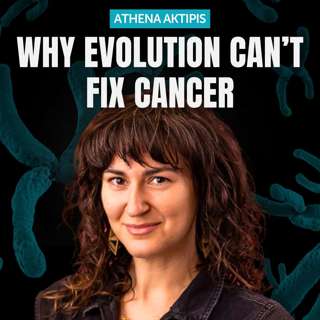
#144 Classic episode – Athena Aktipis on why cancer is a fundamental universal phenomena

#144 Classic episode – Athena Aktipis on why cancer is a fundamental universal phenomena

What’s the opposite of cancer? If you answered “cure,” “antidote,” or “antivenom” — you’ve obviously been reading the antonym section at www.merriam-webster.com/thesaurus/cancer.But today’s guest Athe...

9 Tammi 3h 30min
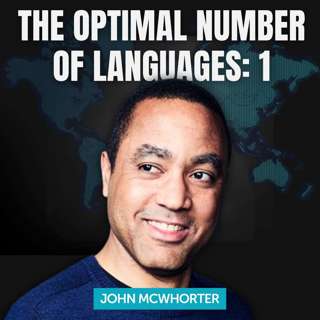
#142 Classic episode – John McWhorter on why the optimal number of languages might be one, and other provocative claims about language

#142 Classic episode – John McWhorter on why the optimal number of languages might be one, and other provocative claims about language

John McWhorter is a linguistics professor at Columbia University specialising in research on creole languages. He's also a content-producing machine, never afraid to give his frank opinion on anything...

6 Tammi 1h 35min
2025 Highlight-o-thon: Oops! All Bests

2025 Highlight-o-thon: Oops! All Bests

It’s that magical time of year once again — highlightapalooza! Stick around for one top bit from each episode we recorded this year, including:Kyle Fish explaining how Anthropic’s AI Claude descends i...

29 Joulu 20251h 40min

#232 – Andreas Mogensen on what we owe 'philosophical Vulcans' and unconscious beings

#232 – Andreas Mogensen on what we owe 'philosophical Vulcans' and unconscious beings

Most debates about the moral status of AI systems circle the same question: is there something that it feels like to be them? But what if that’s the wrong question to ask? Andreas Mogensen — a senior ...

19 Joulu 20252h 37min

Suosittua kategoriassa Koulutus

rss-murhan-anatomia
psykopodiaa-podcast
voi-hyvin-meditaatiot-2
adhd-podi
rss-niinku-asia-on
rss-rahamania
psykologia
rss-hereilla
rss-arkea-ja-aurinkoa-podcast-espanjasta
taytta-tavaraa
rahapuhetta
kesken
rss-valo-minussa-2
rss-tietoinen-yhteys-podcast-2
kehossa
dear-ladies
rss-duodecim-lehti
rss-koira-haudattuna
rss-narsisti
rss-tyohyvinvoinnin-aakkoset