

#169 CEO & Founder Cato Networks, Shlomo Kramer: The Burden of Persona
Guest: Shlomo Kramer, founder and CEO of Cato NetworksShlomo Kramer has founded three companies to date — Check Point, Imperva, and most recently Cato Networks — and taken the first two public, with plans to do the same with Cato. By any measure, he is a successful entrepreneur, but he defines “success” as “a burden you need to shake off every day.” And the easiest way to do that he’s found is to keep moving, keep failing, and keep creating. The material wealth he’s created, he explains, was never the goal: “It was never about things. It was about ideas and making them real.”In this episode, Shlomo and Joubin discuss the contexts of our actions, the IDF, taking three companies public, ideas vs. things, kibbutzes, Gong, Sumo Logic, serial entrepreneurs, leading by example, consumer cybersecurity, trusting others, Albert Einstein, “making it to the pass before winter,” and Israeli directness.In this episode, we cover:The delta between micro and macro (00:54)Working in wartime Israel (03:18)The burden of persona (06:37)Shlomo’s family (13:19)The time between startups (16:30)Self-fulfillment (18:31)“What am I going to do next?” (21:14)Rebelliousness (24:58)Palo Alto Networks (29:42)Loyalty and competition (31:32)Building trust relationships (35:02)“The last one” (37:41)Shaq, Tom Brady, and Carl Eschenbach (42:15)Tough feedback (46:50)Shlomo’s friends (48:18)Intellectual honesty (50:14)What Cato does (52:37)Hiring and work culture (55:23)Ignoring startup advice (58:15)Ideation and being present (59:22)Links:Connect with ShlomoLinkedInConnect with JoubinTwitterLinkedInEmail: grit@kleinerperkins.com Learn more about Kleiner PerkinsThis episode was edited by Eric Johnson from LightningPod.fm
18 Joulu 20231h 2min
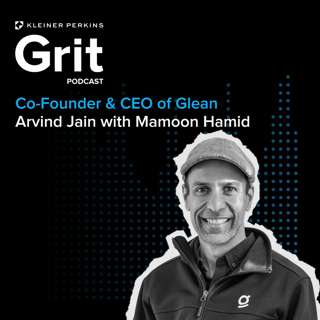
#168 CEO & Founder Glean, Arvind Jain w/ Mamoon Hamid: New Playbook
Guest: Arvind Jain, Founder and CEO of Glean, and Mamoon Hamid, partner at Kleiner Perkins“I’m an engineer, so I have doubts about everything,” says Glean founder and CEO Arvind Jain. Well ... almost everything. Since launching Glean in 2019, he has held to the belief that “all of us are going to have really powerful AI assistants” in the future. With a several-year lead on generative AI tools like ChatGPT, Glean has built a growing club of CIO fans. With the broad acceptance of AI over the past year, Arvind says, “the level of confidence is higher than ever before.”In this episode, Arvind, Mamoon, and Joubin discuss golfer hats, ideas vs. execution, X1, energy audits, small towns in India, IIT, proving yourself, Rubrik, rejecting product-led growth, “workplace assistants,” CIO fans, internet ’94, Parker Conrad, and work as a hobby.In this episode, we cover:Arvind’s newfound fame (01:08)The state of the AI business (03:42)“Why now?” (06:05)Building great products (09:16)Company-building (11:27)Arvind’s childhood (14:37)Competition and hard work (16:44)Leaving Google (18:46)Glean vs. Rubrik (20:53)The future of work (27:22)“Holy shit” moments (29:25)Finding positivity (32:51)AI hype (34:31)How to pick a venture capitalist (38:55)Turning off (42:24)Hiring and the meaning of “grit” (44:41)Links:Connect with ArvindLinkedInConnect with MamoonTwitterLinkedInConnect with JoubinTwitterLinkedInEmail: grit@kleinerperkins.com Learn more about Kleiner PerkinsThis episode was edited by Eric Johnson from LightningPod.fm
11 Joulu 202345min
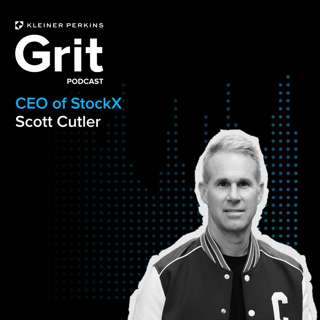
#167 CEO StockX, Scott Cutler: Detroit’s First Unicorn
Guest: Scott Cutler, CEO of StockXWhat’s the point of climbing a mountain, or heli-skiing in the Swiss Alps, or biking in the Tour de France? StockX CEO Scott Cutler has done all three, and for him, the answer is momentary perspective. “When you’re descending, you don’t see, but you know what is above,” he says. “You have experienced and have seen what you saw at the peak and you take that with you into the next experience.” He stressed that the pleasure of being at the top is a fleeting incentive to do it again, not the destination; in life, and in our careers, he argues, the journey is about continually facing new challenges and getting brief glimpses from the top.In this episode, Scott and Joubin discuss out-of-touch VCs, the challenges of marketplaces, Josh Luber, Dan Gilbert, almost missing flights, gaining perspective, scary blackberry bushes, work-family balance, daily workouts, sleeping on planes, e-commerce in the U.S. vs. China, and digital ownership.In this episode, we cover:Special shoes (01:07)Scott’s past jobs at the NYSE, StubHub, and eBay (05:47)Detroit and frequent flying (10:02)Over-optimizing your time (15:25)Why do you climb a mountain? (18:00)Scott’s childhood and his own kids (22:39)Routines and energy (30:15)StockX and the future of e-commerce (36:52)Going public (43:24)SPACs and NFTs (46:21)What’s next? (50:11)Persistence (52:06)Who StockX is hiring (54:34)Links:Connect with ScottTwitterLinkedInConnect with JoubinTwitterLinkedInEmail: grit@kleinerperkins.com Learn more about Kleiner PerkinsThis episode was edited by Eric Johnson from LightningPod.fm
4 Joulu 202355min
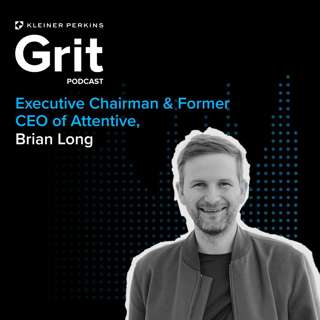
#166 Executive Chairman & Former CEO Attentive, Brian Long: Problem Hunting
Guest: Brian Long, former CEO of Attentive and author of Problem Hunting: The Tech Startup TextbookBrian Long’s most recent company, Attentive, was originally designed to help clients communicate with their distributed workforce — but about six months in, he and his co-founder realized that that business would not grow as quickly as they had hoped. So, they decided to pivot to SMS marketing, at the cost of a few dubious employees and a well-known Fortune 500 client. The successful pivot confirmed Brian’s belief that it’s possible to over-commit to one solution, when in fact there may be bigger and better problems to solve. “I’ve just seen so many entrepreneurs spend years of their life building something being stuck with it,” he says, “and then trying to figure out how to fit it into something that doesn’t work.” In this episode, Brian and Joubin discuss zero to one building, the problem with how entrepreneurs solve problems, How to Win Friends and Influence People, Matt Mochary, Tom Mendoza, transactional relationships, the dangers of ego, optimists and realists, best man speeches, defining a unique culture, reverse selling, Lunar Holdings, Peter Reinhardt, marketing conservatively, and business book sales.In this episode, we cover:New York vs LA (00:54)How Brian feels, six months after stepping away from the CEO role (02:37)Product-market fit and TAM modeling (06:07)Build last (09:05)The qualities of great entrepreneurs (13:24)Tap Commerce and starting in sales (15:49)Listening and remembering names (20:40)The day after selling Tap Commerce (23:32)Starting another company, Attentive (25:07)Resilience and optimism (29:21)Fear, doubt, and the worst-case outcome (32:50)What Brian would tell his 29 year old self (37:13)Hiring and pivoting at Attentive (41:17)Text message marketing (45:49)How Brian interviews people (50:12)His new holding company, Lunar and its first startup (51:52)Don’t go social (55:21)What Brian is personally excited about and what “grit” means to him (01:01:57)Links:Connect with BrianLinkedInBuy Brian’s book, Problem Hunting: The Tech Startup TextbookConnect with JoubinTwitterLinkedInEmail: grit@kleinerperkins.com Learn more about Kleiner PerkinsThis episode was edited by Eric Johnson from LightningPod.fm
27 Marras 20231h 4min
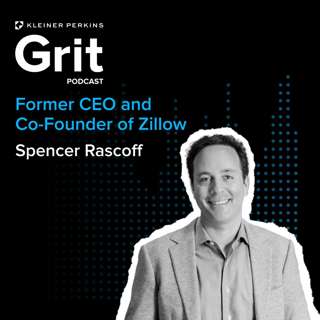
#165 Former CEO & Co-Founder of Zillow, Spencer Rascoff: Real Estate Voyeurism
Guest: Spencer Rascoff, co-founder and former CEO of Zillow + co-founder and general partner at 75 & Sunny When terrorists attacked the US on 9/11, Hotwire co-founder Spencer Rascoff and his colleagues had to put their own trauma aside and “spring into action” — the travel site had sold tens of millions of dollars’ worth of non-refundable flights and hotel rooms and customers who wouldn’t be traveling wanted their money back. Now a visiting professor at Harvard Business School, Spencer teaches this case to his students because this dilemma was not unique to 2001: “What the hell do you do when you’re running a company ... and all of a sudden, a pandemic happens? Or SVB shuts down?”In this episode, Spencer and Joubin discuss Zestimates, context switching, Tom Brady, reinvention, Shaq, the live music business, beating pain, personal connection to tragedies, the structure of rounds, Juul, the qualities of success, Stewart Butterfield, Travis Kalanick, second homes, two-way doors, overstating risk, “Dad, I Have a Question,” management by walking around, and Carl Eschenbach.In this episode, we cover:Spencer’s post-Zillow life (00:57)From player to coach (03:47)“The Forrest Gump of technology” (08:21)Joseph Rascoff and the Rolling Stones (10:56)Teaching grit to kids (14:43)Spencer’s brother (18:55)Channeling pain into achievement (21:35)Co-founding Hotwire (24:37)The impact of 9/11 (27:51)Re-capitalization and selling to Expedia (35:17)“Let’s build a real estate website” (38:05)Office Hours and founder-product fit (45:12)How Pacaso works (53:22)Career mirrors and leaving big companies (57:01)Staying organized (01:04:20)Dinner with the family (01:07:43)What “grit” means to him (01:09:14)Links:Connect with SpencerTwitterLinkedInConnect with JoubinTwitterLinkedInEmail: grit@kleinerperkins.com Learn more about Kleiner PerkinsThis episode was edited by Eric Johnson from LightningPod.fm
20 Marras 20231h 11min
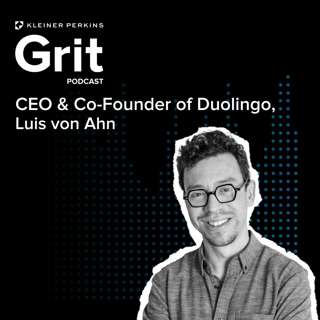
#164 CEO & Co-Founder Duolingo, Luis von Ahn: "The Pitch Was Never Pittsburgh"
Guest: Luis von Ahn, CEO and co-founder of DuolingoWhen Luis von Ahn wanted to go to college in the United States, he had to take a standardized test called the TOEFL, or Test of English as a Foreign Language. But there was nowhere in his home country of Guatemala that could accommodate another test-taker, so he flew to war-torn El Salvador, just to take the TOEFL. Many years later, as the co-founder and CEO of Duolingo, Luis and his team “decided this type of thing, we could do a lot better.” Today, more than 4,500 universities accept the results of the online Duolingo English Test — a boon for the estimated 2 billion people currently learning English around the world.In this episode, Luis and Joubin discuss returning to the office, Carnegie Mellon, identifying strivers, the “Luis dashboard,” ignoring Reddit, pre-meetings, the hardest part of learning, sounding dumb, private security, the job of a professor, digitizing books, working out every day, April Fools’ campaigns, Duo the owl, and hiring nice people.In this episode, we cover:Working in Pittsburgh, in-person (00:57)How Duolingo hires (06:48)Growing up in Guatemala (10:29)Luis’ parents, intelligence, and drive (12:09)His morning routine (16:56)Ground truth (19:39)“The smaller the team, the better” (22:29)Language education and human behavior (24:32)Learning English (28:53)Back to Guatemala (32:03)CAPTCHA and reCAPTCHA (36:10)Money vs. impact (41:26)Luis’ TEDx Talk and public speaking tips (44:46)Love Language and nontraditional marketing (48:46)Doubling down on what works (53:27)Slow hiring (56:44)Would Luis ever start something new? (59:28)Who Duolingo is hiring and what “grit” means to Luis (01:01:46)Links:Connect with LuisTwitterLinkedInConnect with JoubinTwitterLinkedInEmail: grit@kleinerperkins.com Learn more about Kleiner PerkinsThis episode was edited by Eric Johnson from LightningPod.fm
13 Marras 20231h 3min
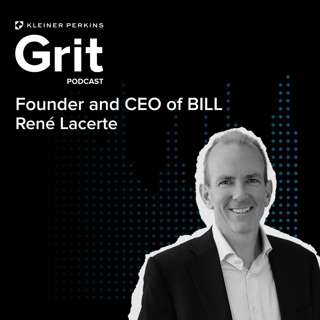
#163 CEO Bill, René Lacerte: Hourglass Leadership
Guest: René Lacerte, CEO of BillRené Lacerte co-founded the online payroll firm PayCycle in 1999, and led it for six years until he was asked by the board to step down. Today, with 17 years as the CEO of Bill under his belt, he’s able to look back on that time with clearer eyes. “The title on my card is ‘CEO and Founder,’” he says. “At Paycycle, it was ‘Co-Founder and CEO.’” The order matters, because once you’ve become a founder or co-founder, you are one no matter what — and in hindsight, René believes he failed to keep up with how PayCycle was changing. “My job as a CEO, it changes every freaking day,” he says of Bill. “We’ve 10x’d in four years. My job today has far more responsibilities and requirements than it had four years ago. So how do you get ready for that?”In this episode, René and Joubin discuss Silicon Valley OGs, the office environment, taking care of yourself, memorizing acronyms, Christmas presents, 11-finger jazz, intentionality and spontaneity, ordering your job titles, problem-solving at night, understanding insecurities, and measuring success.In this episode, we cover:Why René did not want a corner office (02:22)The weight of being CEO (04:40)Dinner with the kids (08:50)Prioritizing, energy, and fitness (11:05)Music and René’s parents (17:31)His father and pride (23:13)Empathy for small businesses (28:00)Family values (32:46)“Legacy, I don’t care about that” (36:15)Stepping down from PayCycle (41:16) Starting Bill (46:58)Leading in hyper-growth (50:10)The early years (53:07)Conventional wisdom (56:08)Who Bill is hiring and what “grit” means to René (01:01:02)Links:Connect with RenéLinkedInConnect with JoubinTwitterLinkedInEmail: grit@kleinerperkins.com Learn more about Kleiner PerkinsThis episode was edited by Eric Johnson from LightningPod.fm
6 Marras 20231h 3min
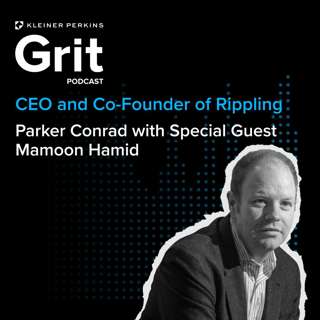
#162 CEO & Co-Founder Rippling, Parker Conrad w/ Mamoon Hamid: Compounding
Guests: Parker Conrad, CEO of Rippling, and Mamoon Hamid, partner at Kleiner PerkinsHow long did it take for Parker Conrad to stop wanting revenge? “I’ll let you know when it switches over,” the Rippling CEO and co-founder jokes. He resigned from his last company, the buzzy HR unicorn Zenefits, in 2016 and then quickly realized that the company’s new leaders would never return it to its former glory. He still loved the problems he had been trying to solve, and launched Rippling because “there was an opportunity there, [and] if it works ... it’s going to be fundamentally and foundationally better as a product.” It worked. As of March, Rippling has been valued at more than $11 billion, more than double Zenefits’ peak.In this episode, Parker, Mamoon, and Joubin discuss what happened at Zenefits, avoiding press coverage, FOMO and expectations, Paul Graham, fixing corporate insurance, Ryan Peterson’s “revenge portfolio,” CEO coaches, Mike Vernal, approving expenses, anecdata, and the Costco of SaaS. In this episode, we cover:How Parker and Mamoon met (00:56)The Zenefits Series B (06:29) “Stuck in a nightmare” (09:20) Entrepreneurship is “soul-destroying” (12:46) Parker’s first company, SigFig (17:17) Starting a company for the right reasons (21:02) Starting over after Zenefits (27:06) Avenging Zenefits (31:57) Rippling’s unusual Series A (38:40) What it does well (43:13) “Go and see” (46:35) The compound startup (51:44)Who Rippling is hiring and what “grit” means to Parker (01:00:39) Links:Connect with ParkerTwitterLinkedInConnect with JoubinTwitterLinkedInEmail: grit@kleinerperkins.com Learn more about Kleiner PerkinsThis episode was edited by Eric Johnson from LightningPod.fm
30 Loka 20231h 2min