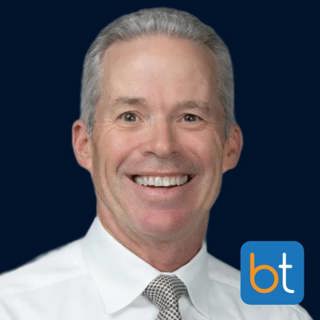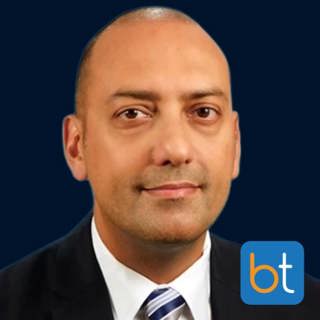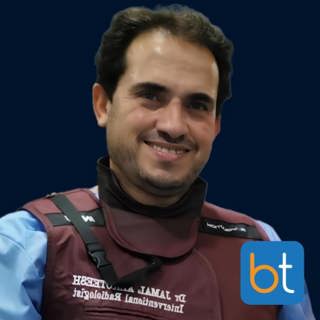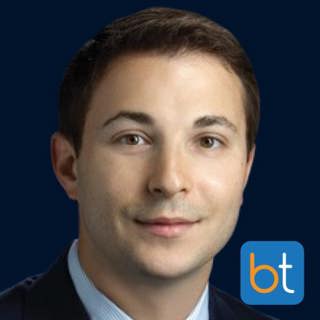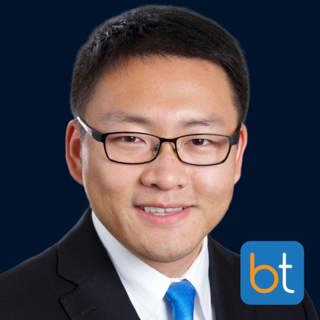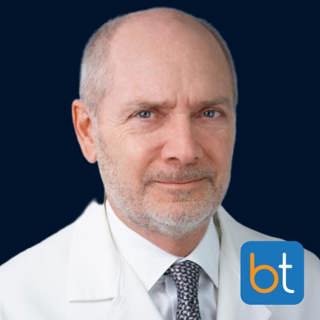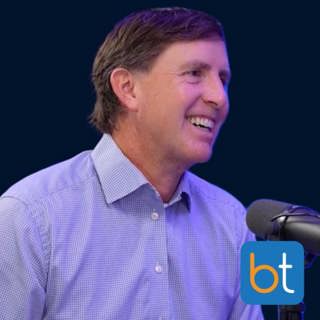
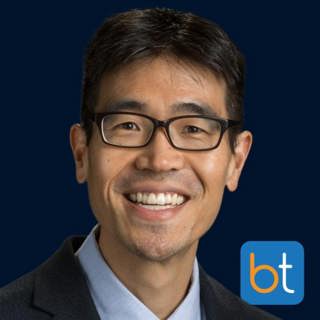
Ep. 286 Minimally Invasive Thyroid Interventions with Dr. Jawad Hussain and Dr. Alan Alper Sag

Ep. 286 Minimally Invasive Thyroid Interventions with Dr. Jawad Hussain and Dr. Alan Alper Sag

In this episode, our host Dr.Michael Barraza interviews Drs. Jawad Hussain and Alan Sag about how they implemented thyroid artery embolization into their respective private and academic practices. --- CHECK OUT OUR SPONSOR Medtronic Chocolate PTA Balloon https://www.medtronic.com/peripheral --- EARN CME Reflect on how this Podcast applies to your day-to-day and earn free AMA PRA Category 1 CMEs: https://earnc.me/GXgzcZ --- SHOW NOTES Dr. Hussain discusses how he started doing thyroid embolizations. It was born out of a need to replace thyroid RFA, since the thyroid RFA generator was not yet approved in his health system. At Duke, Dr. Sag collaborated with endocrinologists and endocrine surgeons to address a need to treat non-surgical candidates with bulk symptoms. These symptoms can include supine dyspnea, dysphagia, and aspiration risk. Together, they developed an institutional protocol for post-procedural management. Dr. Sag emphasizes that everything an IR needs to perform a goiter embolization is probably already available to them. Next, the doctors describe how they implemented thyroid embolization in their respective practices. Dr. Sag approached his institution’s weekly tumor board of endocrine specialists to introduce the concept. When talking to non-surgical patients, he offers thyroid embolization as a palliation alternative to tracheostomy and percutaneous gastrostomy as airway protection for patients with aspiration risks. Dr. Hussain describes patients with TR-3 and TR-4 nodules who require repeat FNA. Embolization can be a valuable option for them, since it is a quick outpatient procedure with minimal side effects. Additionally, he communicates to patients that IRs have experience with applying transcatheter embolizations in different spaces in the body and sets the expectation that shrinkage will be a gradual process. Both doctors emphasize the importance of informed consent in a relatively new palliative procedure. In terms of the research landscape for thyroid embolization, Dr. Hussain says that publishing a large retrospective multicenter study would revolutionize the procedure, since it could show efficacy and safety. Dr. Sag believes that RFA and embolization are complementary technologies that can be used in different scenarios. Dr. Hussain shares his treatment algorithm, which includes getting a CTA after each consultation, to map out variable anatomy and select hypertrophied vessels. Deep cannulation is key to preventing reflux and non-target embolization. Additionally, he does a two week follow up for post-procedural symptoms and a 2 month imaging appointment. Dr. Sag describes a joint clinic with endocrine surgeons. Every patient gets a visit from each service on the same day, and the doctors are able to convene and make joint decisions based on patient and goiter factors. He recommends getting a cone beam CTA to rule out anastamoses to aerodigestive structures and the cervical spinal cord. In his embolization, he uses 300-500 micron Embospheres and leaves at least one quadrant untreated to spare some thyroid and parathyroid glands. He also administers decadron and a medrol dose pack. Lab follow-up happens at day 7, when most thyroid hormone peaks occur. If patients are still experiencing symptoms after two months, Dr. Sag will consider repeating the embolization. --- RESOURCES Thyroid Embolization for Nonsurgical Treatment of Nodular Goiter: A Single-Center Experience in 56 Consecutive Patients (Yilmaz et al): https://pubmed.ncbi.nlm.nih.gov/34256121/ ACR TI-RADS: https://www.acr.org/Clinical-Resources/Reporting-and-Data-Systems/TI-RADS 2017 Thyroid Radiofrequency Ablation Guideline: Korean Society of Thyroid Radiology: https://www.ncbi.nlm.nih.gov/pmc/articles/PMC6005940/

Jaksot(625)

Ep. 596 Thrombin Injection for Pseudoaneurysms: Technique & Considerations with Dr. Gabriel Werder

Ep. 596 Thrombin Injection for Pseudoaneurysms: Technique & Considerations with Dr. Gabriel Werder

Pseudoaneurysms are among the most common complications of vascular access. Here’s a refresher on how to treat them with thrombin injection featuring interventional radiologist Dr. Gabriel Werder from...

9 Joulu 202532min

Ep. 595 Lung Cancer Staging and Systemic Therapies: Recent Advancements with Dr. Karen Reckamp and Dr. Scott Atay

Ep. 595 Lung Cancer Staging and Systemic Therapies: Recent Advancements with Dr. Karen Reckamp and Dr. Scott Atay

How do leading oncologists interpret the abundance of molecular tests, genomic data, and biomarkers to create a lung cancer patient’s treatment plan? In this episode of the 2025 NSCLC Creator Weekend™...

5 Joulu 20251h 8min

Ep. 594 How New Guidelines are Shaping Acute DVT Management with Dr. Steven Abramowitz

Ep. 594 How New Guidelines are Shaping Acute DVT Management with Dr. Steven Abramowitz

Are you up to date with the latest guidelines on deep venous thrombosis (DVT) management? Dr. Steven Abramowitz, vascular surgeon at MedStar Health, joins host Dr. Chris Beck for a deep dive into emer...

2 Joulu 202546min

Ep. 593 Evaluating IR Programs: A Residency Applicant's Guide with Dr. Neil Jain

Ep. 593 Evaluating IR Programs: A Residency Applicant's Guide with Dr. Neil Jain

What should you know before applying to an interventional radiology residency program? Get 70 minutes of free advice in this week's episode of BackTable featuring Georgetown IR fellow Dr. Neil Jain an...

28 Marras 20251h 15min

Ep. 592 Comparing Thermal Ablation Techniques for Liver Lesions with Dr. Jason Hoffmann

Ep. 592 Comparing Thermal Ablation Techniques for Liver Lesions with Dr. Jason Hoffmann

With the range of interventional modalities that are available for metastatic liver tumors, when should you advocate for thermal ablation at the tumor board? In this episode of BackTable, host Dr. Sab...

25 Marras 202552min

Ep. 591 NSCLC Tumor Board Discussion: Considerations for Oligometastatic Disease with Dr. Karen Reckamp, Dr. Scott Atay, Dr. Scott Oh and Dr. Alan Lee

Ep. 591 NSCLC Tumor Board Discussion: Considerations for Oligometastatic Disease with Dr. Karen Reckamp, Dr. Scott Atay, Dr. Scott Oh and Dr. Alan Lee

When cancer spreads to the brain, what is the best approach: immediate local treatment or systemic immunotherapy first? Part two of the 2025 NSCLC Creator Weekend™ series focuses on a complex case inv...

21 Marras 202520min

Ep. 590 Deep Venous Arterialization: Techniques & Outcomes with Dr. Miguel Montero Baker and Dr. Lucas M Ferrer Cardona

Ep. 590 Deep Venous Arterialization: Techniques & Outcomes with Dr. Miguel Montero Baker and Dr. Lucas M Ferrer Cardona

When conventional revascularization fails, can deep venous arterialization offer a new lifeline to limb salvage? Dr. Lucas Ferrer Cardona, vascular surgeon at Ascension and Dr. Miguel Montero Baker, v...

18 Marras 20251h 4min

Ep. 589 Lung Cancer Tumor Boards: Multidisciplinary Approaches & Best Practices with Dr. Karen Reckamp, Dr. Scott Atay, Dr. Scott Oh, Dr. Alan Lee

Ep. 589 Lung Cancer Tumor Boards: Multidisciplinary Approaches & Best Practices with Dr. Karen Reckamp, Dr. Scott Atay, Dr. Scott Oh, Dr. Alan Lee

As lung cancer treatments become more complex, is a collaborative tumor board more essential than ever? We’re kicking off the 2025 NSCLC Creator Weekend™ series with an in-studio panel discussion on t...

14 Marras 202555min

Suosittua kategoriassa Koulutus

rss-murhan-anatomia
psykopodiaa-podcast
voi-hyvin-meditaatiot-2
rss-valo-minussa-2
rss-narsisti
adhd-podi
rss-niinku-asia-on
aamukahvilla
rss-duodecim-lehti
kesken
rahapuhetta
aloita-meditaatio
salainen-paivakirja
rss-elamankoulu
psykologia
rss-uskonto-on-tylsaa
rss-psykalab
rss-selvat-savelet
rss-koira-haudattuna
rss-hereilla