Ep. 325 Recovering From a Major Injury as a Proceduralist with Dr. Deepak Sudheendra

Ep. 325 Recovering From a Major Injury as a Proceduralist with Dr. Deepak Sudheendra

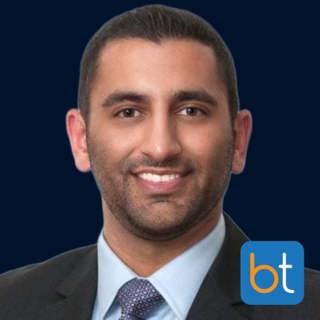
In this episode, host Dr. Ally Baheti interviews Dr. Deepak Sudheendra about obstacles that he has faced while practicing medicine, including dealing with a career-threatening injury, redefining boundaries between clinical and home responsibilities, and navigating a transition from a surgical to radiology residency. --- CHECK OUT OUR SPONSORS Medtronic Ellipsys Vascular Access System https://www.medtronic.com/ellipsys RADPAD® Radiation Protection https://www.radpad.com/ --- SHOW NOTES Dr. Sudheendra has recently returned to his clinical IR practice. He had taken one year off to recover from a traumatic fall that resulted in multiple fractures and loss of function in his left hand and arm. The recovery process was physically arduous, requiring intensive physical and occupational therapy multiple times a week to re-learn basic functions. As an IR that was 100% procedural, Dr. Sudheendra faced a lot of uncertainty about whether he would ever be able to return to performing complex procedures. Additionally, he faced the stress of battling with insurance companies for his rightful disability insurance payments. The paperwork process required him to submit case logs and attestations from co-workers to prove his prior case volume. Through this experience, Dr. Sudheendra is able to give disability insurance advice for young physicians and graduating trainees. Buying an insurance plan before residency or fellowship ends will allow the trainee to pay a lower premium than if they were attendings. It is important to read the fine print in the contracts that are offered and consider buying both short-term and long-term insurance, since there is no way to predict the timing and severity of a future injury. Additionally, buying into multiple plans can lower the total annual premium, but it comes with the added stress of having to deal with multiple companies when an injury does occur. As Dr. Sudheendra returned to clinical practice, he started with locums in community hospitals. He found that easing back into simple IR procedures allowed him to not only gain his confidence back, but also invest more time into his family. His next endeavor is opening his own office-based lab (OBL) focused on vascular interventions. To end the episode, we discuss Dr. Sundheendra’s perspective on navigating his career. He originally started in a cardiothoracic surgery residency, but decided to leave the field to pursue interventional radiology. This switch was not simple, and it required years of researching and advocating for himself to different residency programs. On this journey, he was able to attain his diagnostic radiology residency and interventional radiology fellowship positions through persistence and networking. Overall, Dr. Sudheendra advises procedurally-oriented medical students and early trainees to expose themselves to all related subspecialty areas, think about new developments in those fields, and imagine how the field might change in the course of their careers. --- RESOURCES Dr. Deepak Sudheendra Website: https://www.gethealthyveins.com/ Dr. Deepak Sudheendra Twitter: https://twitter.com/Dr_Sudi/with_replies Physician Moms Group on Facebook: https://www.facebook.com/groups/PhysicianMomsGroup/

Jaksot(614)

Ep. 577 Microwave Ablation for Liver Tumors: Techniques & Outcomes with Dr. Driss Raissi

Ep. 577 Microwave Ablation for Liver Tumors: Techniques & Outcomes with Dr. Driss Raissi

Is microwave ablation only for simple liver tumors, or can it be a versatile ‘Swiss Army knife’ for a wide range of complex cases? In this episode, Dr. Driss Raissi of the University of Kentucky returns to BackTable to join host Dr. Chris Beck for a deep dive into advanced and unconventional microwave ablation techniques. They cover strategies for tackling a wide range of cases, from desmoid tumors to enterocutaneous fistulas.---This podcast is supported by:Medtronic Emprinthttps://www.medtronic.com/emprint---SYNPOSISDr. Raissi shares his ‘pre-burn’ technique that desiccates tissue and reduces complications like capsular burst and bleeding. He elaborates on his method for tackling large liver tumors with a single probe through overlapping ablations, needle placement techniques and his ‘lung seal technique’ to prevent pneumothorax. Dr. Raissi also shares how his previous experience in the ICU promotes close communication with anesthesiologists and how he ups his ablation game through collaboration, optimizing conditions for safe and effective ablation.The episode explores a series of unique, real-world applications beyond the usual scope of IRs. Dr. Raissi walks us through his novel approach to challenging cases, including cauterization of enterocutaneous fistulas, endometriomas and desmoid tumors. He also compares using microwave or cryoablation for renal cell carcinoma, explaining thought processes based on lesion location and the need for speed and simplicity. The discussion provides an overview of ablation physics and careful techniques that expand treatment possibilities for IR patients.---TIMESTAMPS00:00 - Introduction 04:08 - Advanced Techniques for Liver Tumor Ablation06:06 - Pre-Burning Ablation and Ablating a Range of Lesions16:38 - Lung Ablation22:00 - Partnering with Anesthesia28:53 - Managing Postoperative Pain and Nerve Injuries29:42 - Treating Enterocutaneous Fistulas, Endometriomas & Desmoid Tumors38:49 - Adrenal Gland Ablation: A Case Study44:50 - Microwave vs. Cryoablation for Renal Cell Carcinoma49:06 - Preventing Pneumothorax in Lung Ablation

30 Syys 52min

Ep. 576 Biliary Endoscopy Techniques: Managing Strictures & Drains with Dr. Ahsun Riaz

Ep. 576 Biliary Endoscopy Techniques: Managing Strictures & Drains with Dr. Ahsun Riaz

So you’ve placed the biliary drain—are your patients getting the follow up that they need? In this episode, Dr. Ahsun Riaz from Northwestern University joins host, Dr. Christopher Beck, for a deep dive into biliary strictures—how to manage them effectively and navigate the potential complications of this challenging chronic condition.---This podcast is supported by:Medtronic Emprinthttps://www.medtronic.com/emprint---SYNPOSISDr. Riaz takes us inside his journey of building a specialized hepatobiliary service at Northwestern, highlighting innovative practices like endoscopic techniques and radiofrequency ablation. He unpacks the nuances of distinguishing benign from malignant strictures, shares technical pearls for patient management, and emphasizes the power of collaboration with Gastroenterology to improve long-term patient outcomes. He outlines key technical considerations, including the use of the Hudson loop and strategic equipment selection to address intra-procedural challenges. He further emphasizes the importance of comprehensive patient care—ensuring appropriate follow-up, minimizing drain duration, and prioritizing quality of life as essential components of optimal management.---TIMESTAMPS00:00 - Introduction01:28 - Biliary Drain Management04:18 - Approach to Biliary Strictures19:20 - Endoscopic Evaluation and Techniques27:53 - Practical Tips and Experiences with Endoscopy30:39 - Post-Procedure Follow-Up and Patient Outcomes31:16 - Learning from the Hudson Roof Technique32:48 - Innovations in Benign Stricture Management36:48 - Endobiliary Ablation: Equipment and Procedure40:23 - The Double Dragon Technique Explained46:02 - Considerations for Malignant Biliary Stenting52:37 - Future Innovations and Collaborative Care

26 Syys 57min

Ep. 575 Physician Employment Models: Exploring Benefits & Challenges with Dr. Ryan Trojan

Ep. 575 Physician Employment Models: Exploring Benefits & Challenges with Dr. Ryan Trojan

Could hospital employment be your path to practicing 100% interventional radiology (IR)? In this episode of BackTable, host Dr. Ally Baheti sits down with Dr. Ryan Trojan, an interventional radiologist at INTEGRIS Health in Oklahoma City, to discuss the pros and cons of hospital employment contracts in IR.---This podcast is supported by:Medtronic Emprinthttps://www.medtronic.com/emprint---SYNPOSISThe physicians take a deep dive into the evolving employment models in the IR landscape. Dr. Trojan shares his journey from a private IR-DR blended practice to becoming directly employed by a hospital, highlighting the financial challenges, contract negotiations, and administrative dynamics along the way. He explains the growing loss of IR talent to lucrative diagnostic contracts and emphasizes the importance of advocating for IR’s value to hospital systems, from decreasing length of stay to supporting ECMO, trauma, and transplant services. The discussion covers financial security, administrative support, and the benefits of having aligned goals with the hospital in order to grow an IR practice. Dr. Trojan also addresses common misconceptions about IR and private practice, detailing how the landscape is likely to change over the coming years, and offers advice on navigating employment contracts. ---TIMESTAMPS00:00 - Introduction03:02 - Transition to Hospital Employment12:15 - Advocating for IR’s Value16:07 - Contract Structures and Compensation Models25:07 - Benefits and Downsides of the Employed Model28:27 - Negotiating Contracts and Fair Market Value41:12 - Conclusion---RESOURCESDr. Trojan’s contact information:ryan.trojan@integrishealth.org

23 Syys 43min

Ep. 574 MRI Guided Interventions: Techniques, Benefits, & Clinical Applications with Dr. Clifford Weiss and Dr. David Woodrum

Ep. 574 MRI Guided Interventions: Techniques, Benefits, & Clinical Applications with Dr. Clifford Weiss and Dr. David Woodrum

Should MRI-guided interventions be on your radar? Find out why the future of interventional radiology might lie in MRI guidance with experts Dr. Clifford Weiss from Johns Hopkins University and Dr. David Woodrum from the Mayo Clinic.---This podcast is supported by:Medtronic Emprinthttps://www.medtronic.com/emprint---SYNPOSISThe physicians join host Dr. Chris Beck to explore the benefits of MRI guided procedures, including superior imaging capabilities and reduced radiation exposure. Dr. Weiss and Dr. Woodrum detail the challenges and barriers to adoption, like the intricate set up needed to protect equipment from a strong magnetic field. They highlight the significant technological advancements and collaborations between MRI and device companies that are set to make MRI guided interventions more accessible and practical for everyday use. They also discuss the reimbursement paradigm for MRI guided biopsies and how similar the algorithm is to CT guided procedures.The episode closes with unique insights for young physicians on training opportunities and the promising future of MRI guided interventions for trainees looking to bring a different approach to their future practices.---TIMESTAMPS00:00 - Introduction05:13 - The Advantages of MRI in Interventional Radiology13:44 - Technical Insights and Challenges of MRI Guided Procedures18:46 - Future Prospects and Industry Developments in MRI Guided Interventions31:01- Development of Hybrid MRI Rooms48:19 - Economic Considerations and Reimbursement52:33 - Community Support for MRI Interventions56:41 - Conclusion and Final Thoughts---RESOURCESInternational Society for Magnetic Resonance in Imaging:https://www.ismrm.org/

19 Syys 59min

Ep. 573 BackTable Tricks Competition 2025

Ep. 573 BackTable Tricks Competition 2025

What tricks do you have up your sleeve to help you get through tough cases? In this special episode of the BackTable Podcast, Drs. Ally Baheti, Mike Barraza, and Chris Beck spotlight the most creative and practical pearls from the 2025 BackTable Tips & Tricks competition, showcasing standout submissions and clever techniques shared by their peers. --- SYNPOSIS Guests include leading interventional radiologists like Dr. Aaron Fischman from Mount Sinai, who reveals his unique wire-shaping method—bending it like a question mark to navigate challenging, angulated vessels during prostate artery embolization. From Jefferson, Dr. Sean Maratto walks us through his innovative retrograde approach to placing double J stents. And from Ochsner Health, Dr. Tyler Sandow brings invaluable guidance on achieving direct portal vein access for TIPS. --- TIMESTAMPS 00:00 - Introduction 03:30 - Favorite Tips and Tricks06:11 - Practical Techniques and Personal Experiences15:41 - A Humbling Experience with Phil Banov16:02 - The Bumper Stitch Technique17:55 - Direct Portal Access for TIPS19:35 - Navigating Challenging Cases24:11 - Radial vs. Femoral Access Debate27:33 - Innovative Techniques and Tricks29:36 - Final Thoughts and Gratitude

15 Syys 31min

Ep. 572 How to Perform Mesocaval Shunts: Techniques & Outcomes with Dr. Omar Chohan and Dr. Harris Chengazi

Ep. 572 How to Perform Mesocaval Shunts: Techniques & Outcomes with Dr. Omar Chohan and Dr. Harris Chengazi

Before the advent of TIPS, mesocaval shunts were considered a less popular option for managing portal hypertension. But today, could they serve as a lifeline when no other choices remain? This week on BackTable, Drs. Omar Chohan and Harris Chengazi (Great Lakes Medical Imaging) join host Dr. Chris Beck to discuss the evolving role of endovascular mesocaval shunts, covering patient selection, clinical decision-making, and technical pearls. --- SYNPOSIS In this episode, the hosts delve into the specialized procedure of meso-caval shunts, focusing on its applications for patients with portal hypertension who have no other viable options. This discussion includes detailed case studies, such as one involving a woman with autoimmune hepatitis and another with pancreatic cancer, showcasing the practical challenges and innovative solutions in creating these shunts. In each case, they detail the rationale for patient selection, difficult anatomy, procedural steps, and resolution of symptoms like recurrent ascites and variceal bleeding. The episode emphasizes the importance of pre-procedure planning, collaboration, and precise imaging, utilizing advanced tools like the 4D CT scanner. The conversation also highlights the compassionate motivation behind these complex procedures, aimed at improving patients' quality of life. --- TIMESTAMPS 00:00 - Introduction 03:07 - Historical Context and Indications06:49 - Case 1: Patient with Refractory Ascites34:00 - Case 2: Recurrent GI Bleeding41:16 - Case 3: TIPS Consult - Pancreatic Cancer and Duodenal Varices47:44 - Lessons, Pearls, and Tips56:13 - Final Thoughts --- RESOURCES A Case Series of Dr. Chengazi's Mesocaval Shunts on X:https://x.com/chengazimd/status/1966337167879438571 Episode 573 Portal Hypertension Treatment Strategies:https://www.backtable.com/shows/vi/podcasts/473/portal-hypertension-treatment-strategies-ir-hepatology-perspectives TIPS University Freshman Year:https://www.backtable.com/shows/vi/podcasts/123/tips-university-freshman-year-referrals-pre-op-workup TIPS University Sophomore Year:https://www.backtable.com/shows/vi/podcasts/124/tips-university-sophomore-year-basic-procedure-technique TIPS University Junior Year:https://www.backtable.com/shows/vi/podcasts/125/tips-university-junior-year-advanced-techniques-ice-splenic-access TIPS University Senior Year:https://www.backtable.com/shows/vi/podcasts/126/tips-university-senior-year-gunsight-technique-splenic-closure

12 Syys 1h 12min

Ep. 571 Independent IR Practices: Key Strategies for Success with Dr. Kartik Kansagra and Dr. Harout Dermendjian

Ep. 571 Independent IR Practices: Key Strategies for Success with Dr. Kartik Kansagra and Dr. Harout Dermendjian

What does it really take to break away from the hospital system and build your own interventional radiology practice?---This podcast is supported by:Medtronic Emprinthttps://www.medtronic.com/emprint---SYNPOSISIn this episode, host Dr. Ally Baheti interviews Dr. Kartik Kansagra and Dr. Harout Dermendjian, independent interventional radiologists from California and founders of EVS LA. They share their journey in establishing and growing an independent IR practice, discussing their training at Kaiser Sunset, the steps they took to develop their own practice, and the challenges they faced along the way. Emphasizing the importance of training, clinician communication, and balancing inpatient and outpatient services, they offer valuable insights and advice for new IR professionals considering a similar path.---TIMESTAMPS00:00 – Introduction and opening remarks01:23 – Early training and transition08:54 – Clinical vs. non-clinical IR practice differences13:05 – Achieving parity with other interventional specialties17:47 – Building insurance contracts and following up with patients24:31 – Setting boundaries and documenting clinical decisions34:32 – Final advice and closing words from the guests

9 Syys 37min

Introducing Backtable Cardiology

Introducing Backtable Cardiology

8 Syys 1min

Suosittua kategoriassa Koulutus

rss-murhan-anatomia
voi-hyvin-meditaatiot-2
psykopodiaa-podcast
rss-monarch-talk-with-alexandra-alexis
rss-luonnollinen-synnytys-podcast
jari-sarasvuo-podcast
ihminen-tavattavissa-tommy-hellsten-instituutti
rss-liian-kuuma-peruna
rss-arkea-ja-aurinkoa-podcast-espanjasta
ilona-rauhala
mielipaivakirja
psykologia
rss-finnish-with-eemeli-podcast
adhd-podi
aamukahvilla
eevan-politiikkapodi-totuuksia-suomesta
rss-uskonto-on-tylsaa
rss-tule-tule-hyva-ero
rss-valo-minussa-2
rss-sisun-alkemia