214. The doormat League of Nations

214. The doormat League of Nations

In the mid-1930s, there was still widespread hope across Britain that a major war could be avoided.

That could be achieved, many believed, by international negotiation towards disarmament, and by collaboration to enforce the decisions reached. A body existed to achieve just that: the League of Nations.

It called a major conference, chaired by Arthur Henderson, former British Foreign Secretary, former leader of the Labour Party. It set out with plenty of great intentions but achieved nothing. Too few countries were prepared to trust others enough to make the cuts in their armaments that might have made a real difference.

Meanwhile, another British politician, this time a Conservative, Lord Robert Cecil, one of the architects of the League of Nations and president of the British association dedicated to supporting it, the League of Nations Union, was campaigning for international collaboration to give real force to decisions of the League or elsewhere, so that breaches could be genuinely and effectively punished. He organised an unofficial referendum in Britain, the Peace Ballot, completed in 1935, that showed how massively the British people supported efforts for peace.

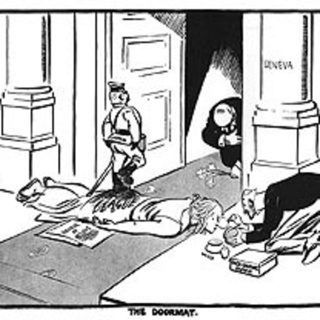
Sadly, though, that year, 1935, would be the peak of such efforts. Thereafter events would drive the world increasingly towards another war. Indeed, one of those events had already happened, as early as in September 1931: the Japanese invasion of the Chinese territory of Manchuria. Someone like the outstanding political cartoonist David Low would go so far as to identify that moment as the true start of the Second World War.

That notion, with which this episode starts, rather suggests that efforts to prevent the Second World War reached their peak, only to fall away afterwards, when it could be argued that, actually, it had already started.


Illustration: The Doormat, cartoon of 1933, by David Low.

Music: Bach Partita #2c by J Bu licensed under an Attribution-NonCommercial-No Derivatives (aka Music Sharing) 3.0 International License


Jaksot(275)

258. Major’s bastards and Labour’s deal

258. Major’s bastards and Labour’s deal

By winning the 1992 general election, John Major had gained his own mandate to form a government, instead of imply inheriting Margaret Thatcher’s. He’d shown himself capable of leading the Conservativ...

31 Elo 202514min
257. Iron Lady out, Grey Man in

257. Iron Lady out, Grey Man in

With the poll tax, Thatcher took one bad decision to many. From the point of view of orthodox Thatcherite thought, it sounded like a good idea. She’d been working for years to shrink the state but, wh...

24 Elo 202514min
256. Maggie losing it

256. Maggie losing it

Having looked last week at how Maggie Thatcher was running out of options for how to carve out a new role for Britain on the world stage, this week we look at how things were going at home. After all,...

17 Elo 202514min
255. Maggie: lioness or poodle?

255. Maggie: lioness or poodle?

Maggie Thatcher in 1987 pulled off a trick that had eluded all other British Prime Ministers of the twentieth century: she won three general elections in a row. Even more, she won a second Commons lan...

10 Elo 202514min
254. Maggie reaching the top

254. Maggie reaching the top

Thatcher’s victories, including a general election landslide and breaking the miners’ strike, emboldened her to launch another phase in the reduction of the role of the state in the British economy. N...

3 Elo 202514min
253. The Enemy Within

253. The Enemy Within

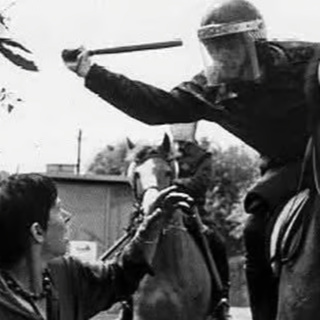
What had converted Maggie Thatcher from something of a lame duck into a front runner for the next British general election?While the economy had begun to pick up, that had been patchy at best, with so...

27 Heinä 202514min
252. Iron Lady

252. Iron Lady

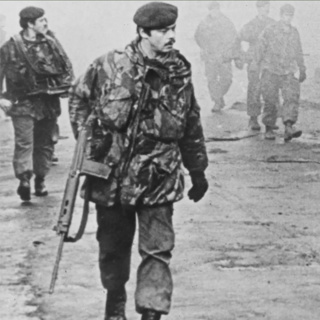
Mrs Thatcher’s first term in office was one of the great get out of jail events. She came into office intent on braking with the Keynesianism and social democracy of the postwar consensus. She drew on...

20 Heinä 202514min
251. Unlucky Jim

251. Unlucky Jim

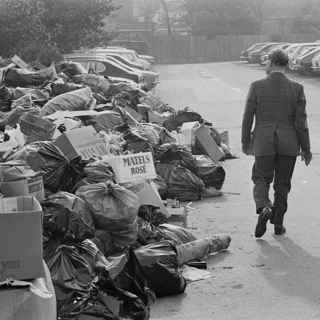
In 1976, Jim Callaghan took over from Harold Wilson as leader of the Labour Party and British Prime Minister. He was a competent politician, though not an outstanding one. He did his job well, but he ...

13 Heinä 202514min

Suosittua kategoriassa Historia

olipa-kerran-otsikko
gogin-ja-janin-maailmanhistoria
mayday-fi
huijarit
mystista
rss-ikiuni
tsunami
totuus-vai-salaliitto
konginkangas
sotaa-ja-historiaa-podi
rss-i-dont-like-mondays-2
rss-sattuu-sita-suomessakin
rouva-diktaattori
rss-kirkon-ihmeellisimmat-tarinat
tiedetta-ja-sirkushuveja-vanhojen-aikojen-podcast
rss-subjektiivinen-todistaja
apinan-vuosi
historiaa-suomeksi
rss-peter-peter
historian-nurkkapoyta