”Painter of people” with Sudhir Patwardhan (200 EP)
Audiogyan3 Marras 2020

”Painter of people” with Sudhir Patwardhan (200 EP)

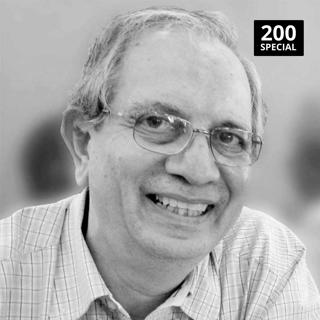
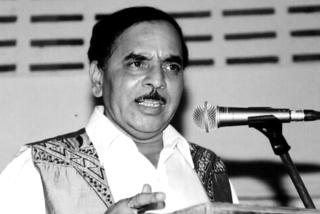
This is the 200th episode of Audiogyan. Today I have Sudhir Patwardhan with us on Audiogyan. I celebrated 100th episode with India's design Hero, B.V. Doshi, and I am equally thrilled and excited to celebrate this 200th episode with another legend - Sudhir Patwardhan - one of India’s finest painters. Thank you Sudhir sir for giving your time and it's a real honor to have you on Audiogyan.

Questions

  1. Most legendary musicians talk about having emptied the mind to reach a higher state of consciousness while performing (Bismillah Khan or Kumar Gandharva). Is this the same process while painting? A painter seems to be filled with thoughts, contradictions, and conflicts in the world.
  2. Your early works (70's) were just the subject. Later on, you started bringing in context along with the subject. Why? What made you make this shift? Eventually, your paintings become busier. Why?
  3. You've said, “It is about what is possible to communicate and what is not. The artist starts by saying something, then he wipes and starts anew.” - Is this the reason why Mumbai has always inspired you? Even Mumbai gets washed with every wave hitting the island and starts fresh? Why Mumbai?
  4. This maximum city is transmuting rapidly all the time. How did you pick subjects to paint? Be it "corporate towers threatening to take over the long-defunct mills" or be it "riots". How did/do you handle the anxiety of expressing these equally burning issues and yet making it an iconic piece of art? (Is that how your multiple scenes within the same canvas emerge?)
  5. In my understanding, be it Vijay Tendulkar, or Satyajit Ray or you (For eg: "Paying the bill" painting - people next door, a common man, are subjects of your interest. What do you think makes your work so relatable? How come the common man (most of the time) is non-cognizant about it? R.K. Laxman could be an exception, maybe :)
  6. Human forms in your painting are doing mundane activities. Yet they are imbued with a sense of innate dignity as they go about performing their chores. What is transpiring in your expression?
  7. Your work ‘Citing the city’ at Sakshi Gallery in 2007 created a dialogue with society - How do you see these dialogues reaching the masses when the galleries are visited by the elite?
  8. You have been drawing Mumbai tirelessly. Crowded and chaotic scenes seem to be clearly depicted in your work. If you have to start all over again, which city would you pick?

Jaksot(306)

26: Epistemology of voice & music - Part 2 with Pt Shrikant Ranade

26: Epistemology of voice & music - Part 2 with Pt Shrikant Ranade

What is the correct way of breathing? What exactly happens when you inhale and exhale? Can you train your body to inhale and exhale correctly and also involuntarily? How to do so? What is Indian & Chi...

4 Elo 20171h 13min
25: Efforts behind effortless acting with Dilip Prabhavalkar

25: Efforts behind effortless acting with Dilip Prabhavalkar

How did you enter this field of acting, writing and direction? What is the role of body in acting? How did you manage to play so many different characters yet making each of them so convincing? What a...

30 Heinä 201739min
24: Understanding Raag Vyawastha with Pt. Chandrakant Limaye

24: Understanding Raag Vyawastha with Pt. Chandrakant Limaye

1. The biggest asset of Hindustani classical is the framework of Raag (Raag Vyawastha). Why do we need this framework and how does it help? 2. How is one raaga’s mood defined? Who defines them? For eg...

25 Heinä 201725min
23: ABCDEF (Epistemology) of voice & music with Shrikant Ranade - Introduction (Marathi)

23: ABCDEF (Epistemology) of voice & music with Shrikant Ranade - Introduction (Marathi)

1. What do you mean by sound, nada or Dhwani? 2. How do we generate voice? 3. What do you mean by correct and incorrect breathing? 4. How can you control voice with help of breathing? 5. Who defined p...

26 Kesä 20171h 4min
22: Understanding motorcycle design with Chetan Shedjale

22: Understanding motorcycle design with Chetan Shedjale

1. What is motorcycle design and how can one get into it? What does one need to learn to become a motorcycle designer? 2. What are the design goals while making a bike? 3. What are stages when you ...

22 Kesä 201739min
21: Part - 1 Understanding 22Shrutis with Dr. Vidyadhar Oke

21: Part - 1 Understanding 22Shrutis with Dr. Vidyadhar Oke

What is a Shruti? Why is it the most important aspect of music? What do we use in our Music, ‘Shrutis’ or ‘Nadas’? How can we practically differentiate between Shrutis and Nadas? How a Raga is formed?...

15 Kesä 201741min

20: Part - 2 Understanding 22Shrutis with Dr. Vidyadhar Oke

20: Part - 2 Understanding 22Shrutis with Dr. Vidyadhar Oke

Introduction and emergence of Harmonium in India and when and how did it come to India or Indian classical music? How can a technically wrong instrument which was banned, be more popular? What exactly...

15 Kesä 201739min
19: Understanding fonts and typefaces with Mahendra Patel

19: Understanding fonts and typefaces with Mahendra Patel

What is a difference between a font-family and a typeface? How does one define / gauge / comment that a particular font is bad and good? For e.g.: Comic sans is considered to be an ugly font. Why? Eve...

8 Kesä 201735min

Suosittua kategoriassa Yhteiskunta

olipa-kerran-otsikko
sita
i-dont-like-mondays
siita-on-vaikea-puhua
kaksi-aitia
gogin-ja-janin-maailmanhistoria
uutiscast
poks
antin-palautepalvelu
kolme-kaannekohtaa
aikalisa
yopuolen-tarinoita-2
mamma-mia
rss-murhan-anatomia
rss-nikotellen
rss-haudattu
meidan-pitais-puhua
rss-palmujen-varjoissa
loukussa
taskula-trishin