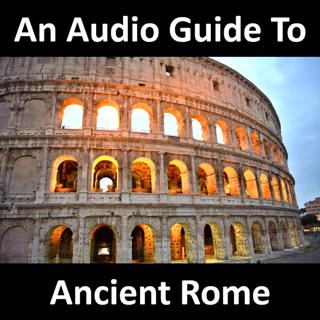
17: The Temple of Castor and Pollux

17: The Temple of Castor and Pollux

The Temple of Castor and Pollux is readily recognizable by its remaining 3 white columns standing in a line close by the Temple of Vesta. These columns are part of the side of a much later rebuild of what was originally a 5 Century BCE temple. The original temple to the semi-divine twins Castor and Pollux was pledged just after 500 BCE by Aulus Postumius Tubertus - an early Roman military leader.

According to legend, Jupiter’s mortal son Castor and his immortal son Pollux came riding into battle in aid of Rome’s forces – the twins were seen by Postumius and his immediate troops. The semi-gods were carrying spears, riding white horses and helped guide an attack of the Roman troops. They were then seen again, later that same day, at the spring of Joturna where they spread news of Rome’s victory. The Temple and Spring of Joturna are very close by.

In the early second century BCE the temple was repaired by possibly Aemilius Paullus in celebration of his victory over the Macedonians. Further modifications and updates were made by Lucius Caecilius Metellus and then by the Emperor Augustus following the devastating fire of 14 or 9 BCE. He used the repairs to better associate the temple and the divine twins with his own two sons - Gaius and Lucius Caesar. Sadly, both children would die before completion of the project and so, in time, the association changed to be with Tiberius and his late brother Drusus.

In the course of all these repairs and updates the design was changed to be of a form similar to other adjacent forum temples such as that of Divus Julius. The updated version had two sets of steps flanking the entrance, a row of 8 columns at the front and back and 11 columns on each side. The 3 remaining columns, which have Corinthian capitals, are from the middle section of the east side. They support a simple but elegant entablature that would have run around the entirety of the edge of the roof – most likely with a carved dedication on the front that faced North. Ascending the steps at the front one would have passed through the front columns, under a large triangular pediment and into a single main temple hall that likely contained statues of Castor and Pollux.

Given that the temple has a raised podium fronting directly onto the Forum it also served as an orators platform. Perhaps surprisingly, the extremely solid base of the temple’s foundations was divided into chambers for various official public services - particularly those needing the protection of thick walls.

In addition to its civic function, the Temple was the center of annual celebrations commemorating the victory at Lake Regillus. A major cavalry parade was held each year on July 15th and featured as many as 5,000 young men carrying shields and spears.

Tämä jakso on lisätty Podme-palveluun avoimen RSS-syötteen kautta eikä se ole Podmen omaa tuotantoa. Siksi jakso saattaa sisältää mainontaa.

Jaksot(36)

28: Trajan's Column

28: Trajan's Column

Trajan’s Column is a monument to Emperor Trajan’s victory in the wars with Dacia that took place between the years 101 and 106.  It was part of a sequence of constructions built by or dedicated to Tra...

25 Helmi 20218min

35: The Column of Marcus Aurelius

35: The Column of Marcus Aurelius

This monument celebrates Marcus Aurelius’ two successful military campaigns against tribes north of the Danube in what is modern day Germany.  The first campaign ran from the year 172-173 and was wage...

17 Loka 202011min

34: The Mausoleum of Augustus

34: The Mausoleum of Augustus

Augustus started building the mausoleum following his victory over Anthony and Cleopatra in 31 BCE at the naval battle on the west coast of Greece close to the promontory of Actium – his success broug...

10 Loka 202010min

33: The Theater of Marcellus

33: The Theater of Marcellus

The Theater was named after Emperor Augustus’ nephew Marcus Claudius Marcellus however the building was originally commissioned by Julius Caesar who bought and cleared the land in a space to the south...

3 Loka 202010min

32: The Pyramid of Cestius

32: The Pyramid of Cestius

The Pyramid of Cestius was built during the reign of the emperor Augustus, probably between 18 and 12 BCE. It’s surface is white Carrara marble and the tip is exactly 100 Roman feet (30 meters) high. ...

26 Syys 20207min

12: The Temple of Vesta

12: The Temple of Vesta

The Temple of Vesta was integrated into the adjacent House and Sanctuary of the Vestal Virgins. The only remains of the temple itself are a modest mound of concrete however there is a reconstruction o...

20 Syys 20204min

13: Temple of Divus Romulus

13: Temple of Divus Romulus

The Temple of Divus Romulus is recognizable as a tall round building on the North side of the Via Sacra. From the name you can be forgiven for thinking that this temple is dedicated to Romulus the leg...

20 Syys 20205min

14: Temple of Antoninus and Faustina

14: Temple of Antoninus and Faustina

The Temple of Antoninus and Faustina is easily recognized by the six columns that dominate its front – these are topped by an entablature that carries the dedication to “Divo Antonino et Divae Faustin...

20 Syys 20205min

Suosittua kategoriassa Koulutus

rss-murhan-anatomia
psykopodiaa-podcast
voi-hyvin-meditaatiot-2
rss-hereilla
rss-valo-minussa-2
rss-narsisti
kesken
rss-liian-kuuma-peruna
rss-koira-haudattuna
rss-niinku-asia-on
dear-ladies
rss-opiskelemaan
rss-arkea-ja-aurinkoa-podcast-espanjasta
aamupore
rahapuhetta
adhd-podi
rss-rahamania
rss-tietoinen-yhteys-podcast-2
rss-suomen-aa-podcast
rss-retoriikan-kesakoulu