

Thomas Hoenig on Bank Capitalization and Fed Policy after COVID-19
Thomas Hoenig is a former vice chair of the FDIC, former president of the Kansas City Federal Reserve Bank, and is currently a distinguished senior fellow at the Mercatus Center at George Mason University. Tom's research has focused on the long-term impact of the politicization of financial services, as well as the effects of government grant privileges on market performance. Tom joins David on Macro Musings to talk about COVID-19, the Fed's response to its economic impact, and the current state of banking in the United States. Transcript for the episode can be found here. Thomas's Twitter: @tom_hoenig Thomas's Mercatus profile: https://www.mercatus.org/scholars/thomas-hoenig Related Links: Bonus segment with Thomas: https://youtu.be/CrA1WRtu0jc David's blog: macromarketmusings.blogspot.com David's Twitter: @DavidBeckworth
25 Touko 202055min

Scott Sumner on the Government's Response to COVID-19 and the Future of Level Targeting
Scott Sumner is the Ralph G. Hawtrey Chair of Monetary Policy at the Mercatus Center at George Mason University, Professor Emeritus of economics at Bentley University, and a research fellow at the Independent Institute. As a returning guest to the podcast, Scott joins Macro Musings to give his latest thoughts on the COVID-19 crisis and its implications for monetary policy. Specifically, David and Scott discuss how the Fed can conduct more aggressive monetary policy, what a level targeting regime should look like in the future, and the current progression toward negative interest rates. Transcript for the episode can be found here. Scott's Mercatus profile: https://www.mercatus.org/scholars/scott-sumner Scott's blog: https://www.themoneyillusion.com/ Related Links: Scott's bonus segment: https://www.youtube.com/watch?v=z8DXU_1oIsg&feature=youtu.be *Reforming the Fed's Toolkit and Quantitative Easing Practices: A Plan to Achieve Level Targeting* by Scott Sumner and Patrick Horan https://www.mercatus.org/publications/covid-19-policy-brief-series/reforming-feds-toolkit-and-quantitative-easing-practices *Negative Interest Rates and Negative IOER* by Scott Sumner https://www.econlib.org/negative-interest-rates-and-negative-ioer/ David's blog: macromarketmusings.blogspot.com David's Twitter: @DavidBeckworth
20 Touko 202050min

Lev Menand on the Fed's Lending Facilities and the Legal Concerns Surrounding Them
Lev Menand is a legal scholar at Columbia Law School and has previously worked for the New York Fed, the US Treasury Department, and the Financial Stability Oversight Council (FSOC). Lev Joins Macro Musings to talk about his new paper, *Unappropriated Dollars: The Fed's Ad Hoc Lending Facilities and the Rules that Govern Them*. Specifically, David and Lev discuss opening up public Fed bank accounts, the importance of liquidity and credit facilities, and how Congress is using the CARES Act to skirt the Fed's current legal mandates. Transcript for the episode can be found here. Lev's Twitter: @LevMenand Lev's Columbia Law profile: https://www.law.columbia.edu/faculty/lev-menand Related Links: Bonus segment with Lev: https://youtu.be/N9qndjjju9A *Unappropriated Dollars: The Fed's Ad Hoc Lending Facilities and the Rules That Govern Them* by Lev Menand https://papers.ssrn.com/sol3/papers.cfm?abstract_id=3602740 *FedAccounts* by Morgan Ricks, John Crawford, and Lev Menand https://papers.ssrn.com/sol3/papers.cfm?abstract_id=3192162 David's blog: macromarketmusings.blogspot.com David's Twitter: @DavidBeckworth
18 Touko 20201h 3min

Martin Hellwig on the Recent German Constitutional Court Ruling and Its Potential Eurozone Implications
Martin Hellwig is the director of the Max Planck Institute for Research on Collective Goods, and he joins Macro Musings to talk about the Eurozone and the implications of the recent German Constitutional Court (GCC) ruling for the future of the monetary union. David and Martin specifically discuss the background of the perceived Eurozone crisis, the power struggle between the GCC and the European Court of Justice, and how this case may lead to a total breakdown of the Eurozone. Transcript for the episode can be found here. Martin's MPI profile: https://www.coll.mpg.de/martin-hellwig Related Links: Bonus segment with Martin: https://youtu.be/1POrO_8VcM0 *The Leverage Ratchet Effect* by Anat Admati, Peter DeMarzo, Martin Hellwig and Paul Pfleiderer https://www.gsb.stanford.edu/faculty-research/working-papers/leverage-ratchet-effect *German Court Has Set a Bomb Under the EU Legal Order* by Martin Sandbu https://www.ft.com/content/79484c01-b66b-4f81-bdc6-fd4def940821 David's blog: macromarketmusings.blogspot.com David's Twitter: @DavidBeckworth
13 Touko 202043min

Nathan Tankus on Public Finance in the COVID-19 Crisis: A Consolidated Budget Balance View and its Implications for Policy
Nathan Tankus is the director of research at the Modern Money Network, and a research fellow at the Global Institute for Sustainable Prosperity. Nathan is also the author of a number of articles on the Fed's recent activity at his Substack page titled "Notes on the Crises." Nathan joins Macro Musings to talk about the post-Keynesian view of money, central bank independence, and the consolidated view of public finance, as well as evaluate the policy responses by the Fed and Congress to COVID-19. Transcript for the episode can be found here. Nathan's Twitter: @NathanTankus Nathan's Substack page: https://nathantankus.substack.com/ Related Links: Bonus segment with Nathan: https://youtu.be/VPl0LYgttYI *Monetary, Credit, and Fiscal Policies: A Collection of Statements Submitted to the Subcommittee on Monetary, Credit, and Fiscal Policies by Government Officials, Bankers, Economists, and Others (specifically a comment made by Albert G. Hart) by the Joint Committee on the Economic Report https://fraser.stlouisfed.org/files/docs/historical/congressional/1949jec_mcfpstate.pdf#page=332 David's blog: macromarketmusings.blogspot.com David's Twitter: @DavidBeckworth
11 Touko 202053min

Anat Admati on the Perils of Corporate Debt and How COVID-19 Relief Efforts Have Gone Wrong
Anat Admati is a professor of finance and economics at Stanford University, and is well-known for her work on leveraging debt in our financial system and how it makes our economy more susceptible to shocks. She's also a co-author of the popular book, *The Banker's New Clothes: What Went Wrong with Banking and What to Do About It*. Anat joins Macro Musings again to talk about the COVID-19 crisis from the debt perspective, how the Fed and Congress have responded so far, and how their relief efforts should have been focused differently. The transcript for the episode can be found here. Anat's Twitter: @anatadmati Anat's website: https://admati.people.stanford.edu/ Related Links: Bonus segment with Anat: https://youtu.be/4xHmmgoURqg *The Banker's New Clothes: What's Wrong with Banking and What to Do about It* by Anat Admati and Martin Hellwig https://press.princeton.edu/books/paperback/9780691162386/the-bankers-new-clothes *The Leverage Ratchet Effect* by Anat Admati, Peter DeMarzo, Martin Hellwig, and Paul Pfleiderer https://onlinelibrary.wiley.com/doi/abs/10.1111/jofi.12588 *Macrofinancial History and the New Business Cycle Facts* by Oscar Jorda, Mortiz Schularick, and Alan Taylor https://www.frbsf.org/economic-research/files/wp2016-23.pdf *Coronavirus Crisis Lays Bare the Risks of Financial Leverage, Again" by Martin Wolf https://www.ft.com/content/098dcd60-8880-11ea-a01c-a28a3e3fbd33 *House of Debt: How They (And You) Caused the Great Recession, and How We Can Prevent It from Happening Again* by Atif Mian and Amir Sufi https://press.uchicago.edu/ucp/books/book/chicago/H/bo20832545.html *Collateral Frameworks: The Open Secret of Central Banks* by Kjell Nyborg https://www.cambridge.org/core/books/collateral-frameworks/DE8BACD87F364A66DD496F601BE92FE7 *Bankruptcy for Banks: A Sound Concept That Needs Fine-Tuning* by Mark Roe and David Skeel https://www.nytimes.com/2016/08/17/business/dealbook/bankruptcy-for-banks-a-sound-concept-that-needs-fine-tuning.html David's blog: macromarketmusings.blogspot.com David's Twitter: @DavidBeckworth
6 Touko 202043min

Kathryn Judge on the CARES Act and the Political Implications of Relief Efforts
Kathryn Judge is the Harvey J. Goldschmid Professor of Law at Columbia Law School, the editor of the Journal of Financial Regulation, and an expert on financial markets, financial regulation, and regulatory architecture. Kathryn joins Macro Musings to discuss the CARES Act, the Fed's role and its limitations regarding COVID-19 relief efforts, and the political implications of relief effort performance. Transcript for the episode can be found here. Kathryn's Twitter: @ProfKateJudge Kathryn's Columbia profile: https://www.law.columbia.edu/faculty/kathryn-judge Related Links: Bonus segment with Kathryn: https://youtu.be/iFub37lpq2c *The Design Flaw at the Heart of the CARES Act* by Kathryn Judge https://www.forbes.com/sites/kathrynjudge/2020/04/20/the-design-flaw-at-the-heart-of-the-cares-act/#21495f0e6bed David's blog: macromarketmusings.blogspot.com David's Twitter: @DavidBeckworth
4 Touko 202057min
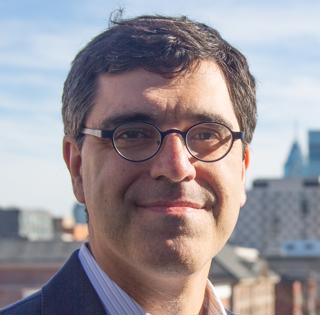
Jesus Fernandez-Villaverde on Central Bank Digital Currency and the Current Economic Responses to COVID-19
Jesus Fernandez-Villaverde is a professor of economics at the University of Pennsylvania, a research associate with the National Bureau of Economic Research, a research affiliate with the Center for Economic Policy Research, and a returning guest to the podcast. Jesus specializes in macroeconomic modeling and economic history among other topics, and he joins Macro Musings to talk about COVID-19, central bank digital currency, and developments in the Eurozone. David and Jesus also discuss the history of central banks and the interacting public, how threatening inflation could become a useful tool for a central bank, and the value economic modeling could add to the epidemiological field. Transcript for the episode can be found here. Jesus's UPenn profile: https://www.sas.upenn.edu/~jesusfv/ Jesus's NBER archive: https://www.nber.org/people/jesus_fernandez-villaverde Related Links: Bonus segment with Jesus: https://youtu.be/CA6y9LqjDwQ *Estimating and Simulating a SIRD Model of COVID-19 for Many Countries, States, and Cities* by Jesus Fernandez-Villaverde & Charles Jones https://web.stanford.edu/~chadj/sird-paper.pdf *Central Bank Digital Currency: Central Banking For All?* by Jesus Fernandez-Villaverde, Daniel Sanches, Linda Schilling, & Harald Uhlig https://bfi.uchicago.edu/working-paper/central-bank-digital-currency-central-banking-for-all/ *Central Bank Digital Currency in a Nominal World* by Jesus Fernandez-Villaverde, Daniel Sanches, Linda Schilling, & Harald Uhlig https://www.sas.upenn.edu/~jesusfv/CBDC_Nominal.pdf David's blog: macromarketmusings.blogspot.com David's Twitter: @DavidBeckworth
29 Huhti 20201h 1min