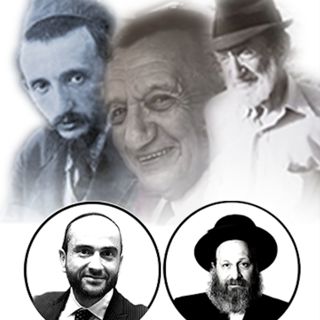
Alex Edelman: Taking Comedy Seriously: Purim
18Forty Podcast15 Maalis 2022

Alex Edelman: Taking Comedy Seriously: Purim

In this episode of the 18Forty Podcast, David is joined by comedian Alex Edelman for a special Purim discussion exploring the place of humor and levity in a world that often demands our solemnity.

A Modern Orthodox Jew from Brookline, Massachusetts, who’s “tried cocaine,” but has “never tried bacon,” Alex stars in the one-man Off Broadway show Just For Us, which has to be one of the only top-tier comedy specials to mention Rabbi Joseph B. Soloveitchik.

In this episode, we discuss:

—How does a Modern Orthodox kid become a mainstream professional comic?
—What makes particularly Jewish stories resonate so much with wider audiences?
—Why hasn’t he left traditional Judaism amid his secular fame?

Tune in to hear how a bona fide star holds onto both his humor and his values to bare to the world his authentic self.

Interview begins at 26:56.

Alex Edelman is a product of Massachusetts’s Maimonides School and has been featured on Conan and The Late Show with Stephen Colbert. In 2020, he was the head writer and executive producer of the “Saturday Night Seder” YouTube extravaganza, which raised over $3.5 million for the CDC Foundation COVID-19 Emergency Response Fund. His show Just For Us is running at the SoHo Playhouse in New York City. While nights tend to sell out quickly, tickets are available here: https://ci.ovationtix.com/35583/production/1107251.

References:

The World as Will and Idea by Arthur Schopenhauer

Is It Funny for the Jews? by Jason Zinoman

Here All Along by Sarah Hurwitz

My Name Is Asher Lev by Chaim Potok

For the Relief of Unbearable Urges by Nathan Englander

Dinner at the Center of the Earth by Nathan Englander

Kaddish.com by Nathan Englander

Baseball as a Road to God by John Sexton

Become a supporter of this podcast: https://www.spreaker.com/podcast/18forty-podcast--4344730/support.

Jaksot(258)

Steven Gotlib & Eli Rubin: What Does It Mean To Be Human? [AI 1/4]

Steven Gotlib & Eli Rubin: What Does It Mean To Be Human? [AI 1/4]

This series is sponsored by American Security Foundation.In this episode of the 18Forty Podcast—recorded at the 18Forty X ASFoundation AI Summit—we speak with Rabbi Eli Rubin and Rabbi Steven Gotlib about what differentiates human intelligence from artificial intelligence.In this episode we discuss:What does AI teach us about what it means to be human? What is the soul, and how do we interact with it? Should we be frightened or encouraged by the development of AI? Tune in to hear a conversation about the role of language in our humanity. Interview begins at 16:49.Steven Gotlib is Associate Rabbi at Mekor Habracha/Center City Synagogue and Director of the Center City Beit Midrash in Philadelphia. Steven received rabbinic ordination from the Rabbi Isaac Elchanan Theological Seminary, certificates in Mental Health Counseling and Spiritual Entrepreneurship, and a BA in Communication and Jewish Studies from Rutgers University.Eli Rubin, a contributing editor at Chabad.org, is the author of Kabbalah and the Rupture of Modernity: An Existential History of Chabad Hasidism and a co-author of Social Vision: The Lubavitcher Rebbe’s Transformative Paradigm for the World. He studied Chassidic literature and Jewish Law at the Rabbinical College of America and at yeshivot in the UK, the US and Australia, and received his PhD from the Department of Hebrew and Jewish Studies, University College London.References:“Basketball: The One And Only”Genesis 7;23Rashi on Genesis 7:23“Remembering my chavruta: Rabbi Moshe Hauer, z”l” By Rabbi Rick Jacobs“18Forty: Exploring Big Questions (An Introduction)”18Forty Podcast: “The Cost of Jewish Education”18Forty Podcast: “Steven Gotlib: Some Rabbi Grapples with His Faith” 18Forty Podcast: “Eli Rubin: How Do Mysticism and Social Action Intersect”18Forty Podcast: “Eli Rubin: Is the Rebbe the Messiah?”Torah Ohr by Shneur Zalman of LiadiTanya by Shneur Zalman of LiadiNefesh HaChayim by Chaim of VolozhinGuide for the Perplexed by MaimonidesHalakhic Man by Rabbi Joseph B. SoloveitchikThe Conscious Mind by David J. Chalmers“Adam, The Speaking Creature: On Humanity and Language in the Era of AI” by Eli Rubin“Toward a Jewish Theology of Consciousness” by Steven GotlibLudwig Wittgenstein: Philosophy in the Age of Airplanes by Anthony GottliebFor more 18Forty:NEWSLETTER: 18forty.org/joinCALL: (212) 582-1840EMAIL: info@18forty.orgWEBSITE: 18forty.orgIG: @18fortyX: @18_fortyWhatsApp: join hereBecome a supporter of this podcast: https://www.spreaker.com/podcast/18forty-podcast--4344730/support.

28 Loka 1h 8min

Rachel Goldberg-Polin and Jon Polin: How Torah Gives Us Faith and Hope

Rachel Goldberg-Polin and Jon Polin: How Torah Gives Us Faith and Hope

This episode is brought to you by Simchat Torah Challenge, a Jewish communal project inspiring tens of thousands of Jews of all backgrounds to read the weekly parsha. The weekly English-language email newsletter and website bring Torah and insights from trusted sources. Join for free at SimchatTorahChallenge.orgIn this special Simchas Torah episode of the 18Forty Podcast, we speak with Rachel Goldberg-Polin and Jon Polin—parents of murdered hostage Hersh Goldberg-Polin, Hashem yikkom damo—about their relationship to Torah. For two years, we’ve been struggling with the paradox of how Simchas Torah has become eternally intertwined with October 7. So, at Koren’s celebration of Rabbi Sacks’s Humash, we could think of no two better people to talk to. In this episode we discuss:How can we find redemption specifically within our exile? How can we move on when we’ve been permanently broken? How can we work to live our lives through the lens of Torah? Tune in to hear a conversation about how Torah gives us strength and hope in even the darkest times. Interview was held on Sept. 8 and begins at 18:26. References:18Forty Podcast: “Chaim Saiman: Is Talmud the Jewish Constitution?”“The Inverted Halakhah of Simhat Torah” by Chaim SaimanParshat Beha'alotchaEzekiel 37Genesis 32:27The Koren Shalem HumashFor more 18Forty:NEWSLETTER: 18forty.org/joinCALL: (212) 582-1840EMAIL: info@18forty.orgWEBSITE: 18forty.orgIG: @18fortyX: @18_fortyWhatsApp: join hereBecome a supporter of this podcast: https://www.spreaker.com/podcast/18forty-podcast--4344730/support.

12 Loka 1h 9min

Moshe Koppel: Artificial Intelligence and Torah [Prayer Re-Release]

Moshe Koppel: Artificial Intelligence and Torah [Prayer Re-Release]

As a hint at our next new series, we want to share with you our 2023 episode with Moshe Koppel—a computer scientist and Talmud scholar—about Torah and its intersection with artificial intelligence.In a world in which technology puts vast libraries of Torah at our fingertips, we are tasked with thinking more deeply about what essentially human abilities we bring to the enterprise of Torah and tefillah. In this episode we discuss:What computer-based innovations are on the horizon in the realm of Torah study?Will AI ever be able to reliably answer our halachic questions?Will advances in technology drastically change the experience of Shabbos observance?Tune in to hear a conversation about how AI has the potential to make our Jewish lives richer—if we use it wisely.Interview begins at 18:21.Dr. Moshe Koppel is a computer scientist, Talmud scholar, and political activist. Moshe is a professor of computer science at Bar-Ilan University, and a prolific author of academic articles and books on Jewish thought, computer science, economics, political science, and other disciplines. He is the founding director of Kohelet, a conservative-libertarian think tank in Israel, and he advises members of the Knesset on legislative matters. Dr. Koppel is the author of three sharply thought books on Jewish thought and previously joined 18Forty to talk about Halacha as Language.References:“Funes the Memorious” by Jorge Luis BorgesThe Mind of a Mnemonist by A.R. LuriaSurfaces and Essences: Analogy as the Fuel and Fire of Thinking by Douglas R. Hofstadter & Emmanuel SanderGödel, Escher, Bach: An Eternal Golden Braid by Douglas R. HofstadterMeta-Halakhah: Logic, Intuition, and the Unfolding of Jewish Law by Moshe Koppel2001: A Space OdysseyDICTA: Analytical tools for Hebrew texts“Digital Discourse and the Democratization of Jewish Learning” by Zev EleffTzidkat HaTzadik: 211 by Tzadok HaKohen of LublinBecome a supporter of this podcast: https://www.spreaker.com/podcast/18forty-podcast--4344730/support.

6 Loka 1h 14min

Moshe Benovitz: Why Religious Change Doesn't Always Last [Teshuva 6/6]

Moshe Benovitz: Why Religious Change Doesn't Always Last [Teshuva 6/6]

This series is sponsored by Mira and Daniel Stokar.In this episode of the 18Forty Podcast, recorded live at Stern College, we speak with Rabbi Moshe Benovitz, director of NCSY Kollel, about what makes religious change real and sustainable.In this episode we discuss:—What is the difference between behavior modification and personality development?—How does one translate yeshiva skills to a life of kedusha? —What is the value of being less emotionally reactive to criticism?Tune in to hear a conversation about how we might do teshuva that lasts throughout the year and beyond.Interview begins at 16:00.Rabbi Moshe Benovitz has been the director of NCSY Kollel for over two decades. David Bashevkin considers him the “Lorne Michaels” of Jewish education. References:Resisei Layla 50Mishnah Kelim 17Saturday Night LiveMishneh Torah, RepentanceFor more 18Forty:NEWSLETTER: 18forty.org/joinCALL: (212) 582-1840EMAIL: info@18forty.orgWEBSITE: 18forty.orgIG: @18fortyX: @18_fortyWhatsApp: join hereBecome a supporter of this podcast: https://www.spreaker.com/podcast/18forty-podcast--4344730/support.

29 Syys 1h 26min

Naftuli Moster: Leaving Haredi Education Activism [Teshuva 5/6]

Naftuli Moster: Leaving Haredi Education Activism [Teshuva 5/6]

This series is sponsored by Mira and Daniel Stokar.In this episode of the 18Forty Podcast, we speak with Naftuli Moster, a former activist for major changes in Hasidic education, about how and why he changed his understanding of the values imparted by Judaism.In this episode we discuss:Why did Naftuli stop campaigning for fundamental reform in Hasidic education?Why are Jews often drawn to movements that can be counterproductive to their interests? How did October 7 make Naftuli rethink his relationship with the Jewish world? Tune in to hear a conversation about finding healthy communities in times when we feel lost. Interview begins at 25:09.Naftuli Moster is the founder and CEO of Shtetl, a non-profit media outlet serving as a free press for the Haredi community. He formerly worked with YAFFED, an organization that pushes for reform in Haredi and Hasidic education.References:“‘Why I left Hasidic education activism’ | Naftuli Moster”Tosafot on Pesachim“The Words of the Master and the Life of the Student” by Shalom CarmyMan's Search for Meaning by Viktor E. FranklNight by Elie WieselFor more 18Forty:NEWSLETTER: 18forty.org/joinCALL: (212) 582-1840EMAIL: info@18forty.orgWEBSITE: 18forty.orgIG: @18fortyX: @18_fortyWhatsApp: join hereBecome a supporter of this podcast: https://www.spreaker.com/podcast/18forty-podcast--4344730/support.

21 Syys 1h 36min

Gayle Kirschenbaum: Learning to Forgive My Mother [Teshuva 4/6]

Gayle Kirschenbaum: Learning to Forgive My Mother [Teshuva 4/6]

This series is sponsored by Mira and Daniel Stokar.In this episode of the 18Forty Podcast, we speak with Gayle Kirschenbaum—author of Bullied to Besties: A Daughter’s Journey to Forgiveness—about how she repaired her fraught relationship with her mother.At the end of the podcast, we hear from her mother, Millie, herself, now over 101 years old. In this episode we discuss: What does a “forgiveness coach” teach her students? How can we repair relationships across generations? What does it take to try to understand the full humanity of our parents? Tune in to hear a conversation about healing, forgiveness, and teshuva through love. Interview begins at 14:29.Gayle Kirschenbaum is an Emmy-winning TV producer, writer, photographer, coach, and speaker. She was invited to give a TED Talk called "No More Drama With Mama," about forgiveness and transforming difficult relationships into healthy ones.  References:Top 5 by David BashevkinBullied to Besties: A Daughter’s Journey to Forgiveness by Gayle Kirschenbaum“No More Drama With Mama” by Gayle Kirschenbaum“Cut! She's Chewing the Scenery; A Shih Tzu and Her Stage Mother Strive for Stardom”The Godfather Part IIIMy NoseThe Nanny You Can Heal Your Life by Louise HayFor more 18Forty:NEWSLETTER: 18forty.org/joinCALL: (212) 582-1840EMAIL: info@18forty.orgWEBSITE: 18forty.orgIG: @18fortyX: @18_fortyWhatsApp: join hereBecome a supporter of this podcast: https://www.spreaker.com/podcast/18forty-podcast--4344730/support.

16 Syys 1h 35min

Sarah Hurwitz: Reclaiming Judaism from Shame and Blame [Teshuva 3/6]

Sarah Hurwitz: Reclaiming Judaism from Shame and Blame [Teshuva 3/6]

This series is sponsored by Mira and Daniel Stokar.In this episode of the 18Forty Podcast, we speak with writer Sarah Hurwitz—author of the new book As a Jew: Reclaiming Our Story from Those Who Blame, Shame, and Try to Erase Us—about what it means to be a “knowing Jew.”In a time when we often feel compelled to justify our Judaism to the world, being Jewishly educated is no longer a luxury but a necessity. In this episode we discuss:What does a proud Jew professionally associated with the Democratic Party make of the state of contemporary politics? Where should one begin in trying to be an educated and involved Jew with a strong Jewish home?How can the mussar literature be a great starting point to people looking to deepen their practice? Tune in to hear a conversation about claiming for ourselves the tradition that so many try to take from us. Interview begins at 11:14.Sarah Hurwitz served as a White House speechwriter from 2009 to 2017, first as a senior speechwriter for President Barack Obama and then as head speechwriter for First Lady Michelle Obama. She is the author of Here All Along: Finding Meaning, Spirituality, and a Deeper Connection to Life – in Judaism (After Finally Choosing to Look There) and As A Jew: Reclaiming Our Story From Those Who Blame, Shame, and Try To Erase Us. References:As a Jew: Reclaiming Our Story from Those Who Blame, Shame, and Try to Erase Us by Sarah HurwitzHere All Along: Finding Meaning, Spirituality, and a Deeper Connection to Life – in Judaism (After Finally Choosing to Look There) by Sarah HurwitzThe Mighty DucksEveryday Holiness: The Jewish Spiritual Path of Mussar by Alan MorinisMesillat Yesharim by Moses Chaim LuzzattoFor more 18Forty:NEWSLETTER: 18forty.org/joinCALL: (212) 582-1840EMAIL: info@18forty.orgWEBSITE: 18forty.orgIG: @18fortyX: @18_fortyWhatsApp: join hereBecome a supporter of this podcast: https://www.spreaker.com/podcast/18forty-podcast--4344730/support.

9 Syys 1h 22min

DovBer Pinson: The Jewish People's Path of Teshuva [Teshuva 2/6]

DovBer Pinson: The Jewish People's Path of Teshuva [Teshuva 2/6]

This series is sponsored by Mira and Daniel Stokar.In this episode of the 18Forty Podcast, we speak with Rabbi DovBer Pinson—a scholar, author, teacher, and spiritual mentor—about how we can rethink teshuva in light of the challenges we face today.In this episode we discuss:What is the difference between “lower” and “higher” teshuva? How should the Jewish world recalibrate in the face of the recent rise in antisemitism?How can we learn to be better at loving the Jewish People, including the Jews with whom we have severe disagreements? Tune in to hear a conversation about what it means to return to our eternality in a rapidly changing world.Interview begins at 8:40.Rav DovBer Pinson is a world-renowned rabbi, scholar, author, teacher, and spiritual mentor. Through his books, lectures, and seminars he has touched and inspired the lives of thousands the world over. Rav Pinson is the Rosh Kolel of the IYYUN Yeshiva/Kolel, Marah D'asra of 84 Viola, and heads The IYYUN/CHABAD Center in Brownstone Brooklyn, New York.Topics (Produced by Sofer.AI):Podcast introduction and theme — 0:14Meeting Rav DovBer Pinson and his impact — 3:51Life as a text: looking for confluence — 7:00Introducing the discussion on teshuva — 8:42Lower vs. higher levels of teshuva — 10:27Diaspora, Israel connection, and shifting Jewish identity — 12:34Specific focus of teshuva for the Orthodox Jew — 16:00Modern identity collapse and reclaiming self — 17:29Agency and free choice in Judaism — 19:20Five dimensions of reality in Sefer Yetzirah — 20:23Orthodox world lagging by fifty years — 22:25Time vs. space: Mishnah acronym insight — 23:57Worries about Orthodox commitment and packaging — 26:05Yeshiva world as a train without an engine — 28:59Subconscious communication across Jewish communities — 30:29Peripheral origins vs. established Hasidic families — 31:49Understanding the relationship with the Land of Israel — 32:51Israel as a nation vs. a people — 34:05Collective awareness of shared destiny — 36:16Yeshiva League analogy and need for new language — 37:31Taking personal responsibility for all Israel — 41:36Tension between love for Jews and love for humanity — 43:03Unity of Torah, God, and Israel — 45:48Yeshiva learning without a structured curriculum — 47:37Rebbe’s vision: every Jew as a shaliach — 49:43Mission of Judaism beyond meritocracy — 54:22Hope expressed in the daily prayer — 57:17Jewish calendar holds a Guinness record — 59:08Personal struggle with criticism over gay Jews — 60:13Pain from establishment and public backlash — 61:21Seeking trusted guidance to navigate criticism — 65:53Personal teshuva: reconciling with critics — 68:53Humility as source of creative innovation — 71:06Current crisis as catalyst for collective change — 73:11The Torah of the moment: Messiah and presence — 74:50Books that pose good questions — 75:51Future vision: every day becomes a holiday — 77:48Great-grandfather lineage in Chabad scholarship — 80:00Balancing Talmudic study with Chassidic heart — 81:43Fascination with French Jewry of the 12th century — 82:54Personal sleep schedule post-COVID — 84:16Facing personal criticism and baggage — 90:11Uniting through the Jewish community — 92:27References:18Forty Podcast: “Haym Soloveitchik: How Modernity Changed Our Relationship to God”18Forty Podcast: “Zohar Atkins: Between Philosophy and Torah”ZoharTanya Chapter 32AleinuFor more 18Forty:NEWSLETTER: 18forty.org/joinCALL: (212) 582-1840EMAIL: info@18forty.orgWEBSITE: 18forty.orgIG: @18fortyX: @18_fortyWhatsApp: join hereBecome a supporter of this podcast: https://www.spreaker.com/podcast/18forty-podcast--4344730/support.

3 Syys 1h 39min

Suosittua kategoriassa Uskonto ja hengellisyys

yopuolen-tarinoita-2
kulttien-johdossa
lahko
voi-hyvin-meditaatiot-2
maailmanpuu
rss-yopuolen-tarinoita
harhaoppia
rss-vapaudu-voimaasi
rss-mielen-laboratorio
rss-emil-anton
rss-valo-minussa-2
rss-pari-sanaa-ja-kuppi-kahvia
rss-seuraa-sieluasi
rss-3-minuuttia-rohkaisua
rss-puhutaan-teologiaa
rss-ylosnousemus-ja-kuolemanjalkeinen-elama
rss-mieletonta-elamaa
rss-viisaiden-naisten-neuvosto
rss-lakeuden-valo
rss-jennan-planetaario