Deregulation and deep decarbonisation feat. Edgardo Sepulveda
Decouple26 Huhti 2021

Deregulation and deep decarbonisation feat. Edgardo Sepulveda

I am joined by Edgardo Sepulveda, a telecoms regulatory economist with an interest in the electricity sector, focused on restructuring and privatization. Edgardo provides a comparative and long-term perspective on the sector. We begin with the first private companies at the dawn of electrification in the 1880’s and the populist push to exert some form of public control to curb abusive pricing, including setting up regulatory commissions to protect the public interest (in the USA, the New York PSC was set up in 1907!). Consolidation from this multi-private operator model to the “traditional” monopoly vertically-integrated firm mostly occurred after World War II (WWII), when the idea that strategic sectors should be publicly-owned via state-owned enterprises (SOEs) drove a series of unifications/nationalizations: Hydro Quebec (1944); ENDESA in Chile (1945); EDF in France (1946); BEA/CEGB in UK (1947), etc. These SOEs expanded the grid and drove electrification. In the US, where public ownership never took off (with a few exceptions (TVA (1933)), the monopoly investor owned utilities (IOUs) also expanded, facilitated by rate-of-return (ROR) economic regulation that guaranteed a stable long-term return on the vast investments needed to meet demand. Starting in the 1980’s, neoliberalism and then environmentalism challenged this structure. Demand, after growing 5% to 6% annually for four decades after WWII, shrank to less than 1% in the last two decades. The neoliberal agenda of competition and privatization was kicked off 1980 in Chile under dictatorship, pushed forward by Thatcher in the UK later in the decade, so that by the California energy crisis in 2000, more than 50% of the USA and 3 out of the 10 provinces in Canada had “restructured”. The idea was that while distribution and transmission remained “natural monopolies” and should continue to be ROR-regulated, generation could be provided competitively and thus “deregulated.” So many vertically-integrated firms were “broken up” (restructured) to allow for a generation market to be created – markets would now set the prices and decide on how much and where to invest. In parallel, many SOE’s were privatized. So what is the verdict? Edgardo and Chris discuss the implications of these two models, for consumers and technologies, in the context of our need to double or triple generation by 2050 to meet decarbonization. Some reports that Edgardo refers to during the podcast, for an even deeper dive: For the USA, Borenstein & Bushnell argue that evidence shows that the restructuring hope was mostly hype in terms of performance: “The U.S. Electricity Industry after 20 Years of Restructuring” (2015) https://energy.ucdavis.edu/wp-content/uploads/2017/03/07-20-2016-DEEP_WP001.pdf Given the above-noted discussion, Edgardo and Chris close of the discussion focusing on nuclear and the available options. A good nuclear-centric analysis of how liberalized markets under-perform from an investment perspective is by Koenig and Kee in “Nuclear New Build - How to Move Forward” (2021) https://nuclear-economics.com/wp-content/uploads/2021/01/2021-01-atw-NECG.pdf, in which they also develop one particular proposed solution (there are many). Edgardo’s Twitter handle is @E_R_Sepulveda Edgardo’s take on the Ontario electricity sector is here https://www.policyalternatives.ca/publications/monitor/power-people and more blogs here: https://www.progressive-economics.ca/author/edgardo-sepulveda/

Tämä jakso on lisätty Podme-palveluun avoimen RSS-syötteen kautta eikä se ole Podmen omaa tuotantoa. Siksi jakso saattaa sisältää mainontaa.

Jaksot(321)

Why the First Nuclear Renaissance Failed: Can America Build Eight AP1000s Now?

Why the First Nuclear Renaissance Failed: Can America Build Eight AP1000s Now?

The first U.S. nuclear renaissance collapsed under the weight of cheap shale gas, lost institutional expertise, and disastrous projects like Vogtle and Summer. Today, America is planning a fleet of ei...

11 Joulu 20251h 33min
The Real Stakes of a Saudi Nuclear Deal

The Real Stakes of a Saudi Nuclear Deal

Saudi Arabia burns nearly one million barrels of oil per day to keep its lights on, yet it has cheaper and faster ways to replace this than by building large nuclear reactors. So why is the Kingdom pu...

2 Joulu 20251h 3min
Microreactors: A Mirage of American Nuclear Innovation?

Microreactors: A Mirage of American Nuclear Innovation?

In this episode, Chris Keefer speaks with Hadron Energy founder Samuel Gibson, the twenty four year old entrepreneur pursuing a ten megawatt integral pressurized water microreactor through a one point...

25 Marras 202550min
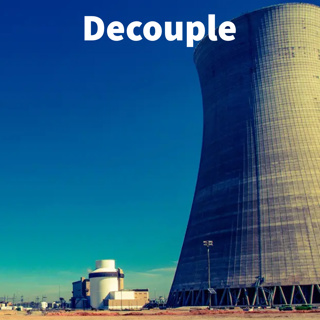
The AP1000 Masterclass

The AP1000 Masterclass

Fan favourite, James Krellenstein, returns for a deep dive into the AP1000. We walk through how its conservative nuclear steam supply system is built from proven Westinghouse and Combustion Engineerin...

18 Marras 20251h 8min

The Great Nuclear Reshoring

The Great Nuclear Reshoring

In late October, amid the choreography of President Trump’s visit to Tokyo, two vast and curiously intertwined announcements were made: an $80 billion strategic partnership between the U.S. government...

11 Marras 20251h 26min
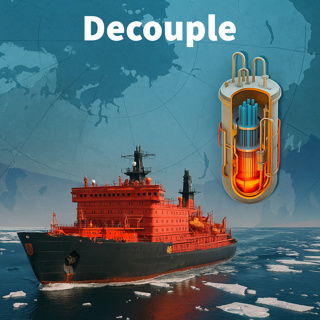
Russia’s Maritime Nuclear Fleet: A Glimpse Behind the Curtain

Russia’s Maritime Nuclear Fleet: A Glimpse Behind the Curtain

This week on Decouple, I sit down with Aleksey Rezvoi, a veteran maritime nuclear engineer who began his career in the Soviet Union designing third- and fourth-generation submarine and icebreaker reac...

4 Marras 20251h 5min
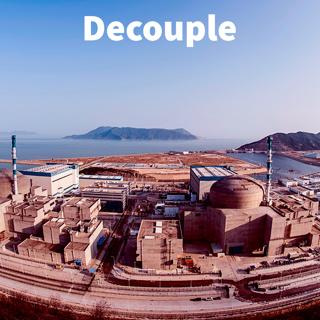
How China Builds Reactors So Fast

How China Builds Reactors So Fast

This week I sit back down with François Morin in his third appearance on the show. François is the World Nuclear Association’s point person on China. He works and travels inside China, speaks fluent M...

28 Loka 20251h 13min
Engineering State v. Lawyerly Society

Engineering State v. Lawyerly Society

This week on Decouple, I sit down with Dan Wang, a research fellow at Stanford’s Hoover History Lab and author of "Breakneck: China’s Quest to Engineer the Future." We trace how China became an “engin...

21 Loka 202553min

Suosittua kategoriassa Tiede

rss-mita-tulisi-tietaa
rss-poliisin-mieli
tiedekulma-podcast
rss-tiedetta-vai-tarinaa
utelias-mieli
docemilia
sotataidon-ytimessa
filocast-filosofian-perusteet
menologeja-tutkimusmatka-vaihdevuosiin
rss-bios-podcast
rss-ranskaa-raakana
rss-duodecim-lehti
rss-duokkari-ekstra
rss-astetta-parempi-elama-podcast
rss-metsantuntijat-podcast
rss-ilmasto-kriisissa
rss-ylistys-elaimille
rss-sosiopodi