#206 – Anil Seth on the predictive brain and how to study consciousness

#206 – Anil Seth on the predictive brain and how to study consciousness

"In that famous example of the dress, half of the people in the world saw [blue and black], half saw [white and gold]. It turns out there’s individual differences in how brains take into account ambient light. Colour is one example where it’s pretty clear that what we experience is a kind of inference: it’s the brain’s best guess about what’s going on in some way out there in the world. And that’s the claim that I’ve taken on board as a general hypothesis for consciousness: that all our perceptual experiences are inferences about something we don’t and cannot have direct access to." —Anil Seth

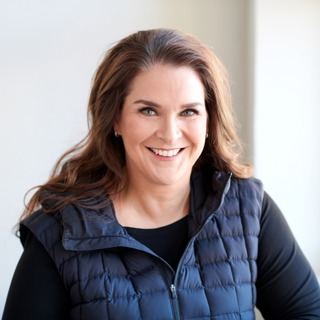
In today’s episode, host Luisa Rodriguez speaks to Anil Seth — director of the Sussex Centre for Consciousness Science — about how much we can learn about consciousness by studying the brain.

Links to learn more, highlights, and full transcript.

They cover:

  • What groundbreaking studies with split-brain patients and blindsight have already taught us about the nature of consciousness.
  • Anil’s theory that our perception is a “controlled hallucination” generated by our predictive brains.
  • Whether looking for the parts of the brain that correlate with consciousness is the right way to learn about what consciousness is.
  • Whether our theories of human consciousness can be applied to nonhuman animals.
  • Anil’s thoughts on whether machines could ever be conscious.
  • Disagreements and open questions in the field of consciousness studies, and what areas Anil is most excited to explore next.
  • And much more.

Chapters:

  • Cold open (00:00:00)
  • Luisa’s intro (00:01:02)
  • The interview begins (00:02:42)
  • How expectations and perception affect consciousness (00:03:05)
  • How the brain makes sense of the body it’s within (00:21:33)
  • Psychedelics and predictive processing (00:32:06)
  • Blindsight and visual consciousness (00:36:45)
  • Split-brain patients (00:54:56)
  • Overflow experiments (01:05:28)
  • How much can we learn about consciousness from empirical research? (01:14:23)
  • Which parts of the brain are responsible for conscious experiences? (01:27:37)
  • Current state and disagreements in the study of consciousness (01:38:36)
  • Digital consciousness (01:55:55)
  • Consciousness in nonhuman animals (02:18:11)
  • What’s next for Anil (02:30:18)
  • Luisa’s outro (02:32:46)

Producer: Keiran Harris
Audio engineering: Ben Cordell, Milo McGuire, Simon Monsour, and Dominic Armstrong
Content editing: Luisa Rodriguez, Katy Moore, and Keiran Harris
Transcriptions: Katy Moore

Jaksot(325)

We just put up a new compilation of ten core episodes of the show

We just put up a new compilation of ten core episodes of the show

We recently launched a new podcast feed that might be useful to you and people you know. It's called Effective Altruism: Ten Global Problems, and it's a collection of ten top episodes of this show, se...

20 Loka 20213min

#113 – Varsha Venugopal on using gossip to help vaccinate every child in India

#113 – Varsha Venugopal on using gossip to help vaccinate every child in India

Our failure to make sure all kids globally get all of their basic vaccinations leads to 1.5 million child deaths every year.According to today’s guest, Varsha Venugopal, for the great majority this ha...

18 Loka 20212h 5min
#112 – Carl Shulman on the common-sense case for existential risk work and its practical implications

#112 – Carl Shulman on the common-sense case for existential risk work and its practical implications

Preventing the apocalypse may sound like an idiosyncratic activity, and it sometimes is justified on exotic grounds, such as the potential for humanity to become a galaxy-spanning civilisation.But the...

5 Loka 20213h 48min
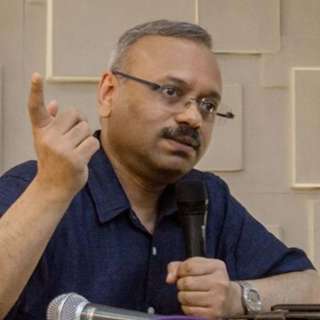
#111 – Mushtaq Khan on using institutional economics to predict effective government reforms

#111 – Mushtaq Khan on using institutional economics to predict effective government reforms

If you’re living in the Niger Delta in Nigeria, your best bet at a high-paying career is probably ‘artisanal refining’ — or, in plain language, stealing oil from pipelines. The resulting oil spills da...

10 Syys 20213h 20min
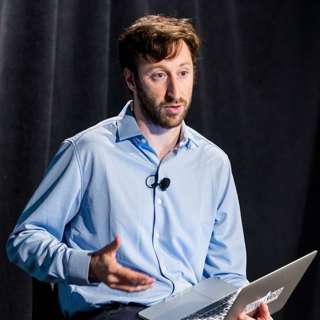
#110 – Holden Karnofsky on building aptitudes and kicking ass

#110 – Holden Karnofsky on building aptitudes and kicking ass

Holden Karnofsky helped create two of the most influential organisations in the effective philanthropy world. So when he outlines a different perspective on career advice than the one we present at 80...

26 Elo 20212h 46min
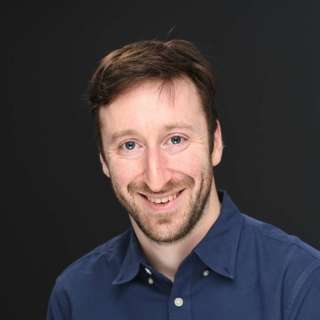
#109 – Holden Karnofsky on the most important century

#109 – Holden Karnofsky on the most important century

Will the future of humanity be wild, or boring? It's natural to think that if we're trying to be sober and measured, and predict what will really happen rather than spin an exciting story, it's more l...

19 Elo 20212h 19min

#108 – Chris Olah on working at top AI labs without an undergrad degree

#108 – Chris Olah on working at top AI labs without an undergrad degree

Chris Olah has had a fascinating and unconventional career path. Most people who want to pursue a research career feel they need a degree to get taken seriously. But Chris not only doesn't have a P...

11 Elo 20211h 33min

#107 – Chris Olah on what the hell is going on inside neural networks

#107 – Chris Olah on what the hell is going on inside neural networks

Big machine learning models can identify plant species better than any human, write passable essays, beat you at a game of Starcraft 2, figure out how a photo of Tobey Maguire and the word 'spider' ar...

4 Elo 20213h 9min

Suosittua kategoriassa Koulutus

rss-murhan-anatomia
rss-narsisti
voi-hyvin-meditaatiot-2
psykopodiaa-podcast
adhd-podi
rss-niinku-asia-on
rss-valo-minussa-2
rss-rahamania
rss-vapaudu-voimaasi
mielipaivakirja
aamukahvilla
rahapuhetta
kesken
psykologia
rss-koira-haudattuna
ilona-rauhala
nakokulmia-rikollisuudesta-irrottautumiseen
rss-keskeneraiset-aidit
rss-tietoinen-yhteys-podcast-2
rss-arkea-ja-aurinkoa-podcast-espanjasta