
Smart People Should Build Things - On Recruiting and the Global Competition for Top Talent
The Flip1 Loka 2020

Smart People Should Build Things - On Recruiting and the Global Competition for Top Talent

The very nature of a high-growth startup means that the company is always growing and hiring at a rapid rate. And for African startups, in particular, the talent question is even more acute, given the general challenges of sourcing for select roles, as well as the difficulty in competing for talent with other startups, multinationals, and companies elsewhere in the world. In this episode, we unpack the talent and recruiting situation for venture-backed startups and growth-stage companies - how do we source for newer types of roles, like product and growth? Do we hire for aptitude and train up? Do we go to where there is more talent? How does remote work - particularly during COVID-19 - play a role here?

2:50 - We discuss the current recruiting landscape with Toun Tunde-Anjous, Founder of The People Practice.
4:38 - Charles Sekwalor, CEO of Movemeback, shares his views on the talent question, and the opportunities with startups and growth-stage companies on the continent.
8:17 - We explore startup recruitment strategy with Ijeoma Oyeyinka, Helium Health's Head of HR.
10:26 - Many startups, including Helium Health, use outside recruiters, as well. Toun's The People Practice is one such firm.
11:20 - We har from Ijeoma & Mansi Babyloni, Flutterwave's Global Head of People Strategy on the hiring competition, and the pitches they make to mission-driven talent.
15:12 - Mansi & Toun on compensation and their experiences with African startups offering equity packages.
17:59 - On remote working dynamics and the opportunity to tap into a wider talent pool, particularly due to COVID-19.
20:46 - A discussion on training & development of talent, and in particular less experienced talent, on the continent.
24:23 - We hear from Aaron Fu, on the Venture for Africa fellowship program, and their endeavor to de-risk an exploration into the African tech and startup ecosystem.
28:13 - As always, a reflective conversation between Justin Norman and Sayo Folawiyo on this episode's topic.

Tämä jakso on lisätty Podme-palveluun avoimen RSS-syötteen kautta eikä se ole Podmen omaa tuotantoa. Siksi jakso saattaa sisältää mainontaa.

Jaksot(102)

What China Taught Me About Global Trade

What China Taught Me About Global Trade

China's manufacturing scale has no historical precedent. $3.8 trillion in exports in 2025. A $1.2 trillion trade surplus — the largest any country has ever recorded. China is the top import partner fo...

17 Syys 15min

What Vietnam’s Gold Shops Taught Me About Money

What Vietnam’s Gold Shops Taught Me About Money

Vietnam is one of the fastest-growing economies in the world. But its currency, the Dong, devalues 3-5% per year to support its export-oriented growth. When the price of gold rises, Vietnamese people ...

30 Heinä 12min

How to Fund a Hospital in a Warzone

How to Fund a Hospital in a Warzone

In Northwest Syria, a critical network of hospitals faces a unique challenge: how do you pay medical staff and fund healthcare when your country is completely cut off from the global financial system?...

2 Kesä 12min
Inside Africa's $16 Billion Waste Economy

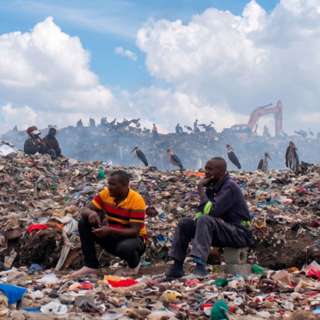
Inside Africa's $16 Billion Waste Economy

Drive through cities in Africa and you’re likely to see a waste problem. In the streets, the sewage, in the waterways…540 million tons of waste goes uncollected every year across sub-Saharan Africa. I...

30 Huhti 14min

I Went to Nigeria to Explore How Global Trade Really Works

I Went to Nigeria to Explore How Global Trade Really Works

In Lagos' Computer Village, Nigeria's largest electronics market, everything is imported from China. But how merchants access dollars and pay their suppliers is a challenge.Nigeria imports $20 billion...

1 Huhti 15min

Why Getting Paid Costs More in Emerging Markets

Why Getting Paid Costs More in Emerging Markets

If you're a freelancer or a remote worker from the global south, you likely have a harder time getting paid and participating in the global economy. Maybe a global payments company doesn't operate in ...

29 Tammi 9min

I Went to Bolivia Where Businesses Survive on Stablecoins

I Went to Bolivia Where Businesses Survive on Stablecoins

Bolivia is facing a severe economic crisis. The country is literally running out of dollars. Their foreign reserves have collapsed from $15 billion a decade ago to just $50 million today. In June 2024...

2 Joulu 202511min

Inside Argentina's $300 Billion Parallel Economy

Inside Argentina's $300 Billion Parallel Economy

Argentina's decades-long economic crises and hyperinflation has a major impact on how Argentine's participate in the economy.The recent story that's been told about Argentina is that people are adopti...

4 Marras 202516min

Suosittua kategoriassa Liike-elämä ja talous

sijotuskasti
vallattomat
rss-rahapodi
psykopodiaa-podcast
mimmit-sijoittaa
rss-oivalluksia-rahasta-elamasta
ostan-asuntoja-podcast
rss-paasipodi
oppimisen-psykologia
rss-karon-grilli
rss-inderes
rss-rahamania
rss-sami-miettinen-neuvottelija
rss-startup-ministerio
lakicast
rss-pinnan-alle
rss-siksi-viestinta
pomojen-suusta
rss-seuraava-potilas
rahapuhetta