Episode 96: An AWS private cloud strategy, kubernetes aplenty, microservices by yaml, & detailed hot-dog creature analysis

Episode 96: An AWS private cloud strategy, kubernetes aplenty, microservices by yaml, & detailed hot-dog creature analysis

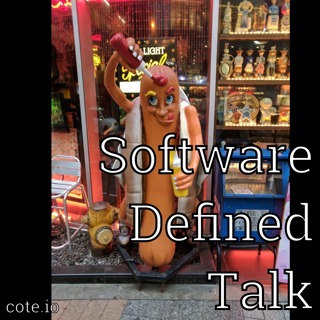
The cat-nip of Mary Meeker's Internet Trends report is out this week so we discuss the highlights which leads to a sudden discussion of what an Amazon private cloud product would look like. Then, with a raft of new container related news we sort out what CoreOS is doing with their Tectonic managed service, what Heptio is (the Mirantis of Kubernetes?), and then a deep dive into the newly announced Istio which seems to be looking to create a yaml-based(!) standard for microservices configuration and policy and, then, the actual code for managing it all. Also, an extensive analysis of a hot-dog display, which is either basting itself or putting on some condiment-hair.

Alternate Titles
  • I've seen this hot-dog before.
  • I’ve been doing this since dickity-4
  • I’m sticking with the Mary Meeker slides, you nerds go figure it out
Mid-roll Hot-dog guy in Japan Internet Trends 2017
  • 300 plus slides of charts
  • Computes!
  • Coté’s notebook, summary of summary:
    • Google and Facebook make a lot of ad money.
    • The Kids like using smart phones, the olds like using traditional telephones. One of them will die sooner.
    • Voice, image recognition, etc.
    • China is pretty much a mature market, and it’s huge.
    • India has potential, but doing business there is hard and you need more Internet in a pocket rollout.
    • The public/private cloud debate is still far from over.
    • But, AWS, Microsoft, and Google have pretty much won.
    • Bonus: there’s surprisingly little funding and exits this year.
  • Would Amazon sell some private clouds?
Isotoner and Hephaestus - All the new container orchestration poop
  • Coté: Catching up on all this week's container poop & as always, my first reaction is “oh, I thought the existing stuff did all that already..so."
  • Managed service for Tectonic as a Service - so, keeping your Kubernates cluster software updated? Presumably enforcing config, etc?
    • However, not all done, still working on the complete solution.
    • But, there’s an etcd thing ‘As a first step, Tectonic 1.6.4 will offer the distributed etcd key-value data store as a fully managed cloud service. “It’s the logical one to offer first because it is everything else gets built on it,” Polvi explained. The data store “guarantees that data is in a consistent state for very specific operations,” he said, referring to how etcd can be essential for operations such as database migrations.’
    • Another etcd description: “etcd is a clustered database that prizes consistency above partition tolerance… Interestingly, at Google, chubby is most frequently accessed using an abstracted File interface that works across local files, object stores, etc. The highly consistent nature, however, provides for strict ordering of writes and allows clients to do atomic updates of a set of values.
    • So, you need locks for - dun-dun-dun! - transactions! Queue JP lecturing me in 2002.
  • Then there’s Istio:
    • Istio?!
    • Whao! Check out the exec-pitch: “ Istio gives CIOs a powerful tool to enforce security, policy and compliance requirements across the enterprise.” And Google: “Through the Open Service Broker model CIOs can define a catalog of services which may be used within their enterprise and auditing tools to enforce compliance.”
      • I love their idea of what a CIO does.
    • “An open platform to connect, manage, and secure microservices“
    • SDN++ overlay for container orchestrators from Google, IBM & Lyft - once you control the network with the “data plane,” you add in the “control plane” which allows you to control the flow and shit of the actual microservices.
    • Tackling the “new problems emerge due to the sheer number of services that exist in a larger system. Problems that had to be solved once for a monolith, like security, load balancing, monitoring, and rate limiting need to be handled for each service.”
    • And, you know, all the agnostic, multi-cloud, open stuff.
    • Thankfully, they didn’t use a bunch of garbage, nonsense names for things.
    • Let’s look at the docs (BTW, can you kids start just putting out PDFs instead of only these auto-generated from markdown web pages?):
      • First of all, these are good docs.
      • Monkey-patching for the container era: “You add Istio support to services by deploying a special sidecar proxy throughout your environment that intercepts all network communication between microservices, configured and managed using Istio’s control plane functionality.”
      • The future! Where we all shall live! “Istio currently only supports service deployment on Kubernetes, though other environments will be supported in future versions.”
      • Problems being solved, aka, “ways you must be this tall to ride the microservices ride”: “Its requirements can include discovery, load balancing, failure recovery, metrics, and monitoring, and often more complex operational requirements such as A/B testing, canary releases, rate limiting, access control, and end-to-end authentication.”
      • Also: Traffic Management, Observability, Policy Enforcement, Service Identity and Security.
      • Does it have the part where it reboots/fixes failed services for you?
      • So:
        • you monkey-patch all this shit in (er, sorry, “sidecar”),
        • which controls the network with SDN shit,
        • Istio-Manager + Envoy does all your load-balancing/circuit breaker/canary/AB shit, service discovery/registry, service versioning (i.e., running n+1 different versions of code - always a pretty cool feature), configuring “routes,” what connects to what,
        • I don’t think it provides a service registry/discover service? Maybe just a waffer thin API (“a platform-agnostic service discovery interface”)?
        • Question: what does this look like in your code?
          • The thing 12 factor-style passes a configuration into your actual code. Here, you’re adding a bunch of name/value pairs (which can be nested) and also translating them to the name/value pairs that your code is expecting...on an HTTP call? Executing a command in your container? As ENV vars?
          • And then, I think you finally get ahold of the network to reply back with some HTML, JSON, or some sort of HTTP request by .,
  • So, big questions, aka, Coté mental breakdown that only Matt Ray can cure:
    • Er...so this all really is a replacement for the VMware stack, right? And OpenStack? Or do you still need those. What the fuck is all this stuff? It just installs the Docker image on a server? And then handles multi-zone replication, and making sure config drift is handles (bringing up failed nodes, too)?
    • So, it’s just cheaper and more transparent than VMware?
    • What’s the set of shit one needs? Ubuntu, Moby Engine (?), Moby command line tools, etcd? Actuality kubernetes code? What’s Swarm do? And then there’s monitoring, which according to Whiskey Charity, is all shit, right?
    • Where’ my fucking chart on this shit?
    • Please write two page memo for the BoD by 2pm today.
  • Meanwhile: Oracle’s cool with it, “WTF is a microservice”, compared to SOA/ESB and RESTful, and James Governor tries to explain it all.
BONUS LINKS! Not covered in episode. Rackspace Buys Enterprise Apps Management TriCore
  • Link
  • New CEO and biggest acquisition, I thought they were quieting down with the PE
Red Hat buys Codenvy
  • Codenvy sets up your developer environments, and has team stuff.
  • Red Hat is really after the developer market.
  • TaskTop has a good chance of being acquired in this climate.
  • Pour one out from BMC/StreamStep.
  • Notes from Carl Lehmann report at 451:
    • In-browser IDE and devtool chain(?) for OpenShift.io, based on Eclipse Che
    • “Founded in 2013, San Francisco-based Codenvy raised $10m in January of that year, and used a portion of its funds to buy its initial codebase from eXo Platform, which had developed the eXo Cloud IDE in-browser coding suite to support its social and collaboration applications.”
    • “The company's suite works with developer tools like subversion and git, CloudBees, Jenkins, Docker, MongoDB, Cloud Foundry, Maven and ant, as well as PaaS and IaaS offerings such as Heroku, Google AppEngine, Red Hat OpenShift and AWS.”
    • Check out the Dell Sputnik call-out: “Rivals to Codenvy include cloud-based development suites Eclipse Orion (open source), Cloud9 IDE and Nitrous.IO. There are other 'cloud IDEs,' including Codeanywhere, CodeRun Studio, Neutron Drive and ShiftEdit. On the developer environment configuration front, Pivotal created and open-sourced a developer and OS X laptop configuration tool called Workstation, and now Sprout. Dell's Project Sputnik is seeking to address similar build environment standup productivity challenges.”
Uber back in Austin Amazon Hiring Old Folks (Like Me) More Tech Against Texas’ Discriminatory Laws
  • Lords of Tech sign a thing
  • “In addition to Facebook founder Mark Zuckerberg and Apple CEO Tim Cook, the letter was signed by Amazon CEO Jeff Wilke, IBM Chairman Ginni Rometty, Microsoft Corp. President Brad Smith and Google CEO Sundar Pichai. The leaders of Dell Technologies, Hewlett Packard Enterprise, Cisco, Silicon Labs, Celanese Corp., GSD&M, Salesforce and Gearbox Software also signed the letter.”
  • “Peeing is not political” - recap of the history of the bathroom bill. Still doesn’t really address “is there actually a problem here, backed up with citations.” Without such coverage, it’s hard to understand (and therefore figure out and react to) the hillbilly’s side on this beyond: "It's just common sense and common decency — we don't want men in women's, ladies' rooms." It also highlights the huge, social divide between “city folk” and the hillbillies.
  • A lot more from TheNewStack.
ChefConf Retrospective Competing in Public Cloud is Crazy Expensive
  • Link
  • Tracks the CAPEX spend over the years for MS, Google and Amazon
A Year of Google & Apple Maps
  • Link
  • Comprehensive drill-down into the mapping changes made by Google and the smaller moves by Apple.
  • Probably not content for conversation, but whoa.
FAA Flight Delay Tracking Recommendations

Jaksot(512)

Episode 91: Container orchestration framework names you can't pronounce, for $500. Or, everything’s coming Up kubernetes.

Episode 91: Container orchestration framework names you can't pronounce, for $500. Or, everything’s coming Up kubernetes.

We discuss the continual rise of Kubernetes, with Amazon as seemingly the main hold-out. This leads to a not-too-painful discussion of the stat of open source, at least how companies are using it tact...

30 Maalis 201754min
Episode 90: These strategies work really well except for when they’re totally fucked

Episode 90: These strategies work really well except for when they’re totally fucked

While it's unknown how much time you should let your kids play Minecraft, it's equally unclear at the moment who'll win the second cloud wars. Between Google, Azure, AWS, and all the others, how compa...

15 Maalis 20171h 1min

Episode 89: The Shit Show Matrix, or, they’re following the playbook which is basically unprofitable

Episode 89: The Shit Show Matrix, or, they’re following the playbook which is basically unprofitable

Docker’s new enterprise SKUs and, once again, the open-core model. Also: IPO mania with Snap and MuleSoft. In discussion Docker EE, we start with a discussion on how socket-based pricing may seem goof...

8 Maalis 20171h 6min
Episode 88: Docker is just cheap VMware, right?

Episode 88: Docker is just cheap VMware, right?

There's tell that some people just look at containers as a cheaper way to virtualize, eschewing the fancy-lad "cloud-native stuff." We discuss that idea, plus "the enterprise cloud wars," and also our...

18 Helmi 20171h

Episode 87: Snap's cloud billions, Google's social, Monitoring Startups considered hard, DHS wants your passwords

Episode 87: Snap's cloud billions, Google's social, Monitoring Startups considered hard, DHS wants your passwords

Snap is looking to spend billions on AWS and Google Cloud over the next five years. We talk about what exactly that could be for, then check in with Google's social strategy and thermostat strategies;...

11 Helmi 201759min
Episode 86: Life after artisanal pork rinds (i.e. tech M&A), CostCo Down Under

Episode 86: Life after artisanal pork rinds (i.e. tech M&A), CostCo Down Under

With a flurry of M&A over the past few weeks, we discuss some of the more popular ones: AppDynamics, Trello, and Apiary. These kind of buys are all about what the acquirer plans to do with the new “as...

30 Tammi 20171h 1min

Episode 85: Being an analyst without being an asshole - Coté’s professional life, part 2

Episode 85: Being an analyst without being an asshole - Coté’s professional life, part 2

In part two of Coté navel gazing, we discuss Coté’s life as an analyst and strategists. Matt Ray is off in Australia-land, so it’s just Brandon and Coté. We discuss: what IT analyst work on; working w...

20 Tammi 201748min

Episode 84: 2017 Predictions: cloud, containers, AI

Episode 84: 2017 Predictions: cloud, containers, AI

After speculating on GitHub’s business we throw out our 2017 predictions. We cover AWS, containers, AI, and government IT. Since holiday family time is coming up, Brandon also suggests some simple fam...

21 Joulu 20161h 7min

Suosittua kategoriassa Liike-elämä ja talous

sijotuskasti
mimmit-sijoittaa
psykopodiaa-podcast
rss-rahapodi
rss-rahamania
herrasmieshakkerit
ostan-asuntoja-podcast
rss-lahtijat
rss-sami-miettinen-neuvottelija
rahapuhetta
rss-sisalto-kuntoon
inderespodi
leadcast
rss-laakispodi
rss-seuraava-potilas
timanttia-hiomassa
rss-juurisyy-johtamisesta-kilpailuetua
rss-vaikuttavan-opettajan-vierella
rss-porssipodi
rss-johtoajatuksia