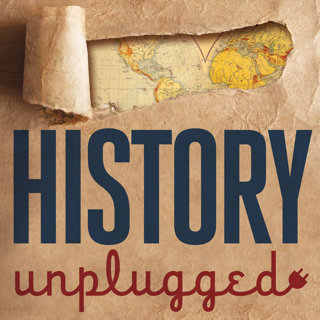
Empires of the Sky: Zeppelins, Airplanes, and Two Men’s Epic Duel to Rule the World

Empires of the Sky: Zeppelins, Airplanes, and Two Men’s Epic Duel to Rule the World

At the dawn of the twentieth century, when human flight was still considered an impossibility, Germany's Count von Zeppelin vied with the Wright Brothers to build the world's first successful flying machine. As the Wrights labored to invent the airplane, Zeppelin fathered the wondrous airship, sparking a bitter rivalry between the two types of aircraft and their innovators that would last for decades in the quest to control one of humanity's most inspiring achievements. And it was the airship--not the airplane--that would lead the way.

In the glittery 1920s, the count's brilliant protégé, Hugo Eckener, achieved undreamt-of feats of daring and skill, including the extraordinary round-the-world voyage of the Graf Zeppelin. What Charles Lindbergh almost died doing--crossing the Atlantic in 1927--Eckener effortlessly accomplished three years before the Spirit of St. Louis even took off.

I'm talking to Alexander Rose, author of the new book “Empires of the Sky,” which gets into this story. Even as the Nazis sought to exploit Zeppelins for their own nefarious purposes, Eckener built his masterwork, the behemoth Hindenburg--a marvel of design and engineering. Eckener met his match in Juan Trippe, the ruthlessly ambitious king of Pan American Airways, who believed his fleet of next-generation planes would vanquish Eckener's coming airship armada. It was a fight only one man--and one technology--could win. Countering each other's moves on the global chessboard, each seeking to wrest the advantage from his rival, the two men's struggle for mastery of the air was not only the clash of technologies, but of business, diplomacy, politics, personalities, and their vastly different dreams of the future.

See omnystudio.com/listener for privacy information.

Jaksot(1078)

How Would Nixon Have Handled the Cuban Missile Crisis?

How Would Nixon Have Handled the Cuban Missile Crisis?

The "Madman Theory" was Richard Nixon's foreign policy strategy during the Vietnam War era, where he deliberately cultivated an image of being unpredictable and irrational—hinting he might escalate to...

30 Joulu 202528min

Diogenes, the Father of Ancient Greek Stoicism, Loving Trolling His Audience and Could Out-Shock Borat

Diogenes, the Father of Ancient Greek Stoicism, Loving Trolling His Audience and Could Out-Shock Borat

The famous street artist Banksy shocked the art world in 2018 when his painting, Girl with Balloon, partially shredded itself moments after selling it for over a million dollars. at a Sotheby's auctio...

25 Joulu 202549min

Blown Off Course: How History’s Windy Turning Points Sank the Armada and Saved Japan from the Mongols

Blown Off Course: How History’s Windy Turning Points Sank the Armada and Saved Japan from the Mongols

The greatest energy source for civilization before the steam engine was wind. It powered the global economy in the Age of Sail. Wind-powered sail ships made global shipping fast and cheap by harnessin...

23 Joulu 202546min

Maps Have Bigger Problems Than the Mercator Projection. They Invent Mountain Ranges and Usually Eliminate New Zealand

Maps Have Bigger Problems Than the Mercator Projection. They Invent Mountain Ranges and Usually Eliminate New Zealand

Maps have always had problems. Five hundred years ago, maps were wildly inaccurate simply because cartographers were drawing the edge of the known world, limited by slow ships and nonexistent satellit...

18 Joulu 202545min

The Great Mathematicians of the Early 1900s Ran into an Unsolvable Problem. They  Realized Math Made No Sense

The Great Mathematicians of the Early 1900s Ran into an Unsolvable Problem. They Realized Math Made No Sense

In the 1800s, it seemed like mathematics was a solved problem. The paradoxes in the field were resolved, and even areas like advanced calculus could be taught consistently and reliably at any school. ...

16 Joulu 202545min

The American Revolution was a World War in All but Name

The American Revolution was a World War in All but Name

The Battles of Lexington and Concord in April 1775, known as the "shot heard round the world," marked the first military engagements of the American Revolution. Ralph Waldo Emerson named it that becau...

11 Joulu 202556min

How Napoleon and Churchill Used Neuroscience to Make a Better Soldier and More Loyal Public

How Napoleon and Churchill Used Neuroscience to Make a Better Soldier and More Loyal Public

The brain acts in strange ways during wartime. Even in active combat situations, when soldiers are one mistake away from death, many can’t fire on their enemies because their brain is triggering comp...

9 Joulu 202545min

William F. Buckley JR.'s Guide to Friendship in a Polarized Era

William F. Buckley JR.'s Guide to Friendship in a Polarized Era

William F. Buckley Jr., the charismatic intellectual who defined modern American conservatism, was famously skilled at forging friendships across the ideological divide, a talent that helped him both ...

4 Joulu 202539min

Suosittua kategoriassa Yhteiskunta

sita
olipa-kerran-otsikko
kaksi-aitia
ihme-ja-kumma
siita-on-vaikea-puhua
i-dont-like-mondays
uutiscast
gogin-ja-janin-maailmanhistoria
poks
antin-palautepalvelu
kolme-kaannekohtaa
mamma-mia
rss-murhan-anatomia
yopuolen-tarinoita-2
aikalisa
loukussa
rss-palmujen-varjoissa
meidan-pitais-puhua
naakkavalta
rss-nikotellen