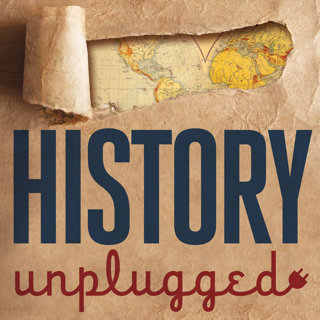
Age of Discovery 2.0, Part 3: Space Colonization Will Reinvigorate Humanity More Than the New World Discovery 500 Years Ago

Age of Discovery 2.0, Part 3: Space Colonization Will Reinvigorate Humanity More Than the New World Discovery 500 Years Ago

The discovery of the New World irrevocably changed the economy of the Old World. Triangle trade, manufactured goods went from Britain to the Americas, which sent food staples to the Indies, which sent cash crops back to England. It also caused investment dollars to flood into exploration ventures. As far back as the 1500s, tracts of land were sold in Kentucky through British crown land patents, helping fund the Virginia Colony of London, which set up Jamestown. Most importantly, it gave Europe a terra nova where the old social hierarchies no longer mattered. New forms of egalitarianism developed.
With the development of cheaper rocketry by Elon Musk and others, something similar is going to happen very soon. Today’s guest, astronautical engineer Robert Zubrin, spells out the potential of these new in a way that is visionary yet grounded by a deep understanding of the practical challenges. A new Triangle Trade will be development between Earth, Mars, and the asteroid belt. Investment dollars will flood into speculative ventures such as asteroid mining. And all sorts of new human societies will be possible.

Fueled by the combined expertise of the old aerospace industry and the talents of Silicon Valley entrepreneurs, spaceflight is becoming cheaper. The new generation of space explorers has already achieved a major breakthrough by creating reusable rockets. Zubrin foresees more rapid innovation, including global travel from any point on Earth to another in an hour or less; orbital hotels; moon bases with incredible space observatories; human settlements on Mars, the asteroids, and the moons of the outer planets; and then, breaking all limits, pushing onward to the stars.

Zubrin shows how projects that sound like science fiction can actually become reality. But beyond the how, he makes an even more compelling case for why we need to do this—to increase our knowledge of the universe, to make unforeseen discoveries on new frontiers, to harness the natural resources of other planets, to safeguard Earth from stray asteroids, to ensure the future of humanity by expanding beyond its home base, and to protect us from being catastrophically set against each other by the false belief that there isn’t enough for all.

See omnystudio.com/listener for privacy information.

Jaksot(1077)

Diogenes, the Father of Ancient Greek Stoicism, Loving Trolling His Audience and Could Out-Shock Borat

Diogenes, the Father of Ancient Greek Stoicism, Loving Trolling His Audience and Could Out-Shock Borat

The famous street artist Banksy shocked the art world in 2018 when his painting, Girl with Balloon, partially shredded itself moments after selling it for over a million dollars. at a Sotheby's auctio...

25 Joulu 202549min

Blown Off Course: How History’s Windy Turning Points Sank the Armada and Saved Japan from the Mongols

Blown Off Course: How History’s Windy Turning Points Sank the Armada and Saved Japan from the Mongols

The greatest energy source for civilization before the steam engine was wind. It powered the global economy in the Age of Sail. Wind-powered sail ships made global shipping fast and cheap by harnessin...

23 Joulu 202546min

Maps Have Bigger Problems Than the Mercator Projection. They Invent Mountain Ranges and Usually Eliminate New Zealand

Maps Have Bigger Problems Than the Mercator Projection. They Invent Mountain Ranges and Usually Eliminate New Zealand

Maps have always had problems. Five hundred years ago, maps were wildly inaccurate simply because cartographers were drawing the edge of the known world, limited by slow ships and nonexistent satellit...

18 Joulu 202545min

The Great Mathematicians of the Early 1900s Ran into an Unsolvable Problem. They  Realized Math Made No Sense

The Great Mathematicians of the Early 1900s Ran into an Unsolvable Problem. They Realized Math Made No Sense

In the 1800s, it seemed like mathematics was a solved problem. The paradoxes in the field were resolved, and even areas like advanced calculus could be taught consistently and reliably at any school. ...

16 Joulu 202545min

The American Revolution was a World War in All but Name

The American Revolution was a World War in All but Name

The Battles of Lexington and Concord in April 1775, known as the "shot heard round the world," marked the first military engagements of the American Revolution. Ralph Waldo Emerson named it that becau...

11 Joulu 202556min

How Napoleon and Churchill Used Neuroscience to Make a Better Soldier and More Loyal Public

How Napoleon and Churchill Used Neuroscience to Make a Better Soldier and More Loyal Public

The brain acts in strange ways during wartime. Even in active combat situations, when soldiers are one mistake away from death, many can’t fire on their enemies because their brain is triggering comp...

9 Joulu 202545min

William F. Buckley JR.'s Guide to Friendship in a Polarized Era

William F. Buckley JR.'s Guide to Friendship in a Polarized Era

William F. Buckley Jr., the charismatic intellectual who defined modern American conservatism, was famously skilled at forging friendships across the ideological divide, a talent that helped him both ...

4 Joulu 202539min

What it Was Like Living Through the USSR’s Collapse

What it Was Like Living Through the USSR’s Collapse

The Collapse of the Soviet Union was twice as devastating as the Great Depression for those who lived there. It immediately led to widespread economic chaos and a breakdown of public services, plungin...

2 Joulu 202555min

Suosittua kategoriassa Yhteiskunta

sita
olipa-kerran-otsikko
kaksi-aitia
siita-on-vaikea-puhua
ihme-ja-kumma
i-dont-like-mondays
gogin-ja-janin-maailmanhistoria
uutiscast
poks
antin-palautepalvelu
kolme-kaannekohtaa
rss-murhan-anatomia
yopuolen-tarinoita-2
mamma-mia
rss-nikotellen
aikalisa
meidan-pitais-puhua
loukussa
lahko
terapeuttiville-qa