Jean Barmash on Inter-Service RPC with gRPC/Thrift, Designing Public APIs, & Lean/Constraint Theory
The InfoQ Podcast14 Huhti 2017

Jean Barmash on Inter-Service RPC with gRPC/Thrift, Designing Public APIs, & Lean/Constraint Theory

Jean Barmash is Director of Engineering at Compass, Founder & Co-Organizer, NYC CTO School Meetup. Live in New York City. He has over 15 years of experience in software industry, and has been part of 4 startups over the last seven years, 3 as CTO / VPE and one of which he co-founded. Prior to his entrepreneurial adventures, Jean held a variety of progressively senior roles in development, integration consulting, training, and team leadership. He worked for such companies as Trilogy, Symantec, Infusion and Alfresco, consulting to Fortune 100 companies like Ford, Toyota, Microsoft, Adobe, IHG, Citi, BofA, NBC, and Booz Allen Hamilton. Jean will speak at QCon New York 2017: http://bit.ly/2nN7KKo Why listen to this podcast: - The Compass backend is mostly written in Java and Python, with Go increasingly a first class language. The main reason for Go being added was developer productivity. - The app is based on a Microservices architecture with around 40-50 services in total. - Binary RPC, originally Thrift and Finagle, is used as the communication protocol, but the company is gradually moving to gRPC still with Thrift. One advantage that gRPC offers is better Python support than Finagle. - The company has built a code generation framework which takes Thrift and converts it to a RESTful API for clients to consume. - Constraint theory is about how you manage the one constraint in a system or team that prevent you increasing throughput; for example if your software engineering team only has one front end engineer do you ask back-end engineers to pick off some front-end tasks, or bring in a contractor. Subscribe: www.youtube.com/infoq Like InfoQ on Facebook: bit.ly/2jmlyG8 Follow on Twitter: twitter.com/InfoQ Follow on LinkedIn: www.linkedin.com/company/infoq You can also subscribe to the InfoQ newsletter to receive weekly updates on the hottest topics from professional software development. bit.ly/24x3IVq

Tämä jakso on lisätty Podme-palveluun avoimen RSS-syötteen kautta eikä se ole Podmen omaa tuotantoa. Siksi jakso saattaa sisältää mainontaa.

Jaksot(396)

AI, ML, and Data Engineering InfoQ Trends Report 2026

AI, ML, and Data Engineering InfoQ Trends Report 2026

In this episode of the podcast, members of the InfoQ AI and MIL editorial staff and friends of InfoQ discuss the current trends in the domain of AI, ML and Data Engineering. One of the regular featur...

30 Loka 1h 11min

The Future of Web Apps: Will AI Agents Generate UIs on the Fly?

The Future of Web Apps: Will AI Agents Generate UIs on the Fly?

Rachel Lee Nabors, former React core team member, dives into the architecture and philosophy behind local-first applications, exploring how small language models (SLMs) running directly on-device can ...

19 Loka 47min

What Does It Really Mean To Program With AI: A Conversation with Joy Ebertz

What Does It Really Mean To Program With AI: A Conversation with Joy Ebertz

In this podcast, Michael Stiefel spoke to Joy Ebertz about how the use of artificial intelligence is changing the way architects and developers do their jobs. Focusing on the long term success of the ...

12 Loka 44min
Future Cybersecurity: Hardware Memory Safety, Automated Governance and Post-Quantum Cryptography

Future Cybersecurity: Hardware Memory Safety, Automated Governance and Post-Quantum Cryptography

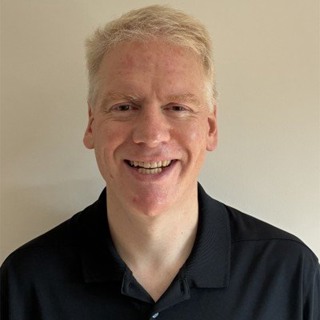
In this episode, Chris Swan, engineer at Atsign and security track host at QCon London, reflects on the ideas shared during QCon London 2026 and teases topics of the future edition. The discussion exp...

5 Loka 34min

The AI Revolution Fails Without Psychological Safety For Developers: A Conversation with Erin Doyle

The AI Revolution Fails Without Psychological Safety For Developers: A Conversation with Erin Doyle

In this podcast, Michael Stiefel spoke to Erin Doyle about how artificial intelligence tools are transforming the software development process, and how they are affecting software engineers. Architect...

28 Syys 54min
The Future of AI: From Enterprise Adoption to Open Source Sovereignty

The Future of AI: From Enterprise Adoption to Open Source Sovereignty

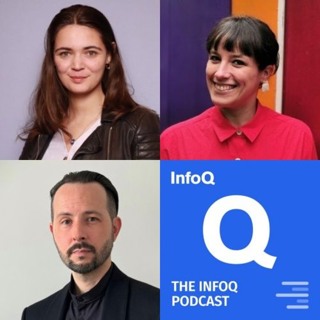
In this episode, a panel of AI experts, Meryem Arik (DoubleWord), Clara Higuera Cabañes (BBVA), and Jeff Smith (C Proof), demystify the current state of AI in the enterprise. The discussion navigates ...

25 Syys 52min
Securing AI Agents: Identity, Authorisation, and the DPACT Framework

Securing AI Agents: Identity, Authorisation, and the DPACT Framework

In this episode, Sahil Agarwal talks about the critical challenges of identity, authorisation, and security in the age of AI agents. Sahil introduces the DPACT framework (Delegation, Policy, Auditabil...

21 Syys 41min
How Will We Train Developers If AI Does the Routine Work: A Conversation with Scott Hanselman

How Will We Train Developers If AI Does the Routine Work: A Conversation with Scott Hanselman

In this podcast Michael Stiefel spoke to Scott Hanselman about developing new software engineers when artificial intelligence agents are doing most of the work on which junior developers were trained....

14 Syys 36min