
Mike Milinkovich, Director of the Eclipse Foundation, Discusses the Journey to Jakarta EE 8
The InfoQ Podcast3 Kesä 2019

Mike Milinkovich, Director of the Eclipse Foundation, Discusses the Journey to Jakarta EE 8

Today on the podcast, Wes talks with Mike Milinkovich, Executive Director of the Eclipse Foundation. The Eclipse Foundation was chosen to govern the evolution of Oracle’s Java EE to Jakarta EE. The two discuss the project, the recent news about issues with the javax namespace, the challenges around bundling a Java Runtime with Eclipse, and the path forward for Jakarta EE 9 and beyond. Why listen to this podcast: - Java EE, unlikely Java SE, has always been a multi-vendor ecosystem. It made sense for everyone for Oracle to invite their partners to be involved in the governance of the specification for Java EE for it to continue moving forward. This is the reason for moving Java EE into the Eclipse Foundation as Jakarta EE. - The current plan is for the Eclipse Foundation to get a copyright license to evolve the text of the specification and not a license to the trademarks of Java EE itself. - The javax namespace must remain as is. For it to be evolved, a different namespace must be used. The javax namespace is a trademark of Oracle. Because of this, there are quality controls that Oracle required for its evolution. Ultimately because of those controls, the Eclipse Foundation felt it was better to branch javax into a different namespace and evolve it separately solely under Jakarta EE governance. - Jakarta EE 8 is targeted to be released around Oracle Code ONE. Jakarta EE 8 will be exactly the same as Java EE 8. * The only difference is it will be licensed from Jakarta, not Oracle and only requires membership in the Working Group. - Beyond EE 8, the release cycle, the plan for moving the javax namespace (and keeping compatibility with both the old javax namespace and the new namespace), and new specifications for inclusion into Jakarta EE are still active areas of discussion. - Unrelated to the discussion of Jakarta EE (but discussed in the same board meeting), an attempt to bundle OpenJ9 with the Eclipse IDE failed because of licensing restrictions around a certified Java Runtime. OpenJ9 is certified when acquired through an IBM channel, but not when downloaded directly for us. More on this: Quick scan our curated show notes on InfoQ https://bit.ly/2HSfcfM You can also subscribe to the InfoQ newsletter to receive weekly updates on the hottest topics from professional software development. bit.ly/24x3IVq Subscribe: www.youtube.com/infoq Like InfoQ on Facebook: bit.ly/2jmlyG8 Follow on Twitter: twitter.com/InfoQ Follow on LinkedIn: www.linkedin.com/company/infoq Check the landing page on InfoQ: https://bit.ly/2HSfcfM

Tämä jakso on lisätty Podme-palveluun avoimen RSS-syötteen kautta eikä se ole Podmen omaa tuotantoa. Siksi jakso saattaa sisältää mainontaa.

Jaksot(386)

Will Agentic AI Bring Fantasia’s Sorcerer's Apprentice to Life?: A Conversation with Tracy Bannon

Will Agentic AI Bring Fantasia’s Sorcerer's Apprentice to Life?: A Conversation with Tracy Bannon

In this podcast, Michael Stiefel spoke to Tracy Bannon about the role of artificial intelligence in software and the attendant risks in the areas of security, software development, and society at larg...

17 Elo 49min
Cloud and DevOps InfoQ Trends Report 2026: AI, Resilience, Platforms, FinOps, and Sovereignty

Cloud and DevOps InfoQ Trends Report 2026: AI, Resilience, Platforms, FinOps, and Sovereignty

In this episode of the podcast, members of the InfoQ editorial staff and friends of InfoQ will discuss current trends in the cloud and DevOps domains as part of our annual trends report. These reports...

12 Elo 50min
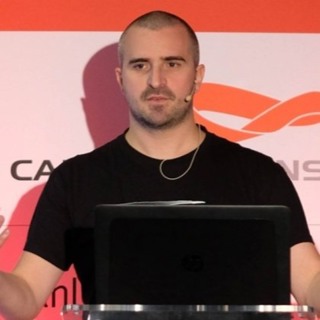
WebAssembly on the JVM: Feature Evolution, Performance, and the Transition to Endive

WebAssembly on the JVM: Feature Evolution, Performance, and the Transition to Endive

Andrea Peruffo discusses the evolution of WebAssembly beyond the browser and its growing role on the server-side JVM. He covers performance advancements in Wasm runtimes, moving from interpreters to e...

3 Elo 34min

Rethinking Data: Moving From the Traditional Three-Tier Web Stack to Client-Side Event Sourcing

Rethinking Data: Moving From the Traditional Three-Tier Web Stack to Client-Side Event Sourcing

Johannes Schickling explores how he moved beyond the traditional three-tier web stack to a local-first approach. He shares his experience transitioning from Prisma to developing Overtone—a music curat...

27 Heinä 43min

Strands Agents with Clare Liguori

Strands Agents with Clare Liguori

In this episode, Thomas Betts talks with Clare Liguori, the technical lead on the open source Strands Agents SDK. The conversation covers how Strands Agents has grown from a Python SDK to a full agent...

20 Heinä 38min

Governance in the Age of AI: A Conversation with Sarah Wells

Governance in the Age of AI: A Conversation with Sarah Wells

In this podcast Michael Stiefel spoke to Sarah Wells about the relationship of governance to software architecture. Governance enables teams to work effectively by establishing procedures that minimiz...

13 Heinä 48min
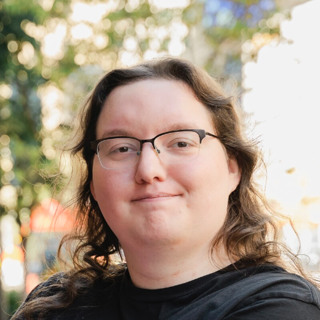
Spite-Driven Engineering: A New Blueprint for Cloud Security in the AI Native Era

Spite-Driven Engineering: A New Blueprint for Cloud Security in the AI Native Era

In this episode, Alex Zenla (CTO/Co-founder, Edera) challenges the "laissez-faire" attitude toward modern infrastructure. She promotes "spite-driven development", building software to solve genuine te...

6 Heinä 40min

Architectural Patterns: Moving Beyond Cloud-Native to Local-First - Insights from Adam Wiggins

Architectural Patterns: Moving Beyond Cloud-Native to Local-First - Insights from Adam Wiggins

In this episode, Heroku co-founder and Ink & Switch founder Adam Wiggins argues for a 'local-first' architecture that reconciles cloud-based collaboration with the performance and data ownership of lo...

29 Kesä 38min