Bryan Liles on Making Kubernetes Easier for Developers, the CNCF, and “Serverless”
The InfoQ Podcast15 Marras 2019

Bryan Liles on Making Kubernetes Easier for Developers, the CNCF, and “Serverless”

In this podcast, Daniel Bryant sat down with Bryan Liles, senior staff engineer at VMware. Topics covered included: the challenges with deploying applications into Kubernetes, using the open source Octant tool to increase a user’s understanding of Kubernetes clusters, and how “serverless” technologies may influence the future approaches to building software. Why listen to this podcast: - Octant is a highly extensible platform for developers to better understand the complexity of Kubernetes clusters. Octant runs locally, using the local Kubernetes credentials. It currently displays information about a Kubernetes cluster and related applications as a web page. Soon this tool and resulting display will be provided as a standalone application. - The goal of Octant is to enable users to discover what they need to discover. The tool aims to provide context relevant to where a user is and what they are trying to achieve. The Octant plugin system allows integration with other tooling, such as logging and metrics frameworks. This aims to facilitate quick problem detection and resolution. - Cloud native platforms like Kubernetes are complicated, as there are lots of moving parts. The most important challenge to be tackled to increase the adoption of platforms like Kubernetes is “how do we move code from our IDEs to wherever it needs to run with the least amount of friction?”. Testing needs to be implicit, as does security verification, and the acts of deployment. Kubernetes needs its “Ruby on Rails” moment. - Creating “serverless” systems is an interesting approach, but we may currently be using this technology in a non-optimal way. For example, creating web applications using this technology enables scalability, but can lead to the creation of difficult to understand systems that also require a lot of boilerplate configuration. Arguably, a more interesting use case is implementing large-scale batch processing using simple event-driven models. - The Cloud Native Computing Foundation (CNCF) has created a series of communities of practice called Special Interest Groups (SIGs), such as SIG App Delivery. This allows folks with similar interests to work together as a community, focusing on solving a specific set of well-scoped problems. There are many ways to get involved, from discussions, to coding and creating documentation. More on this: Quick scan our curated show notes on InfoQ https://bit.ly/37iUwIG You can also subscribe to the InfoQ newsletter to receive weekly updates on the hottest topics from professional software development. bit.ly/24x3IVq Subscribe: www.youtube.com/infoq Like InfoQ on Facebook: bit.ly/2jmlyG8 Follow on Twitter: twitter.com/InfoQ Follow on LinkedIn: www.linkedin.com/company/infoq Check the landing page on InfoQ: https://bit.ly/37iUwIG

Tämä jakso on lisätty Podme-palveluun avoimen RSS-syötteen kautta eikä se ole Podmen omaa tuotantoa. Siksi jakso saattaa sisältää mainontaa.

Jaksot(396)

AI, ML, and Data Engineering InfoQ Trends Report 2026

AI, ML, and Data Engineering InfoQ Trends Report 2026

In this episode of the podcast, members of the InfoQ AI and MIL editorial staff and friends of InfoQ discuss the current trends in the domain of AI, ML and Data Engineering. One of the regular featur...

30 Loka 1h 11min

The Future of Web Apps: Will AI Agents Generate UIs on the Fly?

The Future of Web Apps: Will AI Agents Generate UIs on the Fly?

Rachel Lee Nabors, former React core team member, dives into the architecture and philosophy behind local-first applications, exploring how small language models (SLMs) running directly on-device can ...

19 Loka 47min

What Does It Really Mean To Program With AI: A Conversation with Joy Ebertz

What Does It Really Mean To Program With AI: A Conversation with Joy Ebertz

In this podcast, Michael Stiefel spoke to Joy Ebertz about how the use of artificial intelligence is changing the way architects and developers do their jobs. Focusing on the long term success of the ...

12 Loka 44min
Future Cybersecurity: Hardware Memory Safety, Automated Governance and Post-Quantum Cryptography

Future Cybersecurity: Hardware Memory Safety, Automated Governance and Post-Quantum Cryptography

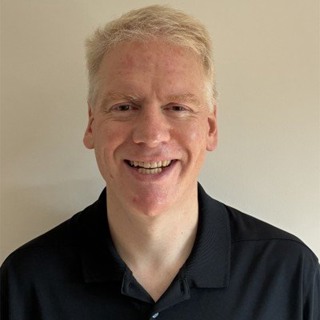
In this episode, Chris Swan, engineer at Atsign and security track host at QCon London, reflects on the ideas shared during QCon London 2026 and teases topics of the future edition. The discussion exp...

5 Loka 34min

The AI Revolution Fails Without Psychological Safety For Developers: A Conversation with Erin Doyle

The AI Revolution Fails Without Psychological Safety For Developers: A Conversation with Erin Doyle

In this podcast, Michael Stiefel spoke to Erin Doyle about how artificial intelligence tools are transforming the software development process, and how they are affecting software engineers. Architect...

28 Syys 54min
The Future of AI: From Enterprise Adoption to Open Source Sovereignty

The Future of AI: From Enterprise Adoption to Open Source Sovereignty

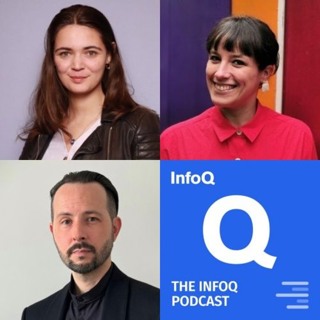
In this episode, a panel of AI experts, Meryem Arik (DoubleWord), Clara Higuera Cabañes (BBVA), and Jeff Smith (C Proof), demystify the current state of AI in the enterprise. The discussion navigates ...

25 Syys 52min

Securing AI Agents: Identity, Authorisation, and the DPACT Framework

Securing AI Agents: Identity, Authorisation, and the DPACT Framework

In this episode, Sahil Agarwal talks about the critical challenges of identity, authorisation, and security in the age of AI agents. Sahil introduces the DPACT framework (Delegation, Policy, Auditabil...

21 Syys 41min

How Will We Train Developers If AI Does the Routine Work: A Conversation with Scott Hanselman

How Will We Train Developers If AI Does the Routine Work: A Conversation with Scott Hanselman

In this podcast Michael Stiefel spoke to Scott Hanselman about developing new software engineers when artificial intelligence agents are doing most of the work on which junior developers were trained....

14 Syys 36min