
#209 – Rose Chan Loui on OpenAI’s gambit to ditch its nonprofit
80,000 Hours Podcast27 Marras 2024

#209 – Rose Chan Loui on OpenAI’s gambit to ditch its nonprofit

One OpenAI critic calls it “the theft of at least the millennium and quite possibly all of human history.” Are they right?

Back in 2015 OpenAI was but a humble nonprofit. That nonprofit started a for-profit, OpenAI LLC, but made sure to retain ownership and control. But that for-profit, having become a tech giant with vast staffing and investment, has grown tired of its shackles and wants to change the deal.

Facing off against it stand eight out-gunned and out-numbered part-time volunteers. Can they hope to defend the nonprofit’s interests against the overwhelming profit motives arrayed against them?

That’s the question host Rob Wiblin puts to nonprofit legal expert Rose Chan Loui of UCLA, who concludes that with a “heroic effort” and a little help from some friendly state attorneys general, they might just stand a chance.

Links to learn more, highlights, video, and full transcript.

As Rose lays out, on paper OpenAI is controlled by a nonprofit board that:

  • Can fire the CEO.
  • Would receive all the profits after the point OpenAI makes 100x returns on investment.
  • Is legally bound to do whatever it can to pursue its charitable purpose: “to build artificial general intelligence that benefits humanity.”

But that control is a problem for OpenAI the for-profit and its CEO Sam Altman — all the more so after the board concluded back in November 2023 that it couldn’t trust Altman and attempted to fire him (although those board members were ultimately ousted themselves after failing to adequately explain their rationale).

Nonprofit control makes it harder to attract investors, who don’t want a board stepping in just because they think what the company is doing is bad for humanity. And OpenAI the business is thirsty for as many investors as possible, because it wants to beat competitors and train the first truly general AI — able to do every job humans currently do — which is expected to cost hundreds of billions of dollars.

So, Rose explains, they plan to buy the nonprofit out. In exchange for giving up its windfall profits and the ability to fire the CEO or direct the company’s actions, the board will become minority shareholders with reduced voting rights, and presumably transform into a normal grantmaking foundation instead.

Is this a massive bait-and-switch? A case of the tail not only wagging the dog, but grabbing a scalpel and neutering it?

OpenAI repeatedly committed to California, Delaware, the US federal government, founding staff, and the general public that its resources would be used for its charitable mission and it could be trusted because of nonprofit control. Meanwhile, the divergence in interests couldn’t be more stark: every dollar the for-profit keeps from its nonprofit parent is another dollar it could invest in AGI and ultimately return to investors and staff.

Chapters:

  • Cold open (00:00:00)
  • What's coming up (00:00:50)
  • Who is Rose Chan Loui? (00:03:11)
  • How OpenAI carefully chose a complex nonprofit structure (00:04:17)
  • OpenAI's new plan to become a for-profit (00:11:47)
  • The nonprofit board is out-resourced and in a tough spot (00:14:38)
  • Who could be cheated in a bad conversion to a for-profit? (00:17:11)
  • Is this a unique case? (00:27:24)
  • Is control of OpenAI 'priceless' to the nonprofit in pursuit of its mission? (00:28:58)
  • The crazy difficulty of valuing the profits OpenAI might make (00:35:21)
  • Control of OpenAI is independently incredibly valuable and requires compensation (00:41:22)
  • It's very important the nonprofit get cash and not just equity (and few are talking about it) (00:51:37)
  • Is it a farce to call this an "arm's-length transaction"? (01:03:50)
  • How the nonprofit board can best play their hand (01:09:04)
  • Who can mount a court challenge and how that would work (01:15:41)
  • Rob's outro (01:21:25)

Producer: Keiran Harris
Audio engineering by Ben Cordell, Milo McGuire, Simon Monsour, and Dominic Armstrong
Video editing: Simon Monsour
Transcriptions: Katy Moore

Tämä jakso on lisätty Podme-palveluun avoimen RSS-syötteen kautta eikä se ole Podmen omaa tuotantoa. Siksi jakso saattaa sisältää mainontaa.

Jaksot(334)

What anonymous contributors think about important life and career questions (Article)

What anonymous contributors think about important life and career questions (Article)

Today we’re launching the final entry of our ‘anonymous answers' series on the website. It features answers to 23 different questions including “How have you seen talented people fail in their work?...

5 Kesä 202037min
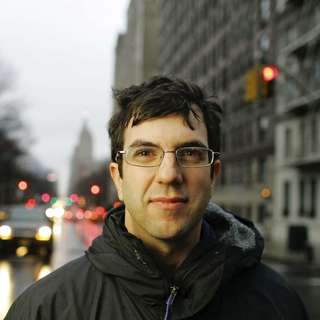
#79 – A.J. Jacobs on radical honesty, following the whole Bible, and reframing global problems as puzzles

#79 – A.J. Jacobs on radical honesty, following the whole Bible, and reframing global problems as puzzles

Today’s guest, New York Times bestselling author A.J. Jacobs, always hated Judge Judy. But after he found out that she was his seventh cousin, he thought, "You know what? She's not so bad." Hijacking ...

1 Kesä 20202h 38min

#78 – Danny Hernandez on forecasting and the drivers of AI progress

#78 – Danny Hernandez on forecasting and the drivers of AI progress

Companies use about 300,000 times more computation training the best AI systems today than they did in 2012 and algorithmic innovations have also made them 25 times more efficient at the same tasks.Th...

22 Touko 20202h 11min
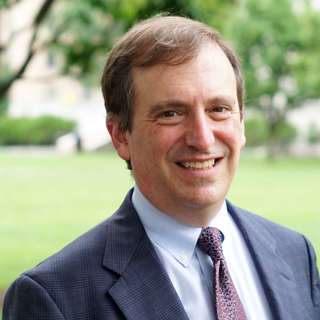
#77 – Marc Lipsitch on whether we're winning or losing against COVID-19

#77 – Marc Lipsitch on whether we're winning or losing against COVID-19

In March Professor Marc Lipsitch — Director of Harvard's Center for Communicable Disease Dynamics — abruptly found himself a global celebrity, his social media following growing 40-fold and journalist...

18 Touko 20201h 37min

Article: Ways people trying to do good accidentally make things worse, and how to avoid them

Article: Ways people trying to do good accidentally make things worse, and how to avoid them

Today’s release is the second experiment in making audio versions of our articles. The first was a narration of Greg Lewis’ terrific problem profile on ‘Reducing global catastrophic biological risks...

12 Touko 202026min
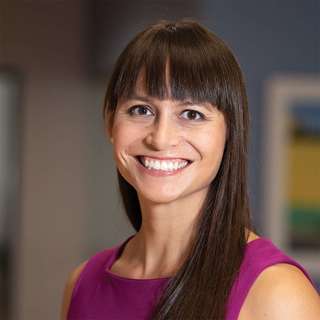
#76 – Tara Kirk Sell on misinformation, who's done well and badly, & what to reopen first

#76 – Tara Kirk Sell on misinformation, who's done well and badly, & what to reopen first

Amid a rising COVID-19 death toll, and looming economic disaster, we’ve been looking for good news — and one thing we're especially thankful for is the Johns Hopkins Center for Health Security (CHS). ...

8 Touko 20201h 53min

#75 – Michelle Hutchinson on what people most often ask 80,000 Hours

#75 – Michelle Hutchinson on what people most often ask 80,000 Hours

Since it was founded, 80,000 Hours has done one-on-one calls to supplement our online content and offer more personalised advice. We try to help people get clear on their most plausible paths, the key...

28 Huhti 20202h 13min

#74 – Dr Greg Lewis on COVID-19 & catastrophic biological risks

#74 – Dr Greg Lewis on COVID-19 & catastrophic biological risks

Our lives currently revolve around the global emergency of COVID-19; you’re probably reading this while confined to your house, as the death toll from the worst pandemic since 1918 continues to rise. ...

17 Huhti 20202h 37min

Suosittua kategoriassa Koulutus

rss-murhan-anatomia
psykopodiaa-podcast
voi-hyvin-meditaatiot-2
adhd-podi
rss-rahamania
psykologia
rss-niinku-asia-on
rss-liian-kuuma-peruna
rss-hereilla
rahapuhetta
kesken
rss-duodecim-lehti
rss-tietoinen-yhteys-podcast-2
rss-vapaudu-voimaasi
rss-arkea-ja-aurinkoa-podcast-espanjasta
kehossa
rss-valo-minussa-2
rss-naiseuden-helmoissa-tiipiituokioita-marikan-kanssa
rss-koira-haudattuna
rss-osaamisen-lukot-oppimisen-avaimet