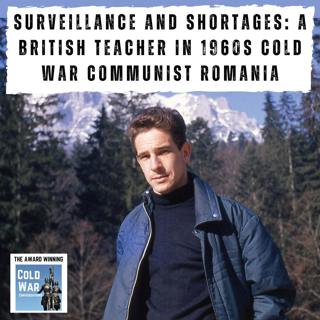


Growing up in Cold War East Germany's Valley of the Clueless (307)
Henrik was born in the late 1960s near Dresden in East Germany. The area was sarcastically known as the Tal der Ahnungslosen or Valley of the Clueless, as the area generally was not able to receive TV from West Germany from the mid-to-late 1950s. He describes his childhood growing up in a Uranium mining area. His mother was a teacher and his father was required to be a member of the Communist Party as his role at the university involved in map making which was classified as secret work. It’s not until he is 8 or 9 that Henrik realises there is another Germany and as he gets older he gets into Western music as he can still pick up West German radio. In 1983 his favourite grandmother moved to the West and started to bring him Western clothing and vinyl records. At 15 or 16 he seriously starts to think about how he can get to the West. Compulsory service in the National Peoples Army beckons increasing his urgency in finding a way to leave. In 1988 Henrik receives an unexpected postcard from Spain from a friend who had been sentenced for 2 years for trying to escape and this begins to crystallise Henrik’s plans. 0:00 Introduction and background of Henrik 10:47 The role of Western radio and music in shaping Henrik's perception of the West 19:21 Importance of Western contact for East German citizens 29:45 Music censorship in East Germany 35:19 Henrik's first thoughts of leaving East Germany 47:34 Henrik's gap year and work in a data processing factory 52:08 News about friends sentenced for trying to escape 1:02:24 The impact of his escape on his family 1:06:24 Comparison of Stasi and Gestapo tactics 1:07:45 Closing remarks, mention of episode extras and soundtrack If Henrik's life was made into a movie he says this would be the soundtrack… https://open.spotify.com/playlist/3eJFR6QJebyv2S16Dqyhoc?si=072a284d83dc4410 Extra episode information https://coldwarconversations.com/episode307 Special thanks to Jonny Whitlam for introducing Henrik to CWC. You can book his excellent Berlin tours here https://www.whitlams-berlin-tours.com/ The fight to preserve Cold War history continues and via a simple monthly donation, you will give me the ammunition to continue to preserve Cold War history. You’ll become part of our community, get ad-free episodes, and get a sought-after CWC coaster as a thank you and you’ll bask in the warm glow of knowing you are helping to preserve Cold War history. Just go to https://coldwarconversations.com/donate/ If a monthly contribution is not your cup of tea, We also welcome one-off donations via the same link. Find the ideal gift for the Cold War enthusiast in your life! Just go to https://coldwarconversations.com/store/ Support the project! https://coldwarconversations.com/donate/ Follow us on Twitter https://twitter.com/ColdWarPod Facebook https://www.facebook.com/groups/coldwarpod/ Instagram https://www.instagram.com/coldwarconversations/ Youtube https://youtube.com/@ColdWarConversations Love history? Check out Into History at this link https://intohistory.com/coldwarpod Learn more about your ad choices. Visit podcastchoices.com/adchoices
1 Syys 20231h 14min
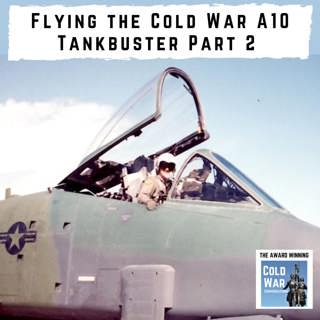
Flying the Cold War A10 Tankbuster Part 2 (306)
You are listening to part 2 of my chat with Joe who joined the USAF in 1981 and was trained to fly the A10 Warthog a single-seat, twin-engine jet aircraft designed to provide close air support to ground forces by attacking tanks, armoured vehicles, and other ground targets. Part 1 is here https://coldwarconversations.com/episode305/ In 1985 Joe is sent to 92nd Tactical Fighter Squadron at RAF Bentwaters in the UK, just over 50 miles from where his father served in World War 2. His role was to fly the A10 over West Germany and attack Warsaw Pact ground forces should the Cold War turn hot. We hear about the perils of flying the A10 at only 100 feet in mist and rain, whilst navigating with a map on your knee in the days before GPS was available. Joe also recounts visiting the Inner German border and driving to his wartime target sectors to see what they looked like from the ground. He describes how they trained for landing on West German autobahns as well as their tactics against enemy aircraft. Joe also flew the Royal Air Force’s VTOL fighter, the Harrier, and tells of the challenge of managing the controls and his respect for the Royal Air Force. 0:00 Introduction and Joe Andrew's deployment to UK 1:35 Visiting the inner German border and discussion on potential kill zones 3:29 Practice landing on autobahns and durability of A-10's undercarriage 6:17 Low-level navigation and situational awareness in Europe 10:59 Practice bombing, missile firing, and liaisons with the army 15:00 Air to air defense, maneuvering training, and target acquisition 17:32 Managing information and plotting targets while flying 20:45 Tactics for air-to-air combat and likely survivability rate in conflict 27:44 Training for escape and evasion if shot down, and use of countermeasures 34:45 Joe Andrew's experiences with combat SAR alert and flying the Harrier 44:00 Extras and acknowledgements for the podcast's financial supporters Table of contents powered by PodcastAI✨ Visit the RAF Bentwaters Museum here https://www.bcwm.org.uk/ Extra episode information https://coldwarconversations.com/episode306 The fight to preserve Cold War history continues and via a simple monthly donation, you will give me the ammunition to continue to preserve Cold War history. You’ll become part of our community, get ad-free episodes, and get a sought-after CWC coaster as a thank you and you’ll bask in the warm glow of knowing you are helping to preserve Cold War history. Just go to https://coldwarconversations.com/donate/ If a monthly contribution is not your cup of tea, We also welcome one-off donations via the same link. Find the ideal gift for the Cold War enthusiast in your life! Just go to https://coldwarconversations.com/store/ Support the project! https://coldwarconversations.com/donate/ Follow us on Twitter https://twitter.com/ColdWarPod Facebook https://www.facebook.com/groups/coldwarpod/ Instagram https://www.instagram.com/coldwarconversations/ Youtube https://youtube.com/@ColdWarConversations Love history? Join Intohistory on this link https://intohistory.com/coldwarpod Learn more about your ad choices. Visit podcastchoices.com/adchoices
25 Elo 202349min
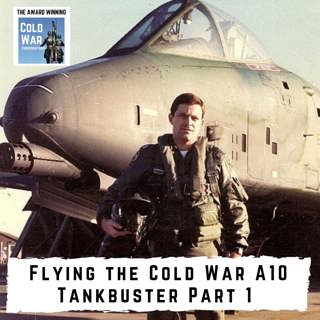
Flying the Cold War A10 Tankbuster Part 1 (305)
Joe’s father served in World War 2 in the USAF. His service inspired Joe to try and join the USAF or the Naval Air Force despite having no flying experience. It’s the aftermath of the Vietnam War so forces are being reduced, however with the arrival of a new President, Ronald Reagan, defence spending grows and provides Joe with an opportunity to start pilot training with the USAF. He eventually ends up flying the A10. The A-10 was first in service in 1976 and was designed to provide close air support to ground troops by attacking armoured vehicles, tanks, and other enemy ground forces. Joe describes what makes the A10 special as well as his training and initial deployment in the A10 in Alaska. You get a real pilot’s eye view of flying the plane including navigation techniques and the challenges of flying low level. 0:00 Introduction and background of Joe Andrew 6:41 Joe's completion of officer training school and becoming a second lieutenant 9:47 The decision of what to fly at the end of training 15:01 Description of the A 10 and its capabilities 28:19 First flight experience in the A-10 32:17 Joe's first operational station and flying experience in Alaska 37:56 Journey to Bentwaters and first impressions of the UK 41:40 Meeting and marrying future wife in the UK 44:13 Undergoing advisory training course for UK weather conditions 48:05 Wrap up and preview of next week's episode Table of contents powered by PodcastAI✨ Part two is here https://coldwarconversations.com/episode306/ where Joe is sent to 92nd Fighter Squadron at RAF Bentwaters in the UK, just over 50 miles from where his father served in World War 2. Visit the RAF Bentwaters Museum here https://www.bcwm.org.uk/ Extra episode information https://coldwarconversations.com/episode305 Rick Shreve's F111 episode https://coldwarconversations.com/episode193/ The fight to preserve Cold War history continues and via a simple monthly donation, you will give me the ammunition to continue to preserve Cold War history. You’ll become part of our community, get ad-free episodes, and get a sought-after CWC coaster as a thank you and you’ll bask in the warm glow of knowing you are helping to preserve Cold War history. Just go to https://coldwarconversations.com/donate/ If a monthly contribution is not your cup of tea, We also welcome one-off donations via the same link. Find the ideal gift for the Cold War enthusiast in your life! Just go to https://coldwarconversations.com/store/ Support the project! https://coldwarconversations.com/donate/ Follow us on Twitter https://twitter.com/ColdWarPod Facebook https://www.facebook.com/groups/coldwarpod/ Instagram https://www.instagram.com/coldwarconversations/ Youtube https://youtube.com/@ColdWarConversations Love history? Join Intohistory on this link Cold War Conversations – Into History Learn more about your ad choices. Visit podcastchoices.com/adchoices
18 Elo 202353min
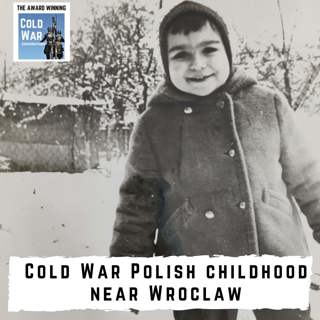
A Cold War Polish childhood near Wroclaw (304)
Tom lived in western Poland in an area that had been part of Germany until the end of World War 2. He describes how his grandmother settled in this area and the strangeness of taking over formerly German houses and apartments. Tom’s grandfather on his mother’s side was a Communist activist who worked for the Polish security services which created some tension as Tom’s father dodged the draft into the Polish Army. Tom describes his childhood in some detail, highlighting the contrasts of life in Cold War Poland versus some of the Warsaw Pact countries such as how the Boy Scouts and the Catholic Church managed to co-exist with the Communist government. He is 11 years old when the free trade union Solidarity is made illegal and martial law is declared by the Polish Communist authorities. Tom describes how life changes under martial law and the suppression of Solidarity demonstrations. We end with the poignant story of his Grandmother’s experiences as a forced labourer in Germany during World War 2. 0:00 Introduction and background of Tom's family history in Cold War Poland 9:06 Tom's family members and their roles during the Cold War 20:38 Tom's parents' professions and their impact on his upbringing 26:15 Living conditions in the 70s in Poland and Tom's school life experiences 41:56 The role of the Scouts movement and the state in shaping youth ideology 48:59 Declaration of martial law and its immediate impact 1:02:19 Witnessing solidarity demonstrations and restrictions on travel 1:11:39 Visit to Dresden and grandmother's experience as a forced laborer 1:22:00 Communicating with the locals in Dresden and Grandma's vivid recount 1:24:15 Podcast extras and thanking financial supporters 1:24:43 Closing remarks and teaser for next week's episode Extra episode information https://coldwarconversations.com/episode304 The fight to preserve Cold War history continues and via a simple monthly donation, you will give me the ammunition to continue to preserve Cold War history. You’ll become part of our community, get ad-free episodes, and get a sought-after CWC coaster as a thank you and you’ll bask in the warm glow of knowing you are helping to preserve Cold War history. Just go to https://coldwarconversations.com/donate/ If a monthly contribution is not your cup of tea, We also welcome one-off donations via the same link. Find the ideal gift for the Cold War enthusiast in your life! Just go to https://coldwarconversations.com/store/ Support the project! https://coldwarconversations.com/donate/ Follow us on Twitter https://twitter.com/ColdWarPod Facebook https://www.facebook.com/groups/coldwarpod/ Instagram https://www.instagram.com/coldwarconversations/ Youtube https://youtube.com/@ColdWarConversations Love history? Join Intohistory on this link Cold War Conversations – Into History Learn more about your ad choices. Visit podcastchoices.com/adchoices
11 Elo 20231h 29min
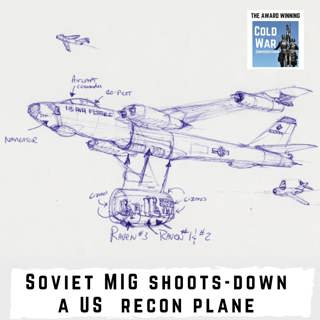
Soviet MIG shoots-down a US RB-47H reconnaissance plane (303)
On 1 July 1960, a United States RB-47H reconnaissance plane was shot down by the Soviet Air Defence Forces while performing signals intelligence in the Barents Sea, near the Kola Peninsula, off the Arctic coast of the Soviet Union. Four of the six crew members died. The shootdown occurred exactly two months after the far better-known U-2 shootdown involving Francis Gary Powers and added to the tensions created by that incident. Gary Power and the U2 incident https://coldwarconversations.com/episode23/ I speak with John Mollison, an aviation artist, writer, and award-winning filmmaker. Do check out his website at https://www.johnmollison.com/ John interviewed Captain "Bruce" Olmstead who was co-pilot of the RB47. As a result of his involvement in the incident, Olmstead received the POW medal in 1996 and Silver Star medals in 2004, as well as the Distinguished Flying Cross. His Silver Star Citation reads “For 208 days, Colonel Olmstead was interrogated and harassed at length on a continuous basis by numerous top Soviet Secret Police interrogating teams. Although greatly weakened physically by the lack of food, denial of sleep, and the mental rigors of constant interrogation, Colonel Olmstead steadfastly refused all attempts to give sensitive defense information or be exploited for propaganda purposes. By his gallantry and devotion to duty, Colonel Olmstead has reflected great credit upon himself and the United States Air Force.” Bruce died in October 2016. 0:00 Introduction and background of the RB47 incident 6:30 The shift from RB47 to U2 missions and importance of signals intelligence 12:00 Description of the RB47's engagement and defensive armament 17:00 Context of the times, the Gary Powers shoot down, and implications of SIOP 20:00 The tracking, interception, and attack on the RB 47 26:00 Communication between the Ravens and the cockpit, aftermath of the crash and capture 33:00 The American reaction to the loss of the RB 47 and negotiations with the Soviets 36:00 The duration of captivity, trial, and release of the crew 38:00 Meeting with President Kennedy and the zeitgeist of the times 40:00 Importance of the shoot down in Cold War history and other related incidents 43:00 Podcast extras, acknowledgements, and closing remarks Extra episode information https://coldwarconversations.com/episode303 The fight to preserve Cold War history continues and via a simple monthly donation, you will give me the ammunition to continue to preserve Cold War history. You’ll become part of our community, get ad-free episodes, and get a sought-after CWC coaster as a thank you and you’ll bask in the warm glow of knowing you are helping to preserve Cold War history. Just go to https://coldwarconversations.com/donate/ If a monthly contribution is not your cup of tea, We also welcome one-off donations via the same link. Find the ideal gift for the Cold War enthusiast in your life! Just go to https://coldwarconversations.com/store/ Support the project! https://coldwarconversations.com/donate/ Follow us on Twitter https://twitter.com/ColdWarPod Facebook https://www.facebook.com/groups/coldwarpod/ Instagram https://www.instagram.com/coldwarconversations/ Youtube https://youtube.com/@ColdWarConversations Love history? Join Intohistory https://intohistory.supercast.com/ Learn more about your ad choices. Visit podcastchoices.com/adchoices
4 Elo 202349min
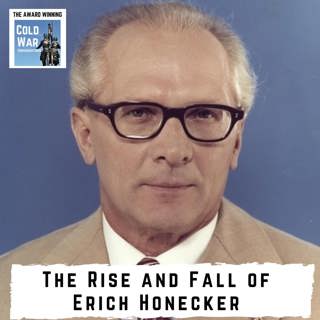
The rise and fall of East German leader Erich Honecker (302)
Honecker emerged as an ambitious political player and became the shadowy mastermind behind the construction of the Berlin Wall in 1961, a crucial moment in twentieth-century history. Author Nathan Morley brings to life the story of the longtime leader of the German Democratic Republic. Drawing from a wealth of untapped archival sources – and firsthand interviews with Honecker’s lawyers, journalists, and contemporary witnesses – Morley paints a vivid portrait of how an uneducated miner’s son from the Saarland rose to the highest ranks of the German Communist Party. Having survived a decade of brutality in Nazi prisons, and frequently on the verge of being relegated to obscurity, he managed to overthrow strongman Walter Ulbricht at the height of the Cold War and reigned supreme over the GDR between 1971-1989. However, by 1980, the Honecker honeymoon was on the wane as a decade of economic and social difficulties blighted the GDR. Then, as tumultuous changes swept through the Soviet bloc, everything in and around him collapsed in 1989. His health, his certainties, his ideology, his apparatus of power, and his beloved SED party. 0:00 Introduction and discussion on the life of Eric Honecker 5:42 Overview of Honecker's early life and family background 13:49 Honecker's return to Germany and the state of the country 19:37 Honecker's post-war life and rise in East German politics 28:01 Honecker's struggle with the exodus of East Germany's population 34:53 Operation Rose: The division of Berlin 44:10 Public perception of Honecker in East Germany 46:05 Intensifying economic struggles in East Germany and Poland 55:26 Honecker's refusal to follow Gorbachev's reforms and health decline 1:01:19 Honecker's extradition and trial in Berlin 1:03:17 Honecker's release and final years in Chile 1:05:29 Honecker's funeral and tributes received 1:06:51 Mention of the book "The Man Who built the Berlin Wall" by Nathan Moreley and podcast extras 1:07:22 Acknowledgement of podcast's financial supporters and closing remarks Buy the book here https://uk.bookshop.org/a/1549/9781399088824 The fight to preserve Cold War history continues and via a simple monthly donation, you will give me the ammunition to keep this podcast on the air. You’ll become part of our community and get a sought-after CWC coaster as a thank you and you’ll bask in the warm glow of knowing you are helping to preserve Cold War history. Just go to https://coldwarconversations.com/donate/ If a monthly contribution is not your cup of tea, We also welcome one-off donations via the same link. Book giveaway entry info here https://coldwarconversations.com/giveaway/ Episodes mentioned: History of East Germany https://coldwarconversations.com/episode284/ Doping of East German athletes https://coldwarconversations.com/episode264/ Polish strikes in 1980 https://coldwarconversations.com/episode152/ Extra episode information https://coldwarconversations.com/episode302/ Find the ideal gift for the Cold War enthusiast in your life! Just go to https://coldwarconversations.com/store/ Support the project! https://coldwarconversations.com/donate/ Follow us on Twitter https://twitter.com/ColdWarPod Facebook https://www.facebook.com/groups/coldwarpod/ Instagram https://www.instagram.com/coldwarconversations/ Youtube https://youtube.com/@ColdWarConversations Radio GDR If you are interested in East Germany we can highly recommend our friends over at Radio GDR. Learn more about your ad choices. Visit podcastchoices.com/adchoices
28 Heinä 20231h 13min
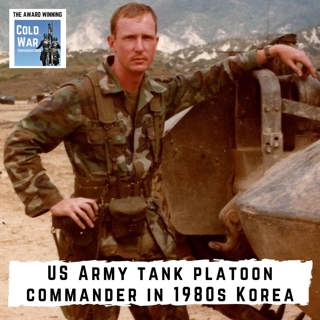
US Army tank platoon commander in 1980s Cold War Korea (301)
Tom Sullivan was a tank platoon commander in Korea in the early 1980s responsible for six tanks and their crew We hear why he joined the US Army, his training, and his first impressions of Korea in the Winter of 1982. He is assigned to Second Platoon, C Company, 1-72 Armor under the toughest Company Commander in the Brigade who had very high standards, no humour, and was a rigid disciplinarian with an uncompromising approach. Tom shares details of his fellow soldiers, including Vietnam veterans, the living conditions He explains the challenges of operating armour where the winter weather is brutal, and the majority of the terrain is hills, mountains, rice paddies, and dirt roads We discuss the threat the North Koreans posed and the scarce hope that reinforcements would arrive in sufficient time should the North Koreans decide to attack. 0:00 Introduction and background of Tom Sullivan 4:56 Training to become an armored officer and the role of international instructors 14:12 Arrival in Korea, transfer to Camp Casey and introduction to the unit 20:35 Initial challenges and observations in Korea 27:57 Exercise with Korean army units: Team Spirit and deployment experience 32:00 Living conditions and navigating the difficult Korean terrain 39:00 Proximity to the DMZ and observing cross border fire and incursions 43:38 Using the M48 tank in Korea and facing the North Korean armored threat 51:08 Being within North Korean artillery range and potential infiltration threats 57:22 Acknowledgement of financial supporters and podcast extras Table of contents powered by PodcastAI✨ The fight to preserve Cold War history continues and via a simple monthly donation, you will give me the ammunition to continue to preserve Cold War history. You’ll become part of our community, get ad-free episodes, and get a sought-after CWC coaster as a thank you and you’ll bask in the warm glow of knowing you are helping to preserve Cold War history. Just go to https://coldwarconversations.com/donate/ If a monthly contribution is not your cup of tea, We also welcome one-off donations via the same link. Extra episode information https://coldwarconversations.com/episode301/ Find the ideal gift for the Cold War enthusiast in your life! Just go to https://coldwarconversations.com/store/ Support the project! https://coldwarconversations.com/donate/ Follow us on Twitter https://twitter.com/ColdWarPod Facebook https://www.facebook.com/groups/coldwarpod/ Instagram https://www.instagram.com/coldwarconversations/ Youtube https://youtube.com/@ColdWarConversations Learn more about your ad choices. Visit podcastchoices.com/adchoices
21 Heinä 20231h 2min
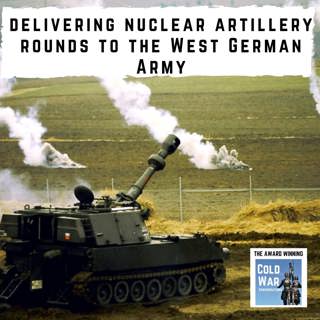
Assembling and delivering nuclear artillery rounds to the Cold War West German Army (300)
In February 1983 US soldier Manuel Alzager was sent to a mysterious posting to the British Zone in the north of West Germany a long way from the main US forces in southern Germany. After a lengthy journey, he is picked up by a West German private and eventually arrives at the 81st USAFAD (US Army Field Artillery Detachment), where his mission is to guard, assemble, and deliver low-yield nuclear artillery rounds to the 7th West German Army Artillery Regiment. He describes how the rounds were assembled as well as their orders in the event of unauthorised intruders. Being stationed in the British Zone of West Germany Manuel also tells us about the love/hate relationship with the Brits where they would fight, make up, drink, and fight again. 0:00 Introduction and overview of the episode 0:55 Manuel Altsaga's experience and assignment in West Germany 13:25 Mission and protocol related to nuclear artillery rounds 21:10 Public awareness and potential spy encounters 24:29 Guard duty and response plan for potential attacks 30:06 Social interactions and bonding with British soldiers 32:14 Manuel's departure from Germany and reflection on his service 33:38 Manuel's assignment at Fort Bragg and decision not to re-enlist 37:00 Transition to civilian life: College and California National Guard 39:17 Acknowledgement of financial supporters and promotion of Facebook discussion group Table of contents powered by PodcastAI✨ Manuel's other episodes are here: A 17-year-old in the Cold War US Army https://coldwarconversations.com/episode57/ Experiences of the Cold War Reforger 82 NATO Exercise https://coldwarconversations.com/episode100/ The fight to preserve Cold War history continues and via a simple monthly donation, you will give me the ammunition to continue to preserve Cold War history. You’ll become part of our community, get ad-free episodes, and get a sought-after CWC coaster as a thank you and you’ll bask in the warm glow of knowing you are helping to preserve Cold War history. Just go to https://coldwarconversations.com/donate/ If a monthly contribution is not your cup of tea, We also welcome one-off donations via the same link. Extra episode information https://coldwarconversations.com/episode300/ Find the ideal gift for the Cold War enthusiast in your life! Just go to https://coldwarconversations.com/store/ Support the project! https://coldwarconversations.com/donate/ Follow us on Twitter https://twitter.com/ColdWarPod Facebook https://www.facebook.com/groups/coldwarpod/ Instagram https://www.instagram.com/coldwarconversations/ Youtube https://youtube.com/@ColdWarConversations Learn more about your ad choices. Visit podcastchoices.com/adchoices
14 Heinä 202344min