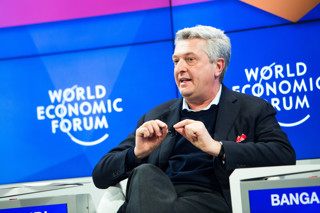
COVID's impact on displaced people, with UN High Commissioner for Refugees Filippo Grandi
Radio Davos20 Kesä 2021

COVID's impact on displaced people, with UN High Commissioner for Refugees Filippo Grandi

There are more forcibly displaced people than ever - 82 million - despite the pandemic making it harder to flee across borders. On World Refugee Day, Radio Davos speaks to UN High Commissioner for Refugees Filippo Grandi, and to Victor Ochen, who grew up in a conflict zone in northern Uganda and has used his experience as a displaced person to help others.

Key quotes:

Filippo Grandi:

"Most of these 80-plus million people we're talking about, refugees, displaced people, are in poor countries…[which have] fewer resources to deal with these massive problems."

"I think the problem [of vaccine inequality] is not inequality in respect of refugees, it is inequality between countries. And I think that I am actually surprised that there is not even more outcry about what a scandal it is."

"The risk of backfiring globally is very, very high. The slogan … that we will not be safe until everybody is safe ... is actually the most true slogan of the many that have been coined around the pandemic."

"The slogan of the [United Nations] Sustainable Development Goals is: 'No one should be left behind'. The risk of that ... is much higher now than it was a year and a half ago. And this is where we need to focus in the next few years."

"If you look at the type of money that has been mobilized to respond to COVID and you look at the aid budgets, the proportion is staggering. One is huge and one is very small, comparatively speaking. So I do hope that governments will have a better judgement than that and will not take it [from] aid budgets to compensate for the large expenditure."

Victor Ochen:

"I was born into war. I was born in the community affected by war and a society where nothing was happening except the struggle for power."

"It was the most dangerous venture, most dangerous move, to talk about peace in an environment where there is no peace, to talk against war in an environment clouded by conflict."

"War destroys one key institution: not the government, not the United Nations, not international organizations, not politics – war destroys the family. Families are split apart, families lose members, families become so helpless, separated for life. They live in that endless sense of not knowing what will happen. It's very difficult to see something good come out of a community where families are destroyed."

"Suffering in northern Uganda, suffering in Africa, is no different from suffering anywhere in the world. With COVID came a lot of understanding that we are all human, we are all powerless, we are all fragile. We shouldn't wait for suffering to knock on our doors before we act to care for those who are already suffering."

Mentioned in this episode:

COVAX - the global effort to get COVID vaccines to all.

The UK's plan to cut its overseas aid budget.

COP26 - the climate summit due to happen in November.

Lord's Resistance Army - the militia that caused Victor Ochen's family to become displaced people.

Find all our podcasts here.

Subscribe: Radio Davos; Meet the Leader.

Join the World Economic Forum Podcast Club on Facebook.

Tämä jakso on lisätty Podme-palveluun avoimen RSS-syötteen kautta eikä se ole Podmen omaa tuotantoa. Siksi jakso saattaa sisältää mainontaa.

Jaksot(330)

What I tell my Stern Business School students on how to thrive in the age of AI

What I tell my Stern Business School students on how to thrive in the age of AI

For today's undergraduates, the impact of artificial intelligence on the jobs market means massive job uncertainty. So how should young people prepare themselves for the unknown unknowns of a career i...

11 Syys 33min
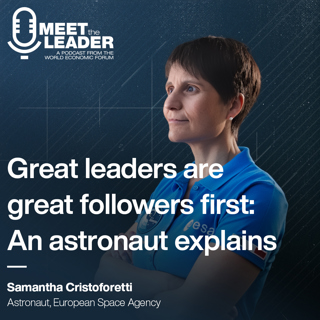
Meet the Leader: astronaut Samantha Cristoforetti

Meet the Leader: astronaut Samantha Cristoforetti

As an astronaut, Samantha Cristoforetti knows a lot about leadership and teamwork. She spoke to our sister podcast Meet the Leader at the Annual Meeting in Davos in January. You can watch it here: htt...

2 Syys 25min
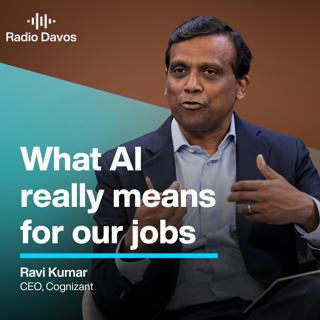
AI's real impact on jobs - what it means for you, your company and future generations

AI's real impact on jobs - what it means for you, your company and future generations

Artificial intelligence is already having an impact on the way most of us work - but it's still early days and it's hard to predict exactly which jobs will disappear completely, what new ones will be ...

27 Elo 37min
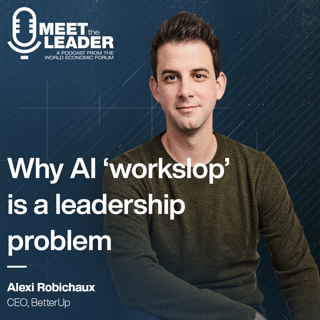
Meet the Leader: Why AI 'workslop' is a leadership problem

Meet the Leader: Why AI 'workslop' is a leadership problem

Workslop – low-quality work produced through poor human-AI collaboration – is wasting time, slowing teams down and limiting the productivity gains leaders expect from AI. But the problem isn't always ...

20 Elo 23min

Trade, tech and geopolitics: what you need to understand about China today

Trade, tech and geopolitics: what you need to understand about China today

China is a partner and rival to many countries around the world. But what should we know about this country that is central to the global economy and is playing an ever greater role in geopolitics? On...

12 Elo 39min
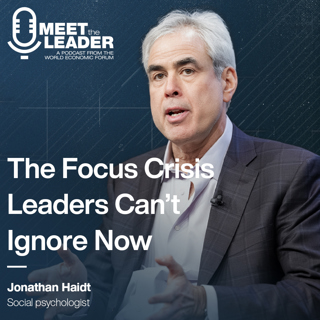
Meet the Leader: author Jonathan Haidt

Meet the Leader: author Jonathan Haidt

Jonathan Haidt, author of The Anxious Generation, spoke to the World Economic Forum's Meet the Leader podcast at the Annual Meeting in Davos in January for an episode called "How leaders can fix focus...

6 Elo 23min
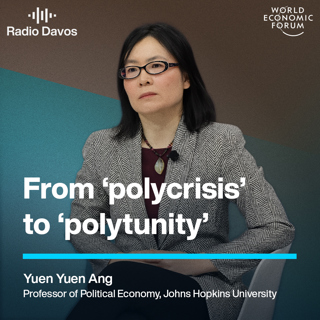
From 'polycrisis' to 'polytunity' - the future of geopolitics with Prof Yuen Yuen Ang

From 'polycrisis' to 'polytunity' - the future of geopolitics with Prof Yuen Yuen Ang

"Polycrisis" was a term coined to describe the convergence of multiple global challenges: political polarisation, conflicts, and the breakdown of post-World War Two norms on issues such as trade and s...

29 Heinä 32min
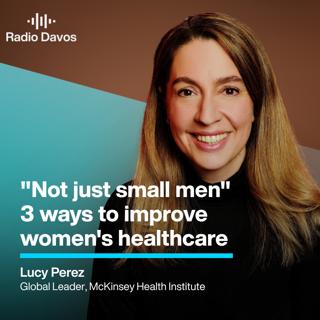
"Not just small men" - how healthcare is failing women, and what can be done

"Not just small men" - how healthcare is failing women, and what can be done

Women spend 25% more of their lives in poor health than men and are 50% more likely to die of a heart attack than a male patient. The statistics are staggering - but there are some relatively simple a...

23 Heinä 30min

Suosittua kategoriassa Politiikka ja uutiset

uutiscast
vallattomat
aikalisa
rss-viihde-media
politiikan-puskaradio
rss-ootsa-kuullut-tasta
ootsa-kuullut-tasta-2
tervo-halme
rss-vaalirankkurit-podcast
otetaan-yhdet
rss-voi-venaja
rss-podme-livebox
rss-kaikki-uusiksi
rss-ulkopoditiikkaa
et-sa-noin-voi-sanoo-esittaa
rss-girls-finish-f1rst
the-ulkopolitist
rss-raha-talous-ja-politiikka
popcorn-with-esko
rss-asiastudio